Because it rains frequently in the Portland area during fall, winter, and spring, the pores in brick gradually erode and become larger. As a result, bricks slowly lose their ability to properly retain and shed water. Once this happens, the chimney begins to absorb and leak water through the bricks and mortar joints, much like a sponge. This causes lime to leach out of the mortar (lime is one of the main components of mortar) and emerge through the pores of the bricks. This process is called efflorescence, which appears as white lime stains on the exterior and interior faces of the chimney bricks. Once this happens, you have a leaking chimney.
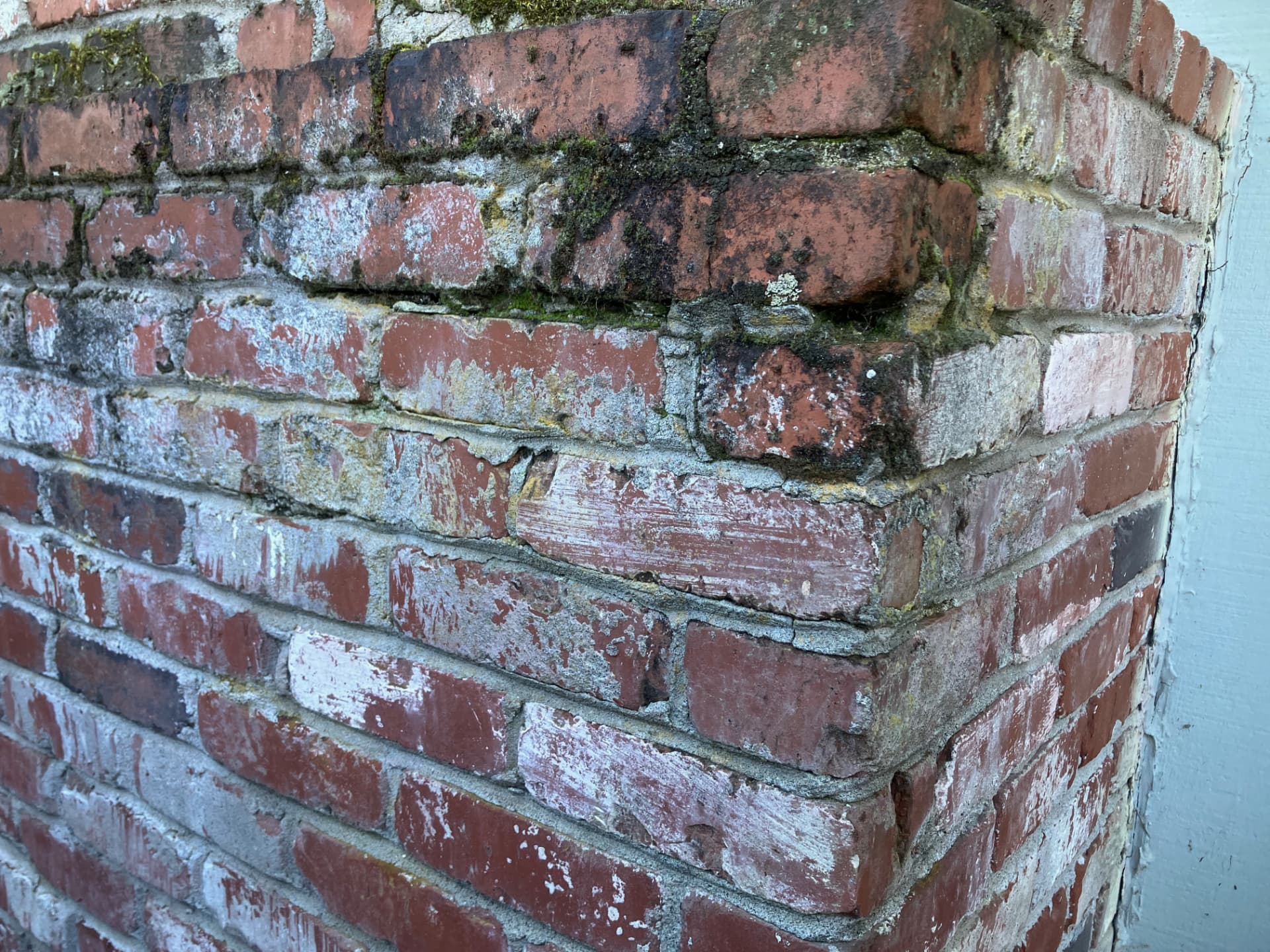
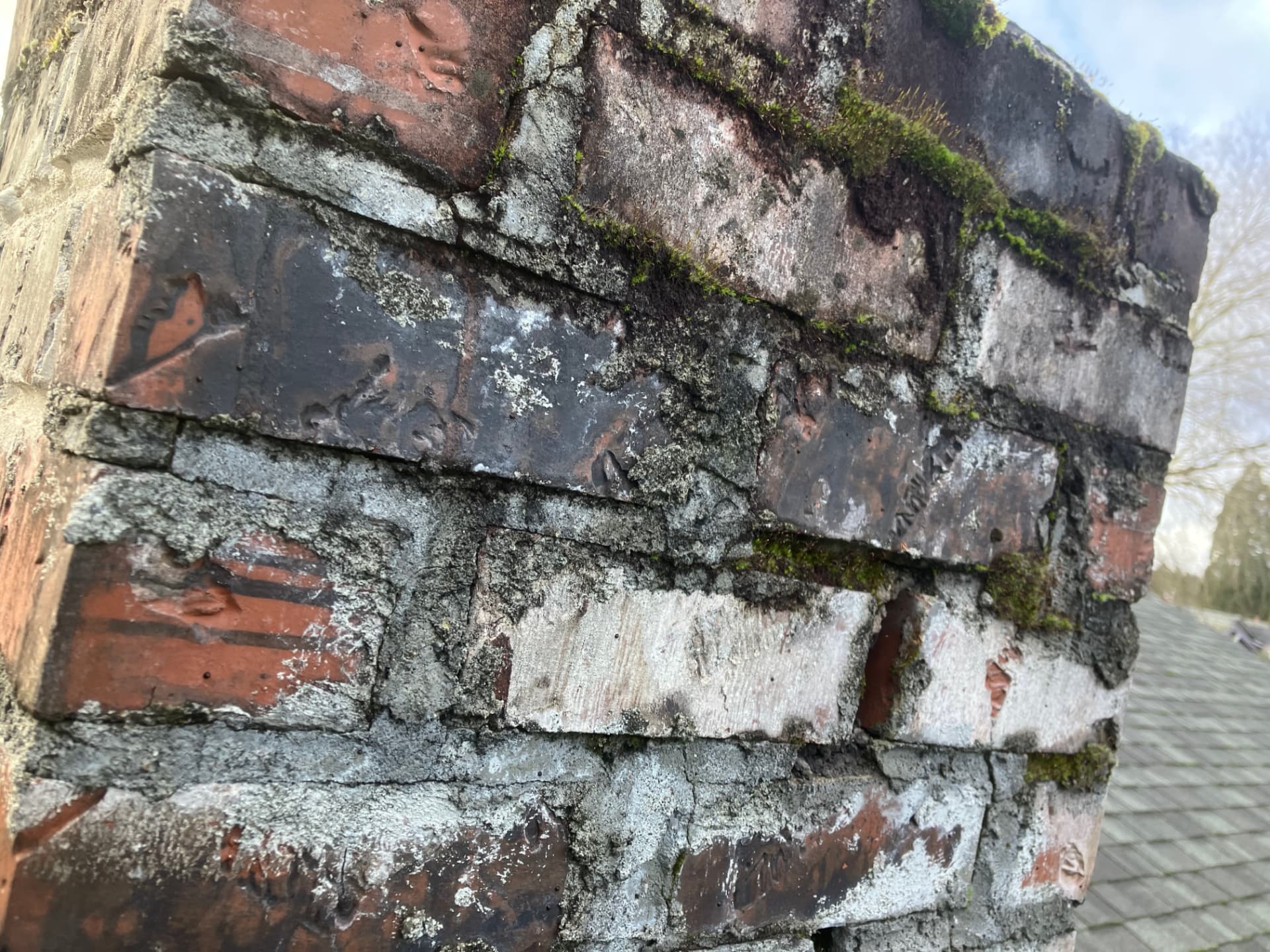
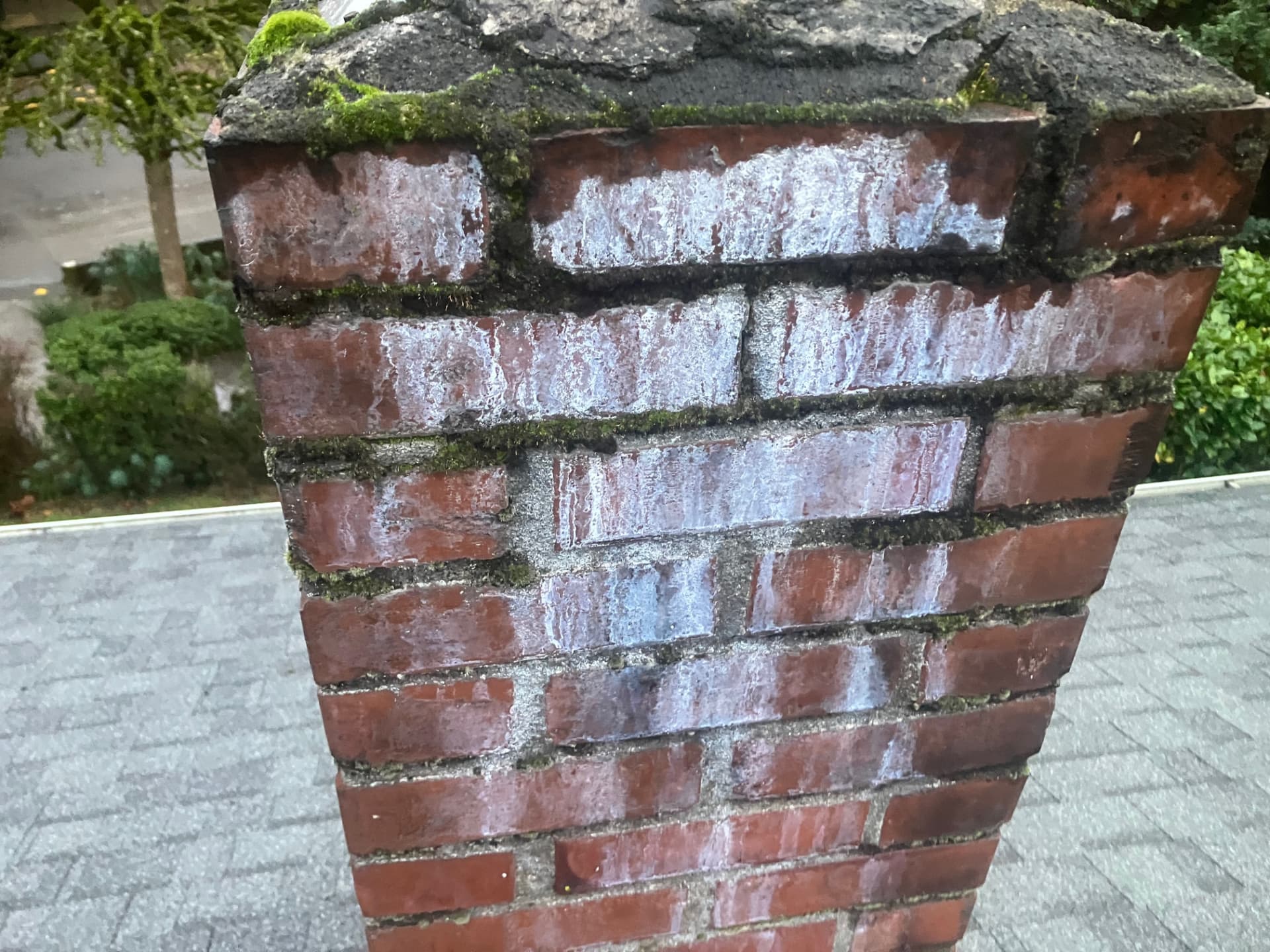
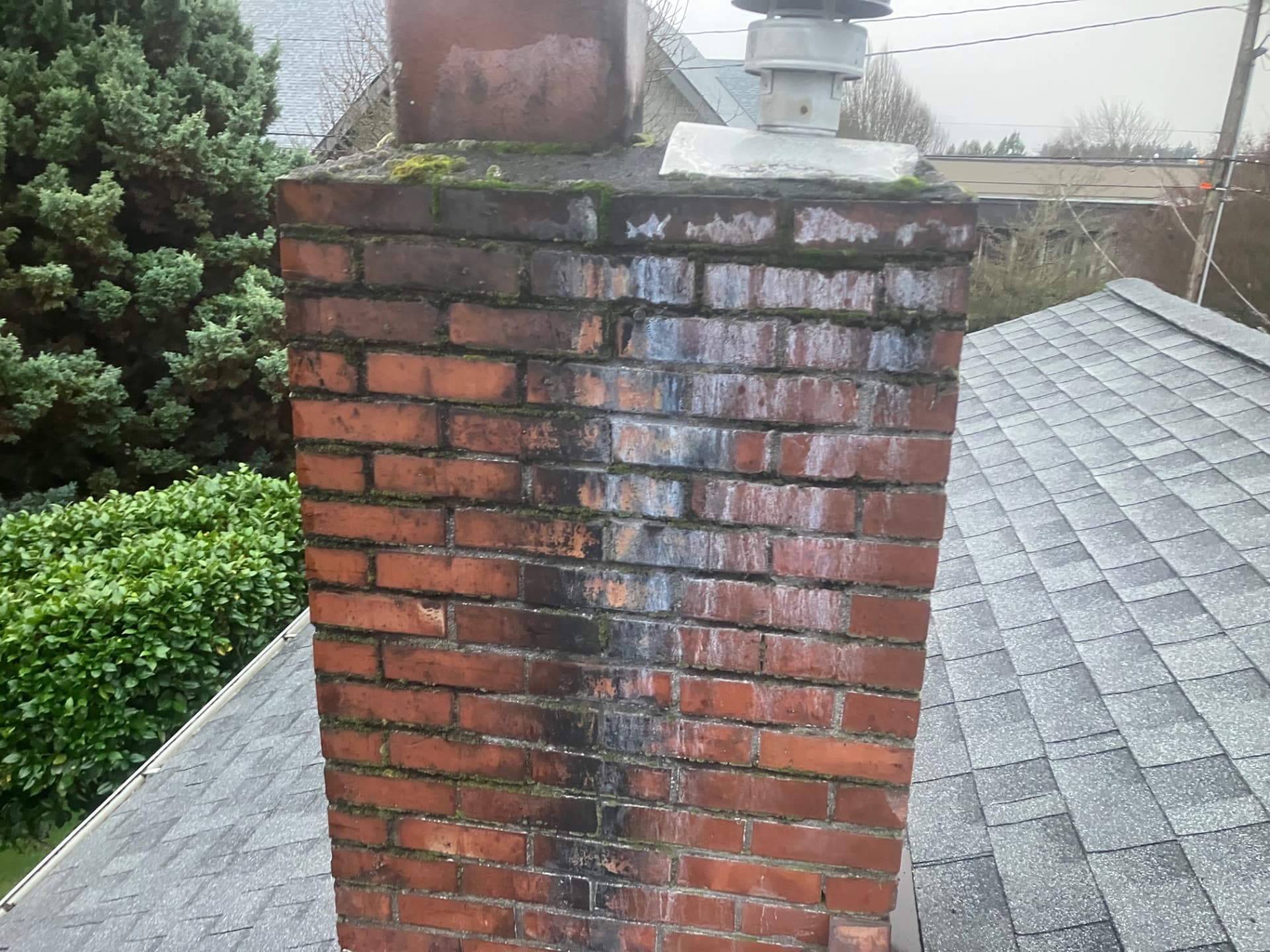
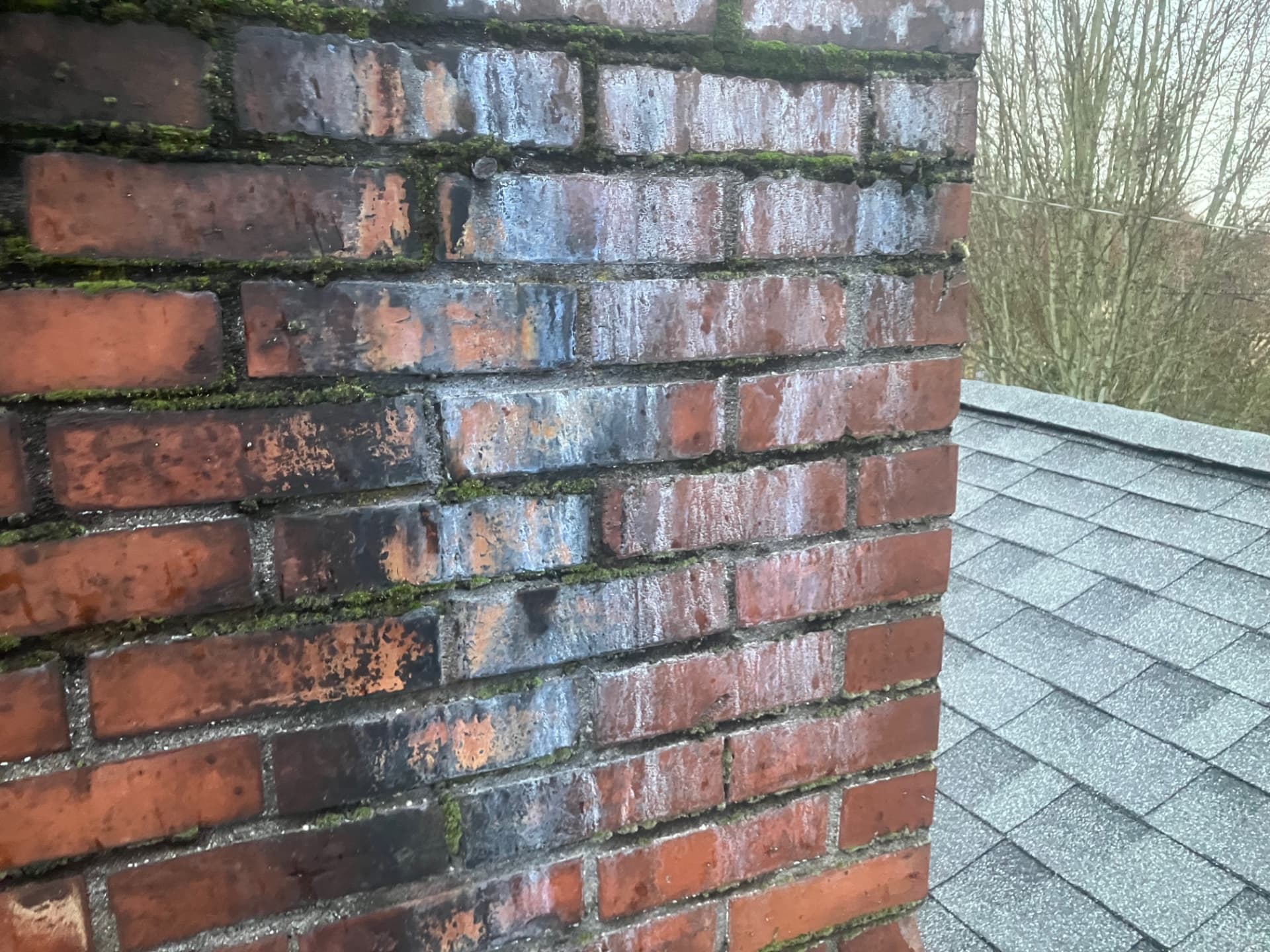
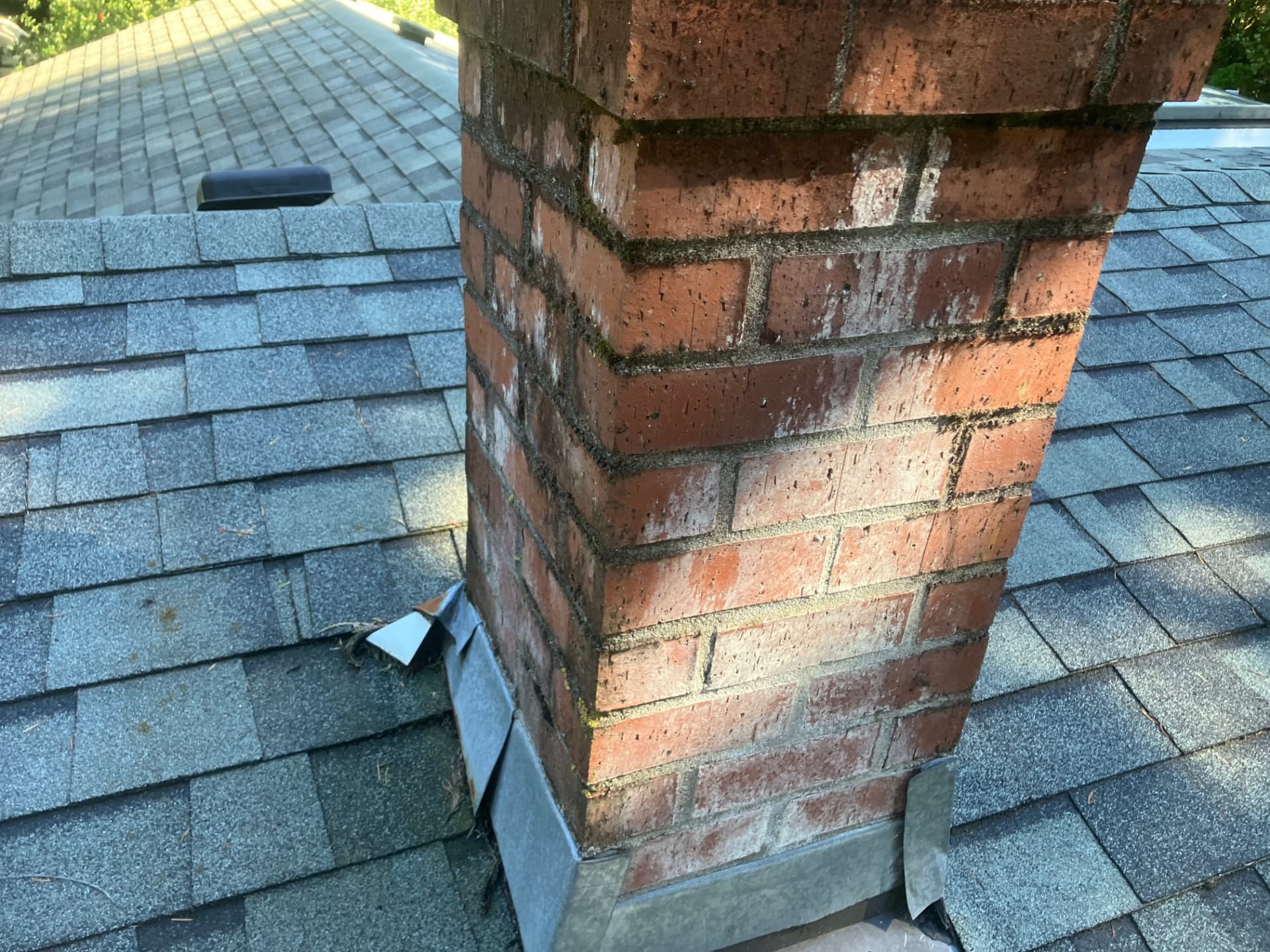
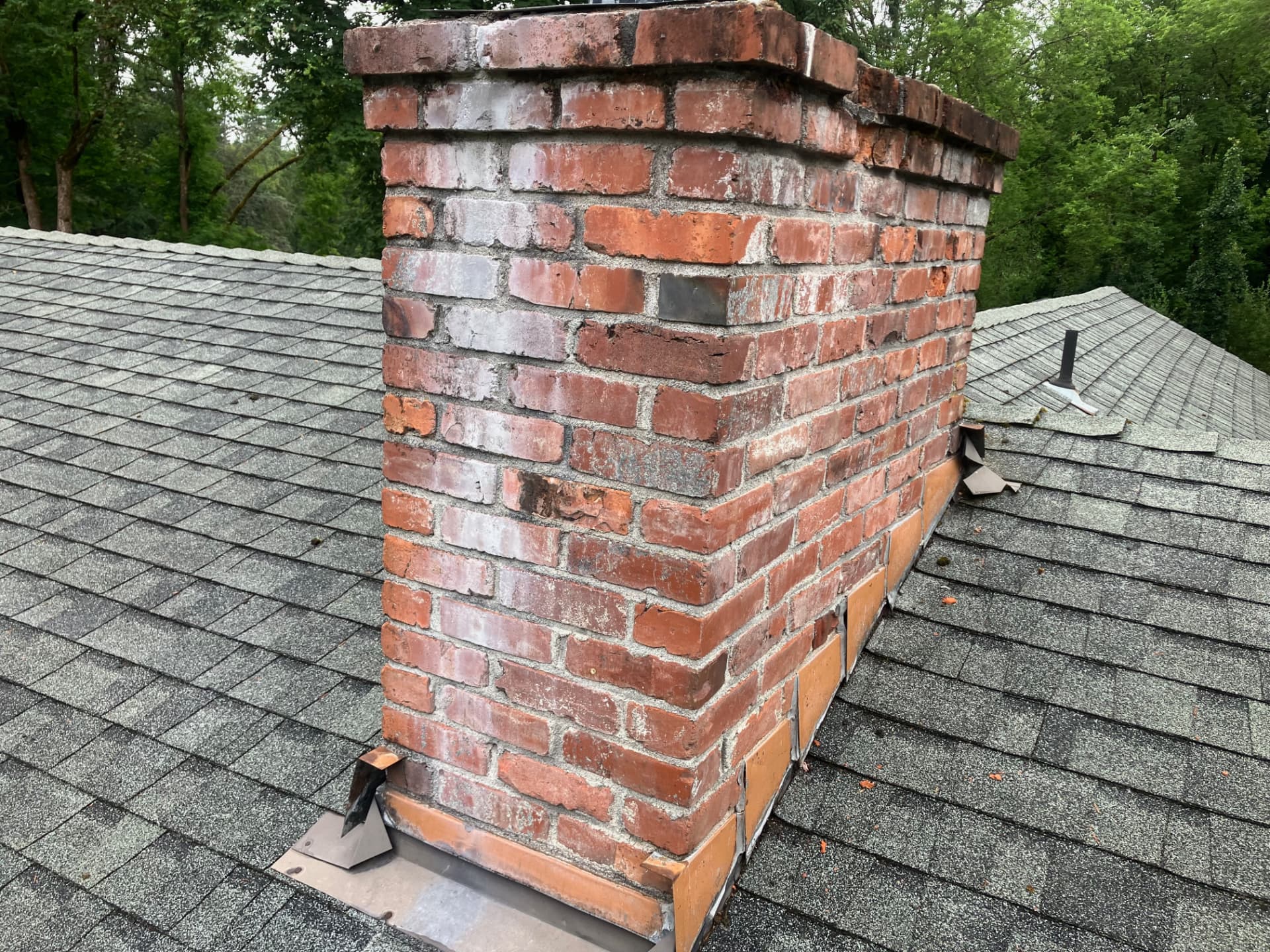
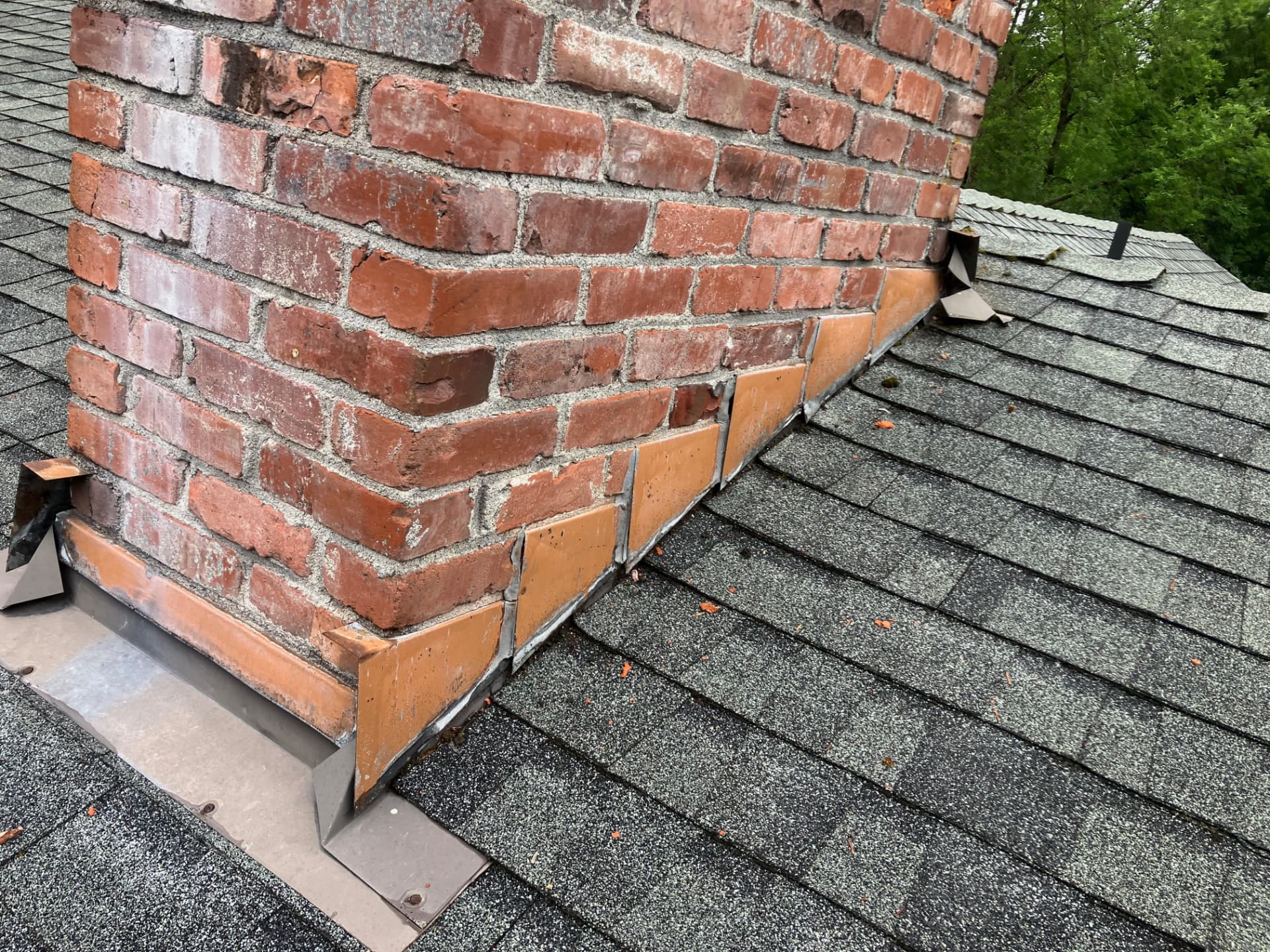
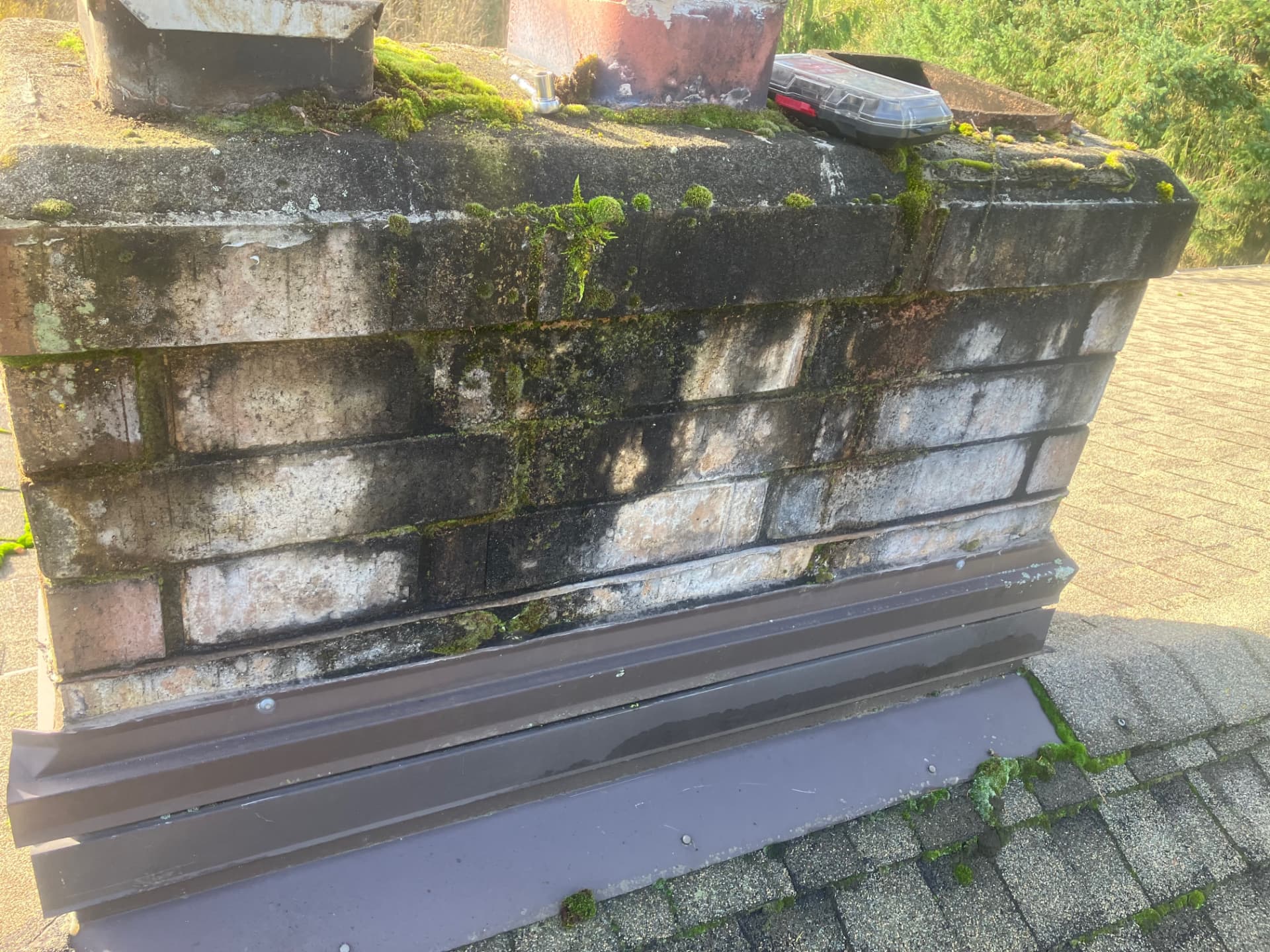
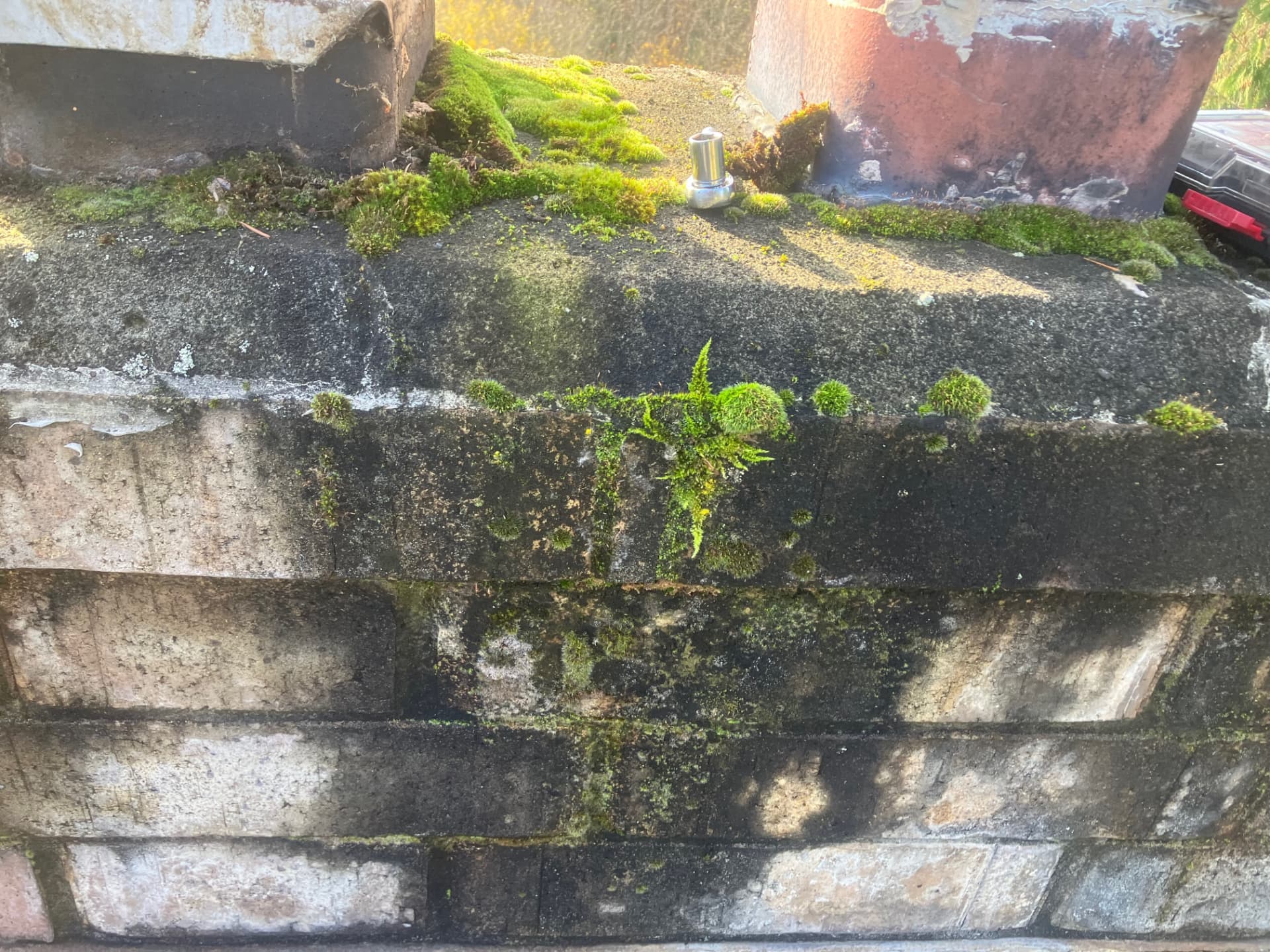
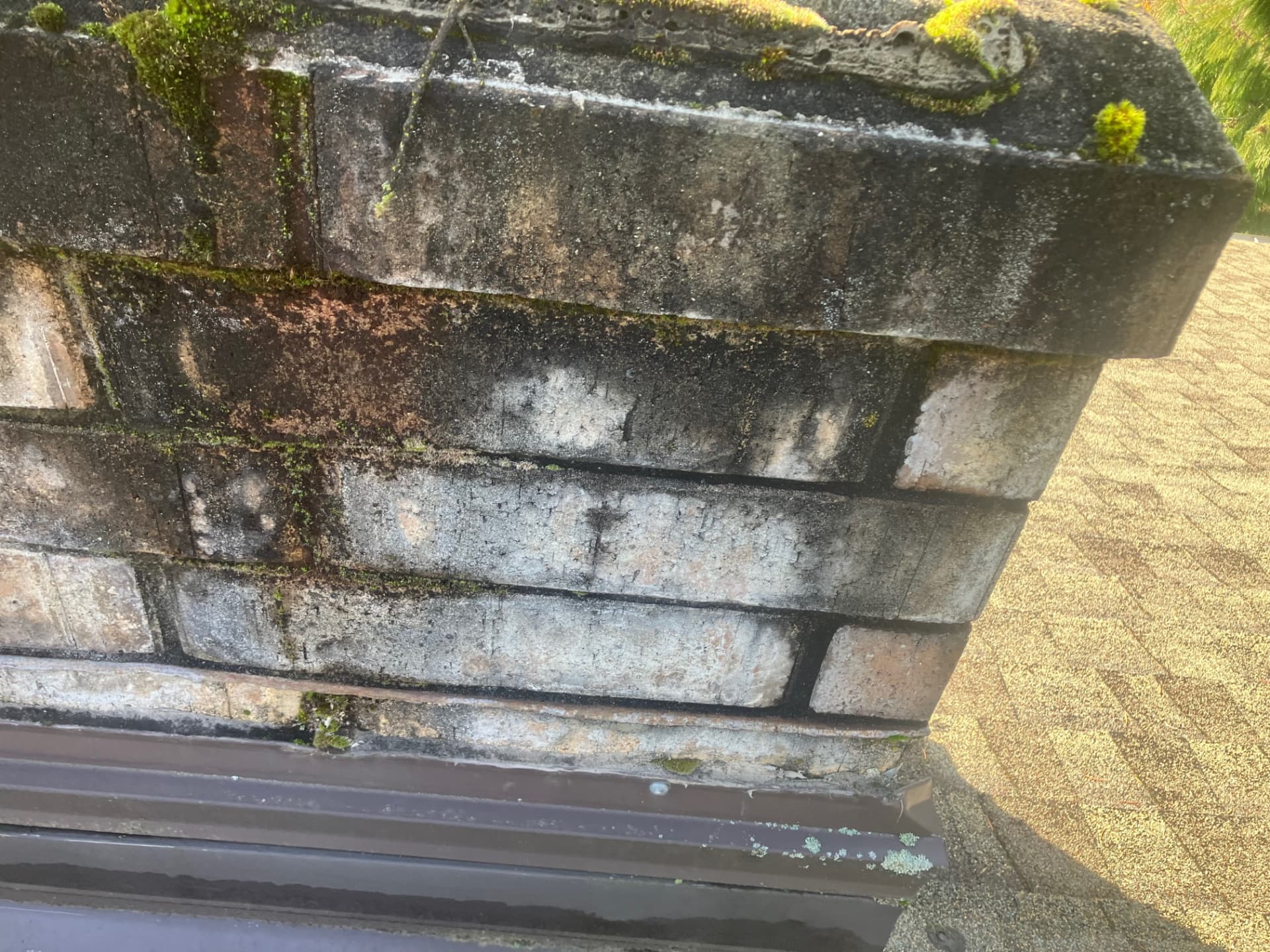
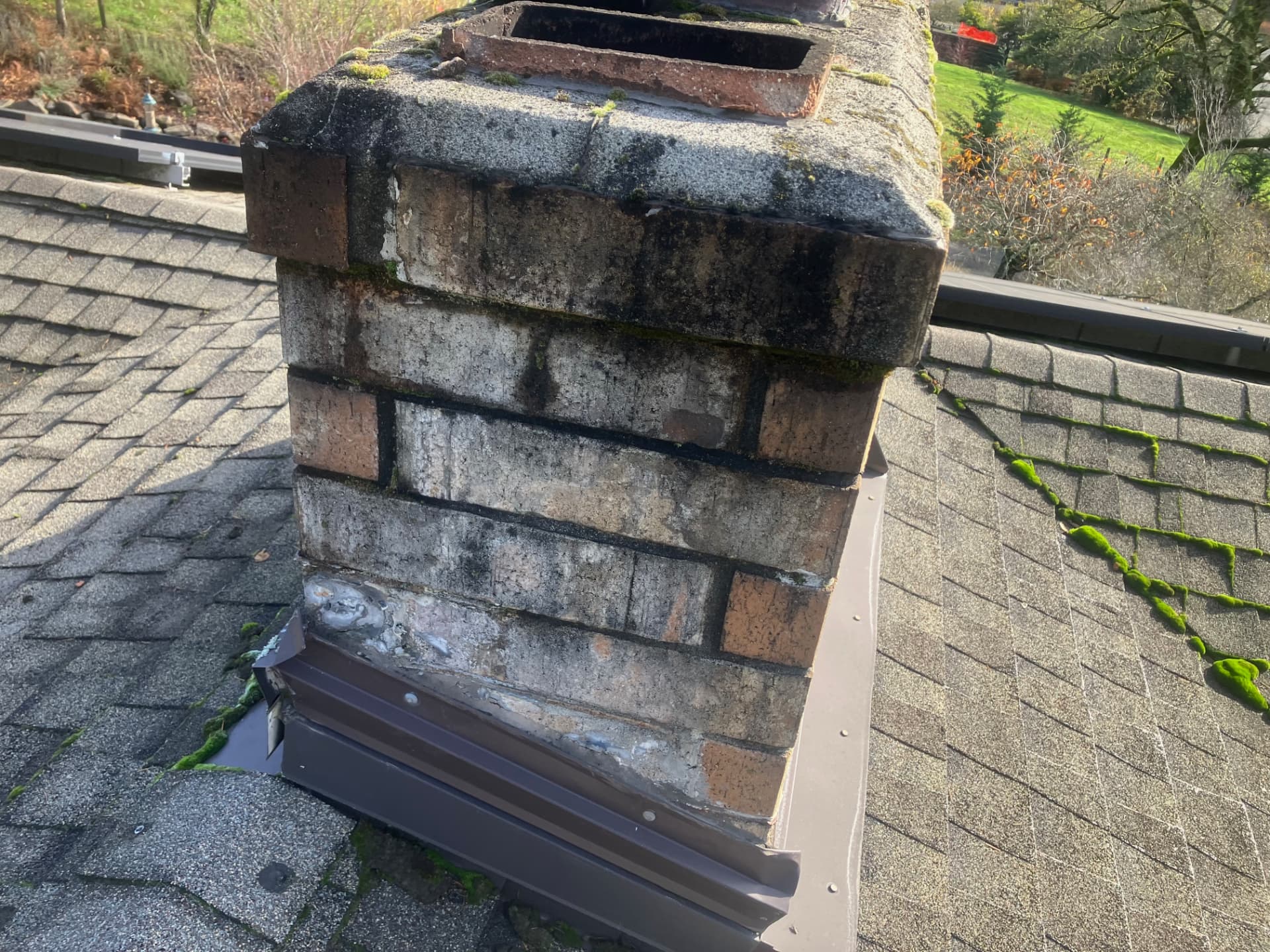
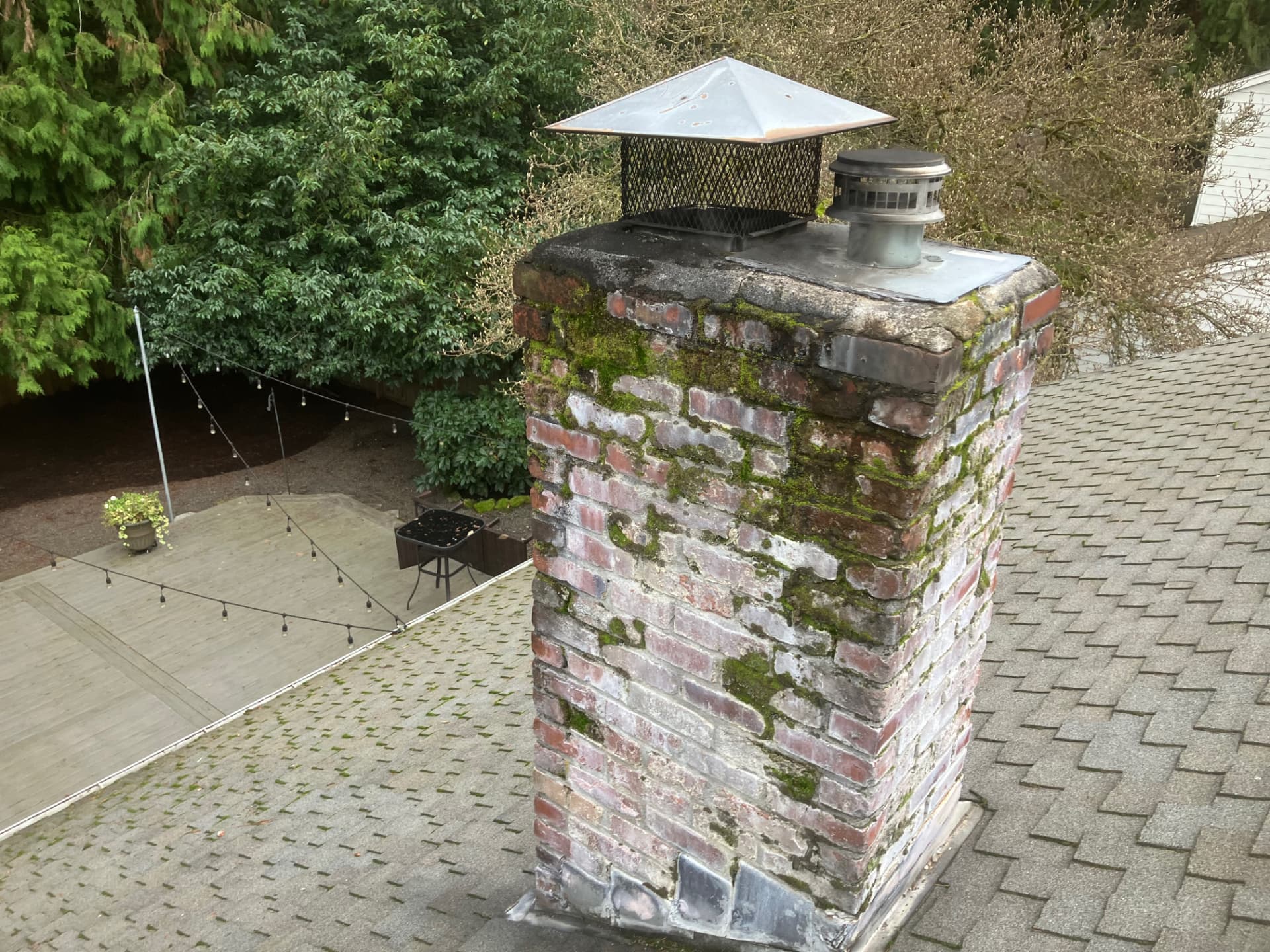
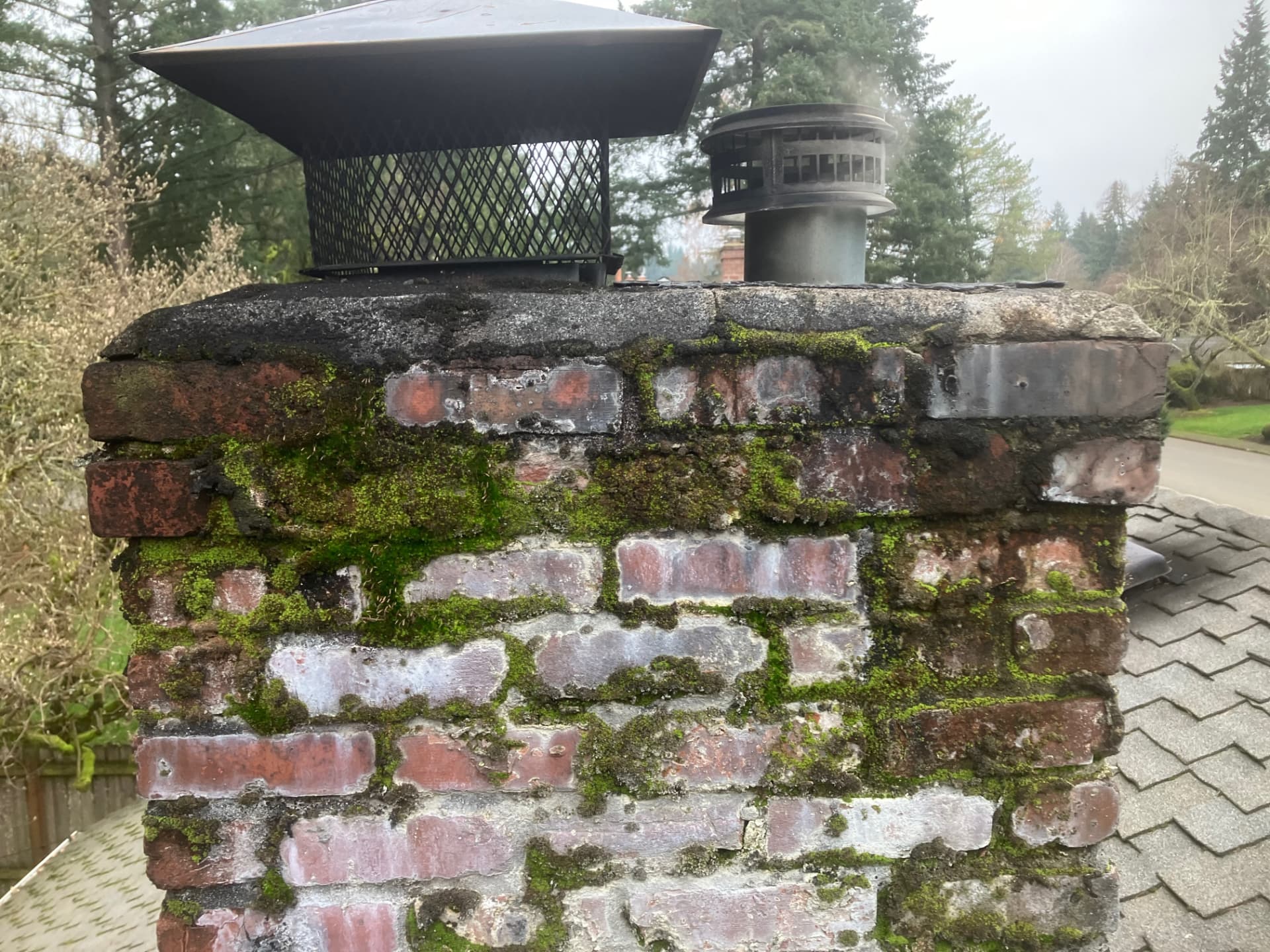
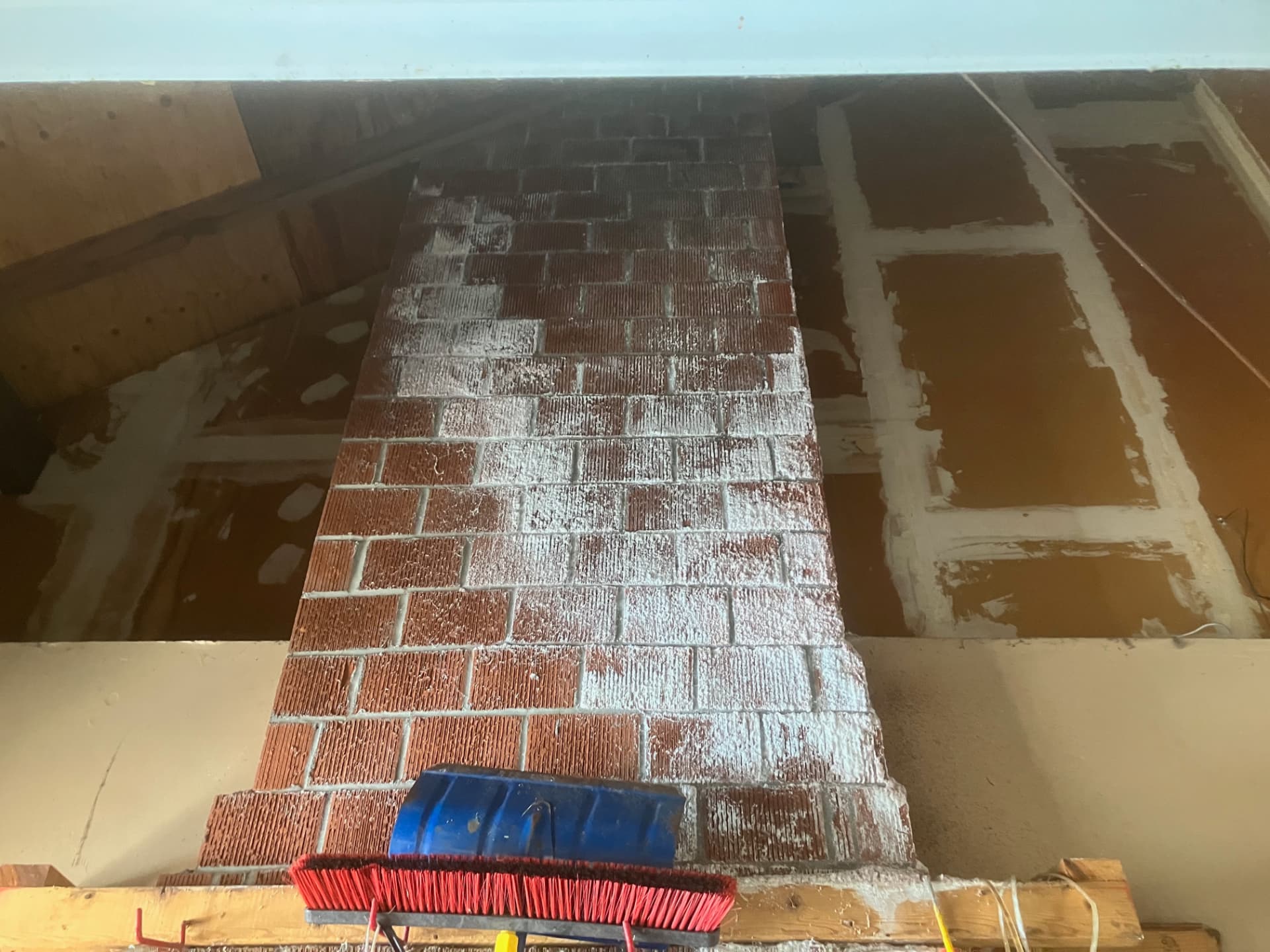
And once this happens, you may also begin to see water leaks and efflorescence stains inside the flue and firebox.
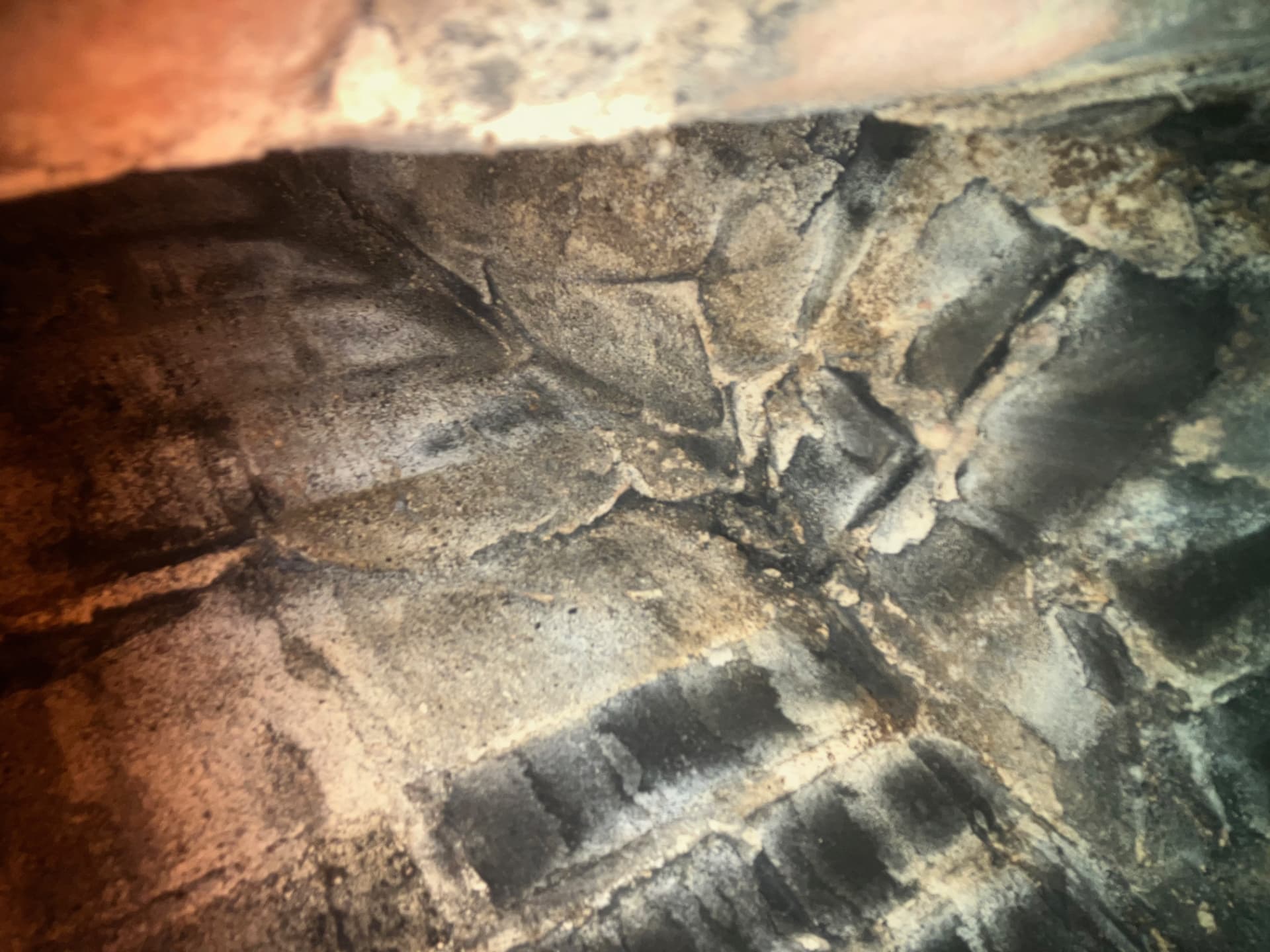
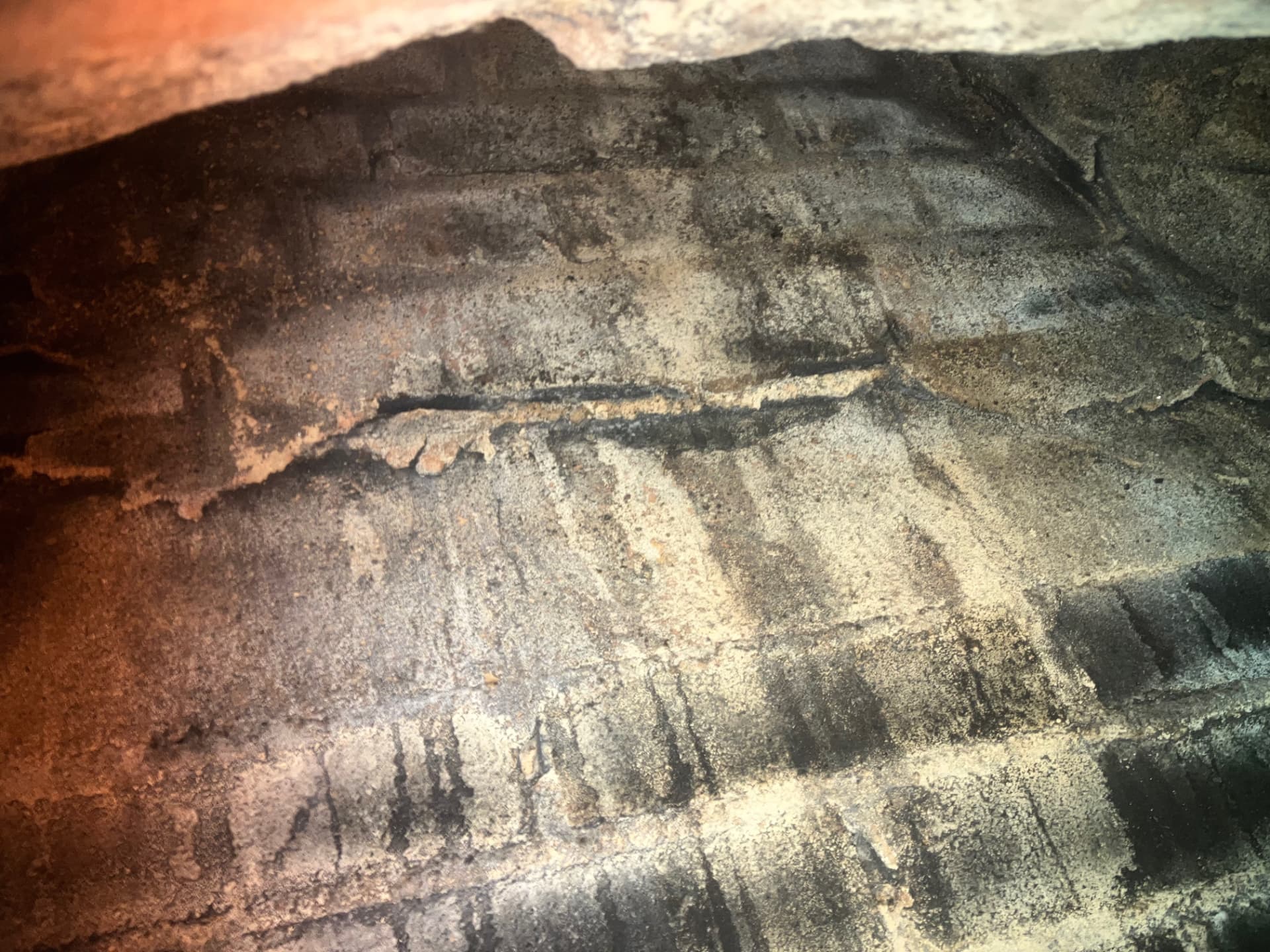
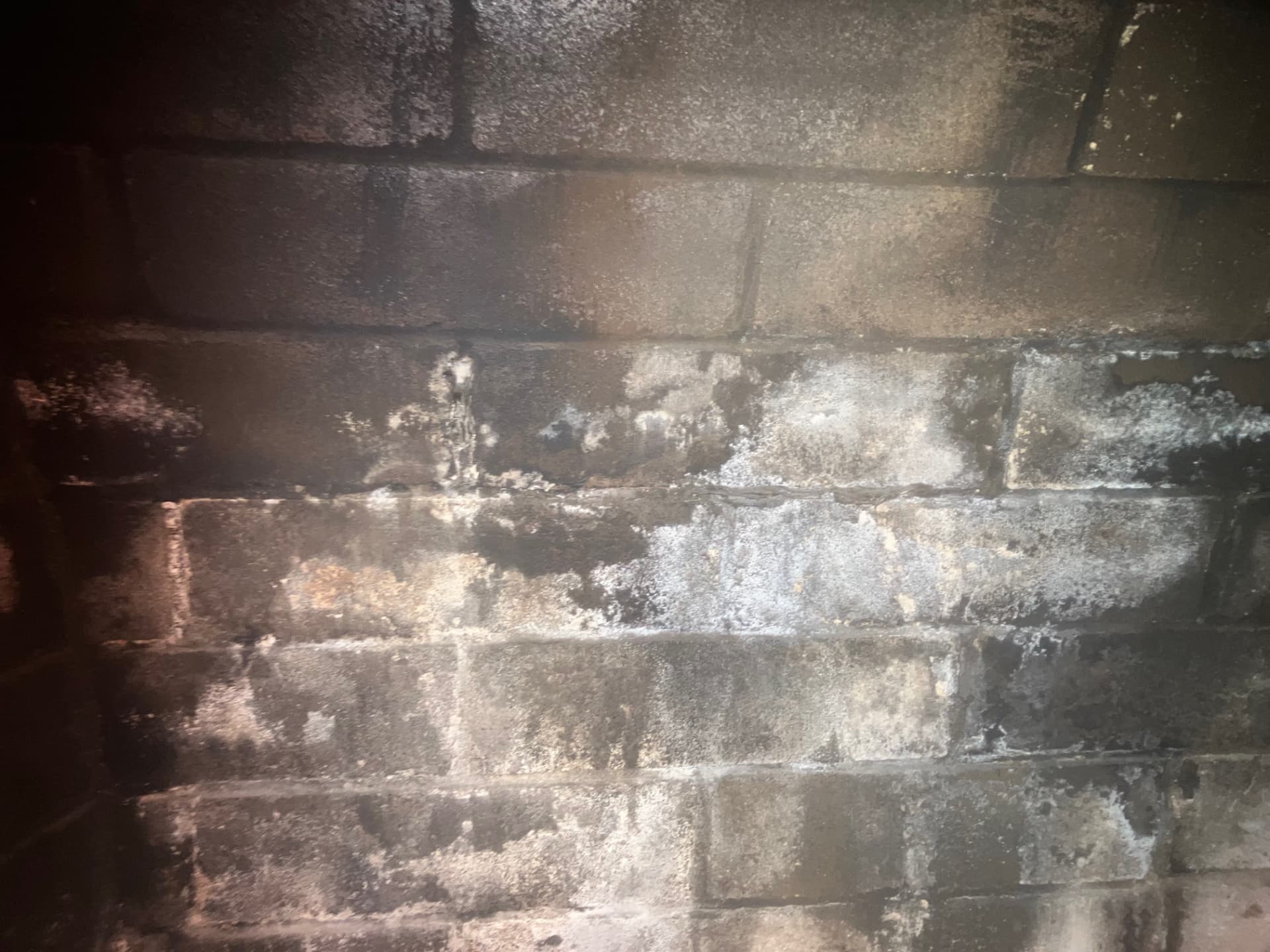
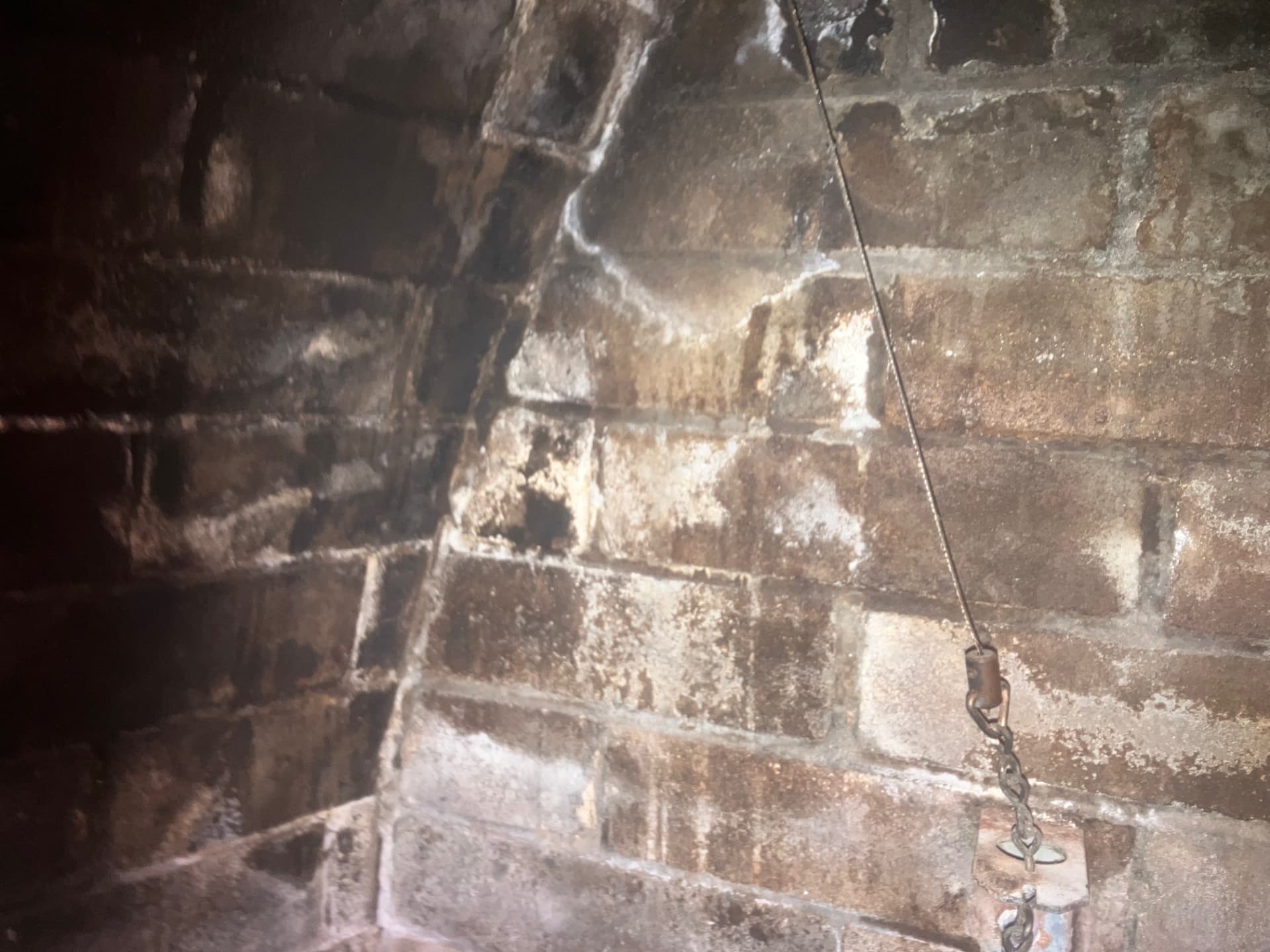
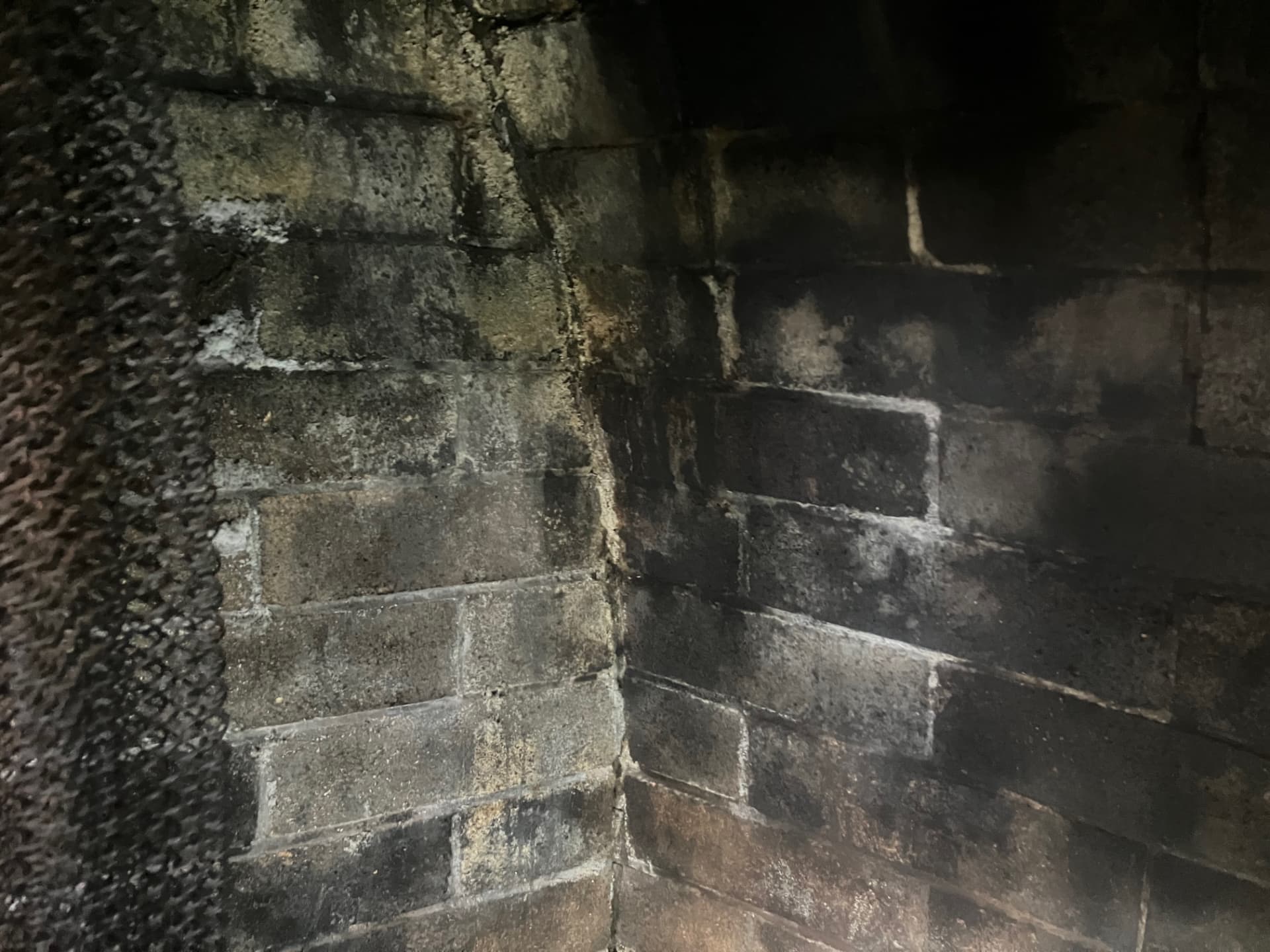
Another problem brick or stone chimneys face in areas that receive frequent rain from fall through spring is freeze-thaw damage. A freeze-thaw cycle is a destructive process in which absorbed moisture freezes, expands, and breaks apart masonry materials as temperatures repeatedly drop and rise. After thawing, the damaged masonry can fall out of the joints and onto the roof.
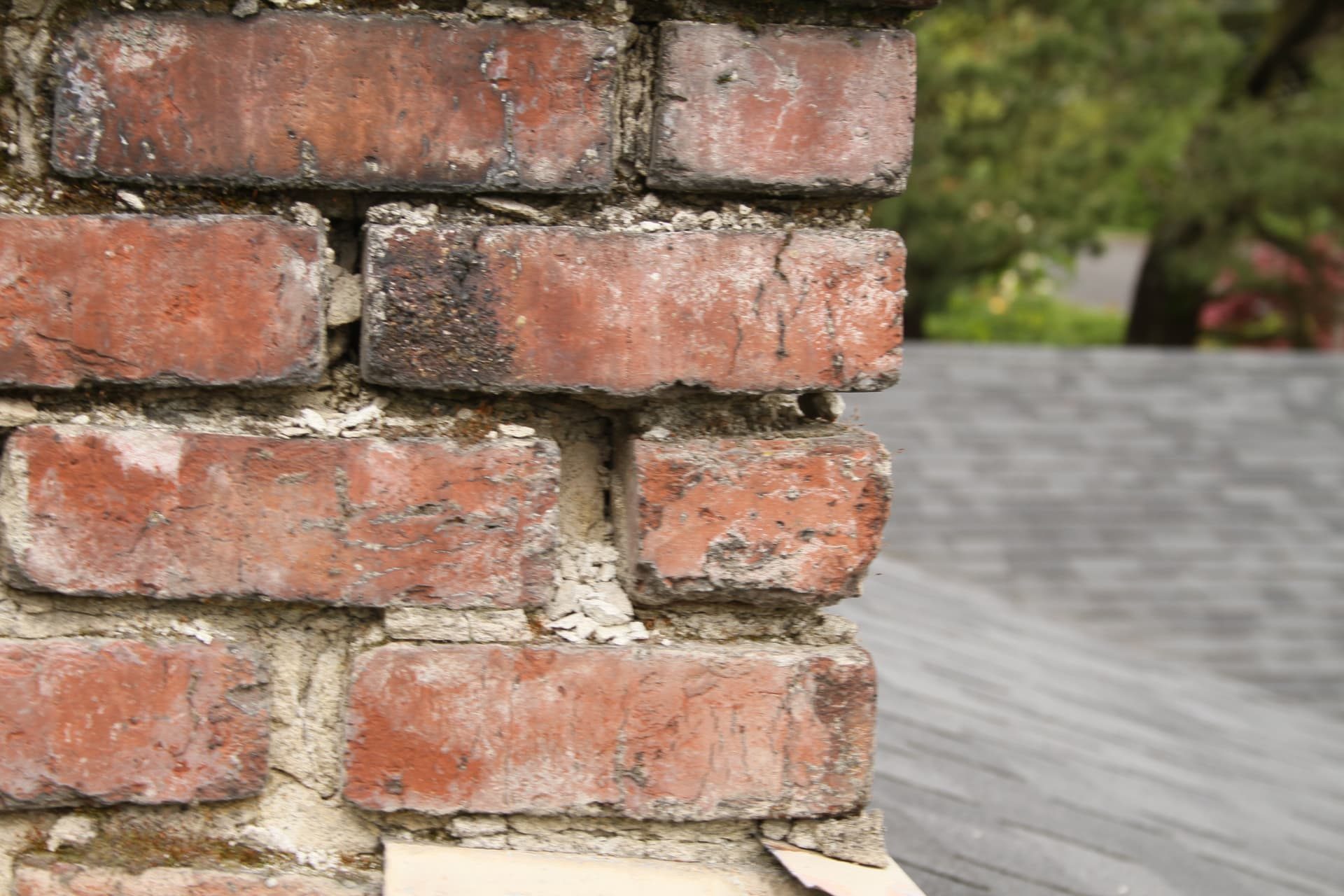
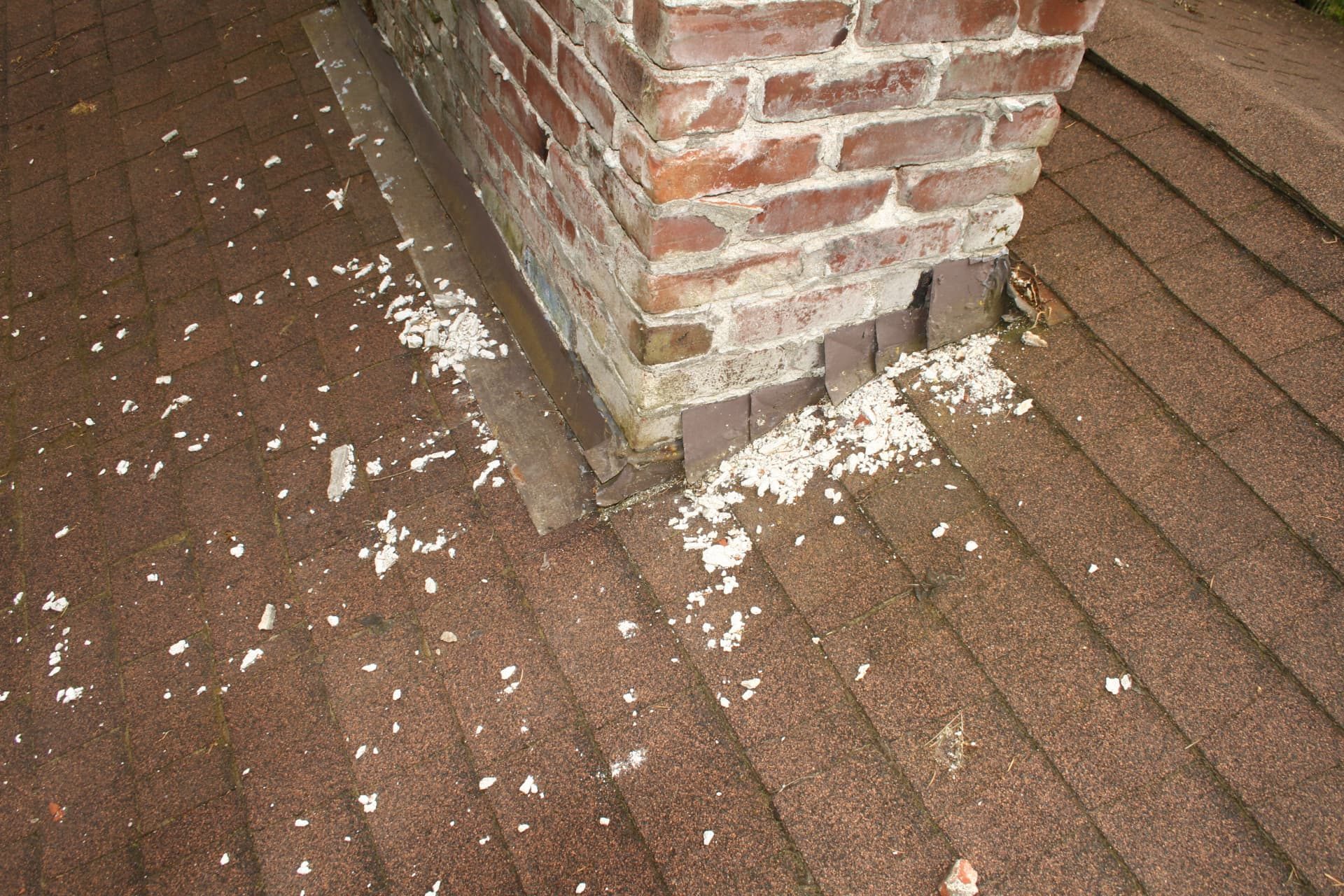
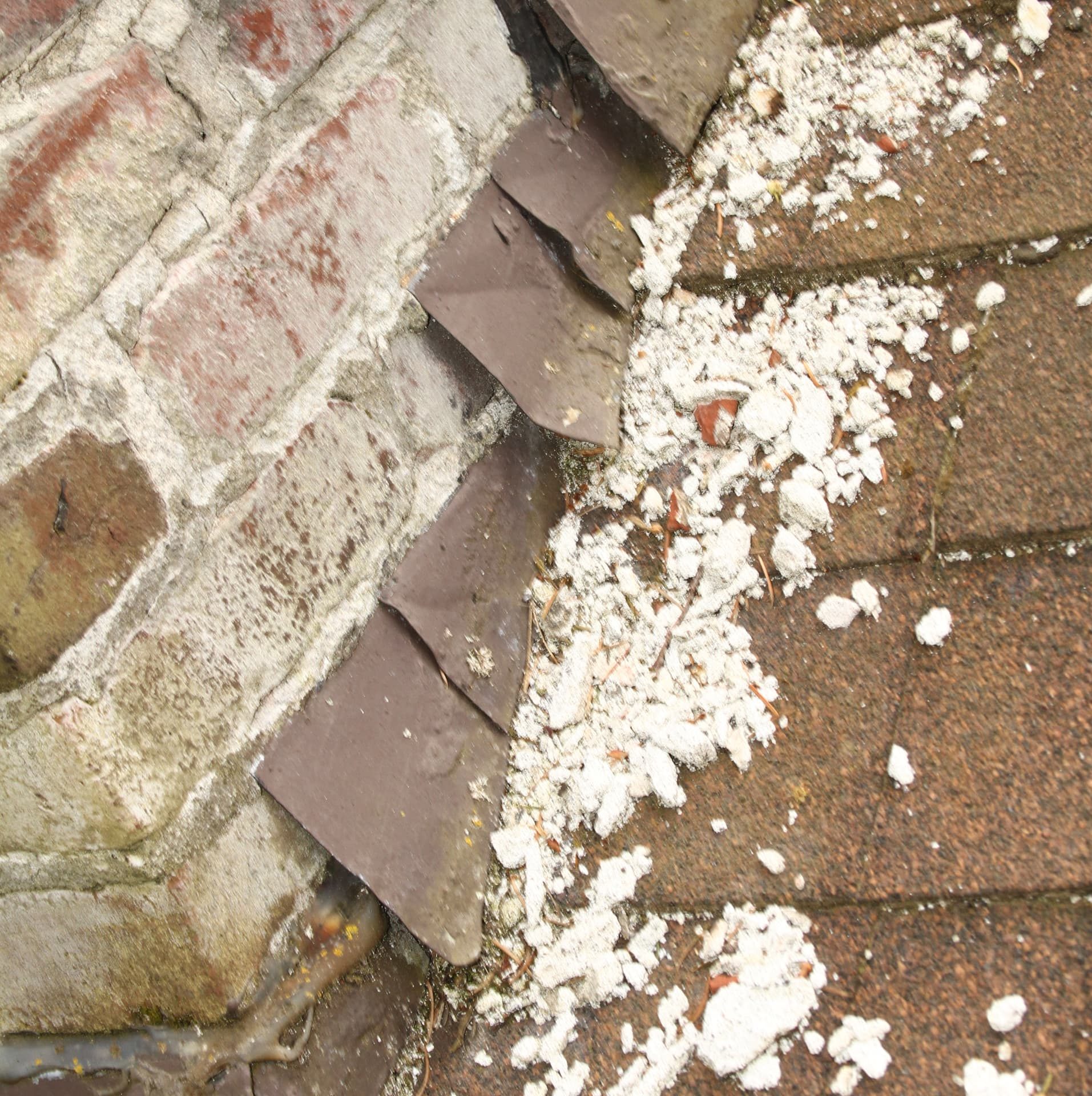
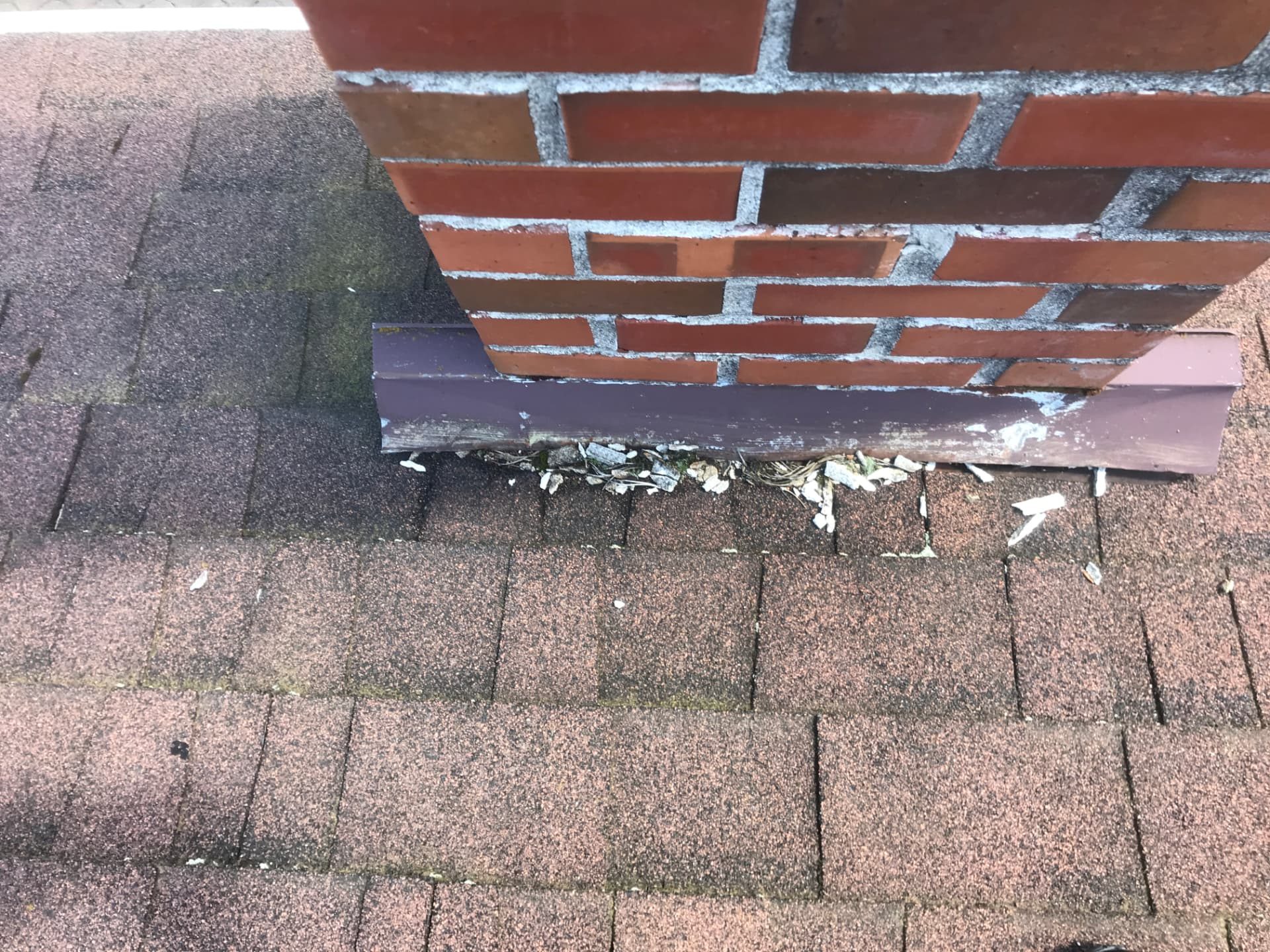
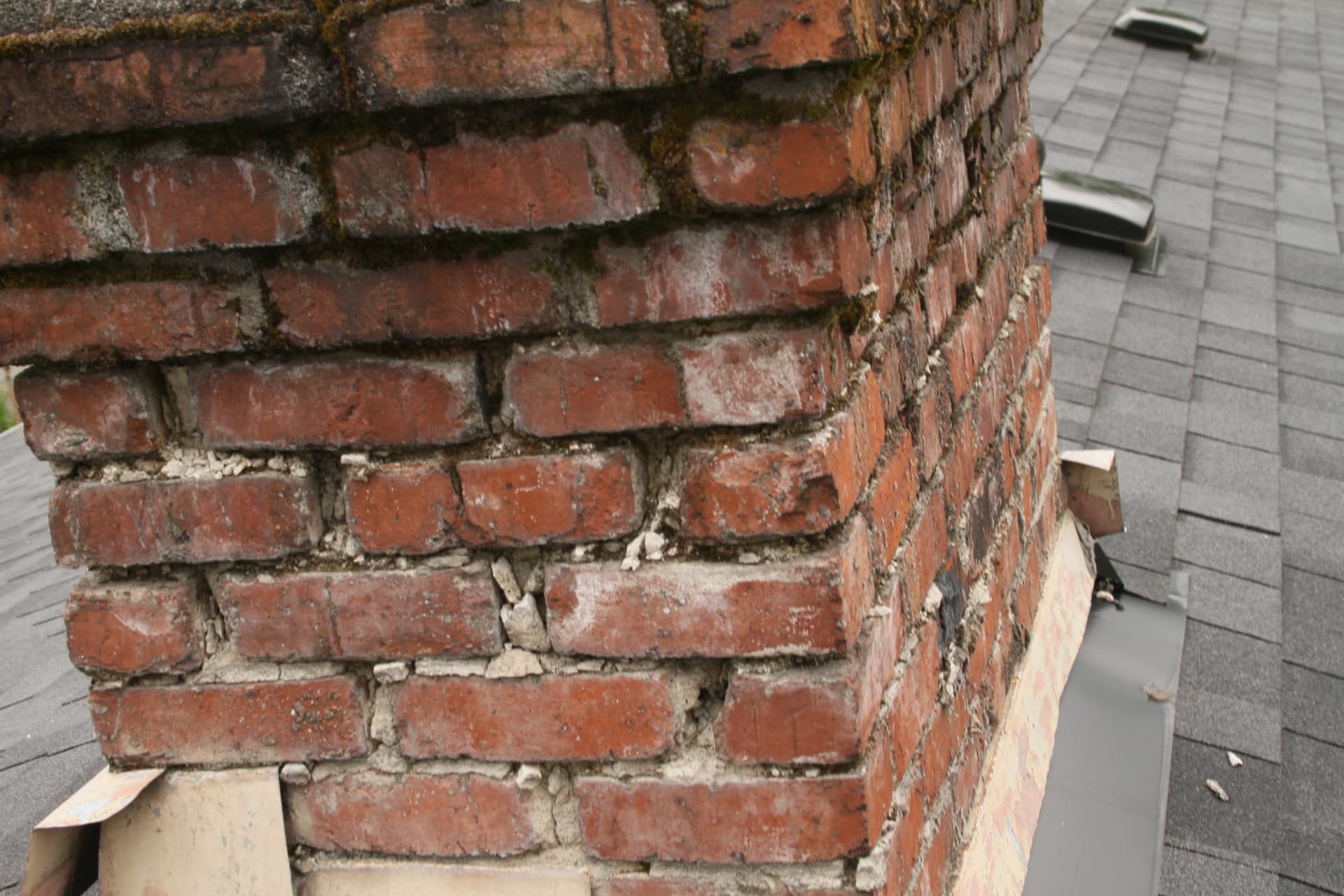
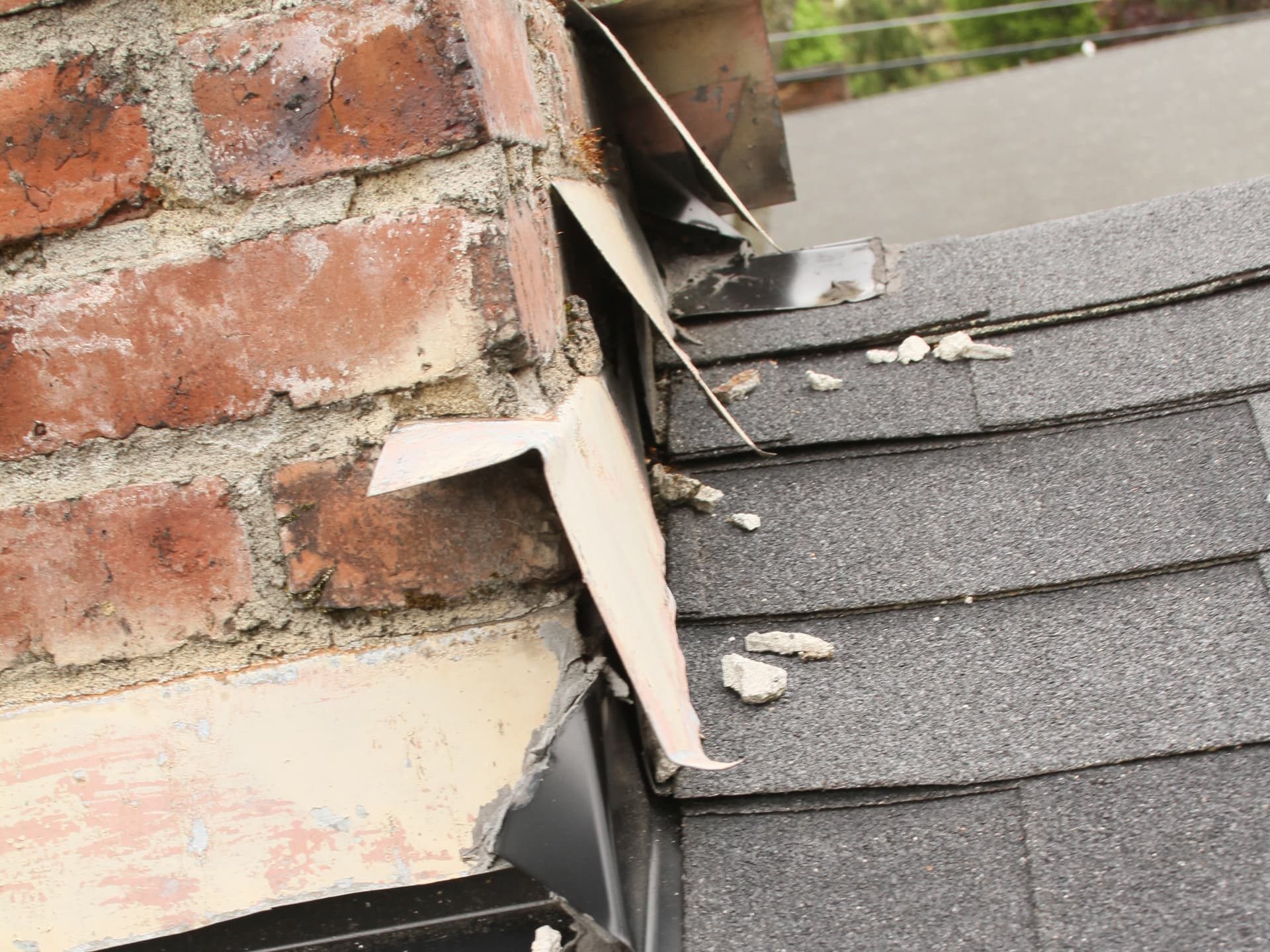
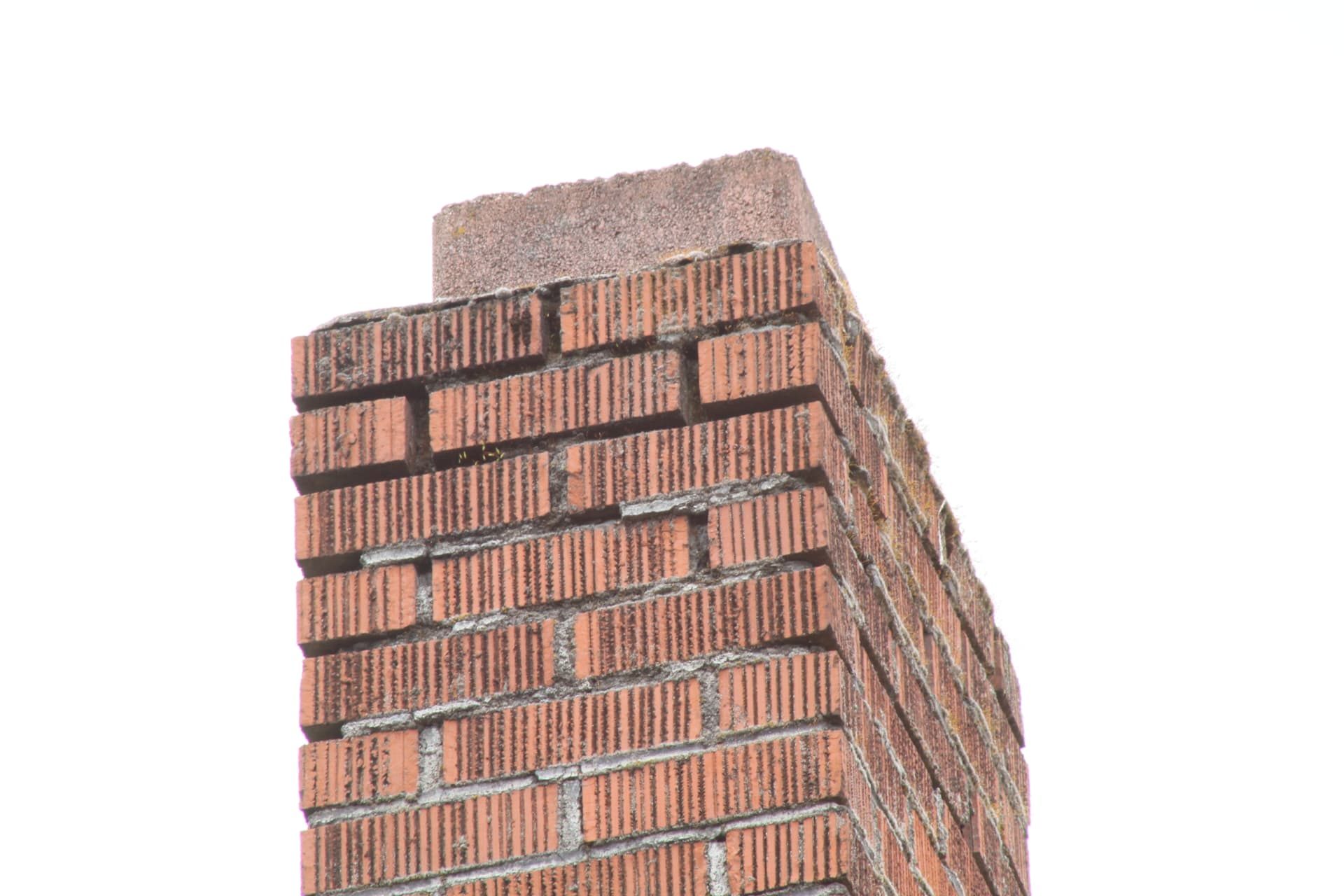
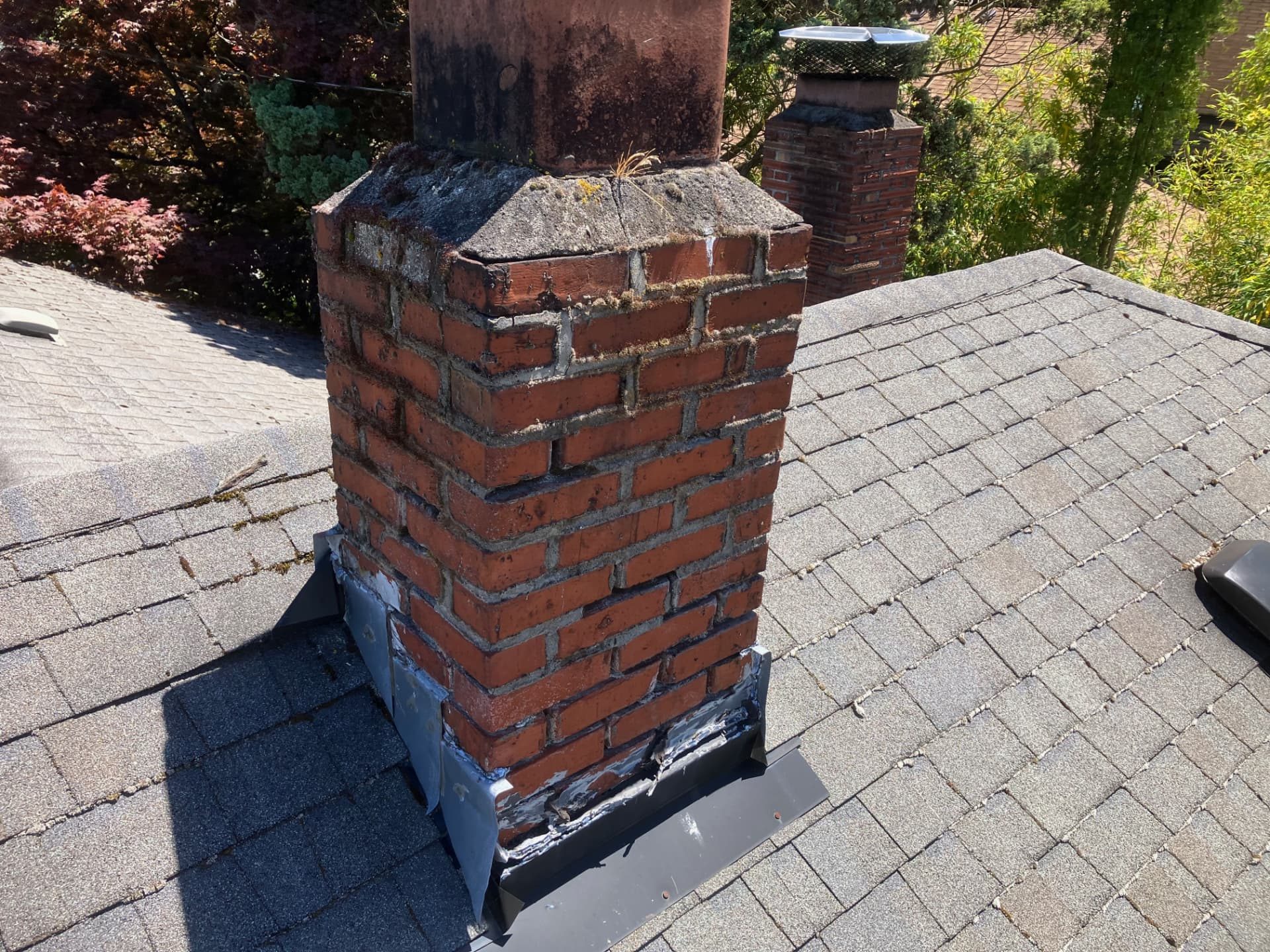
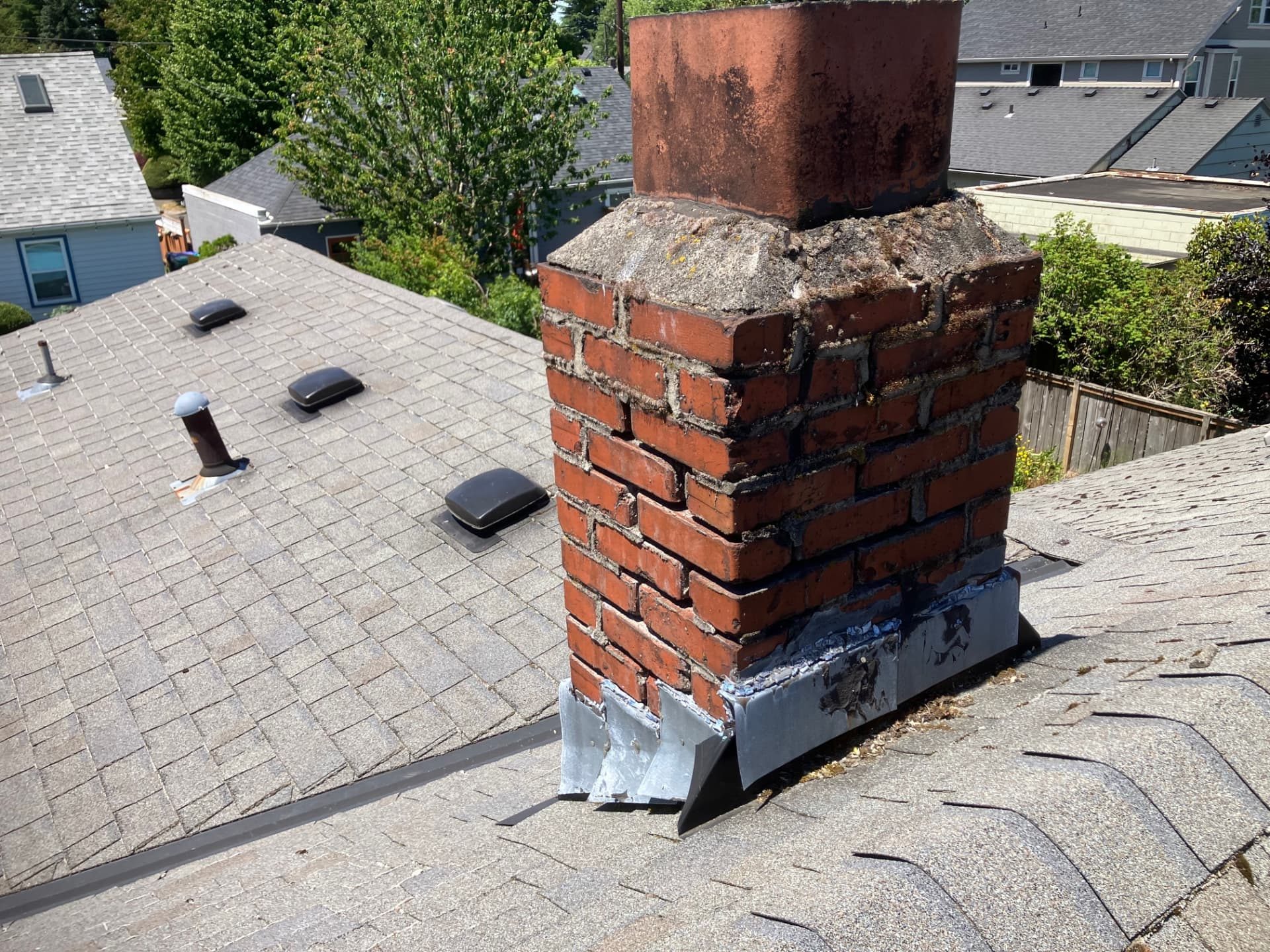
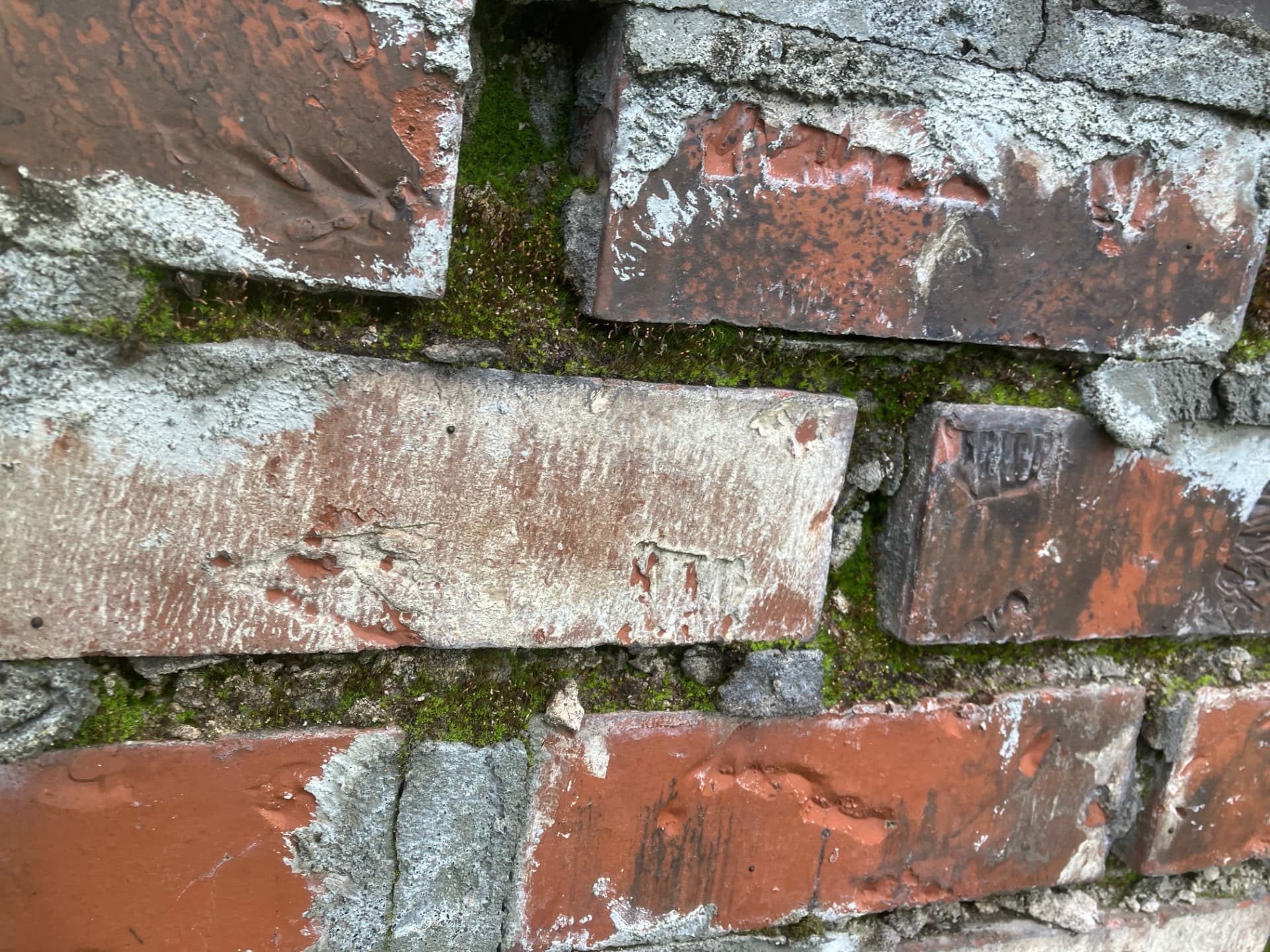
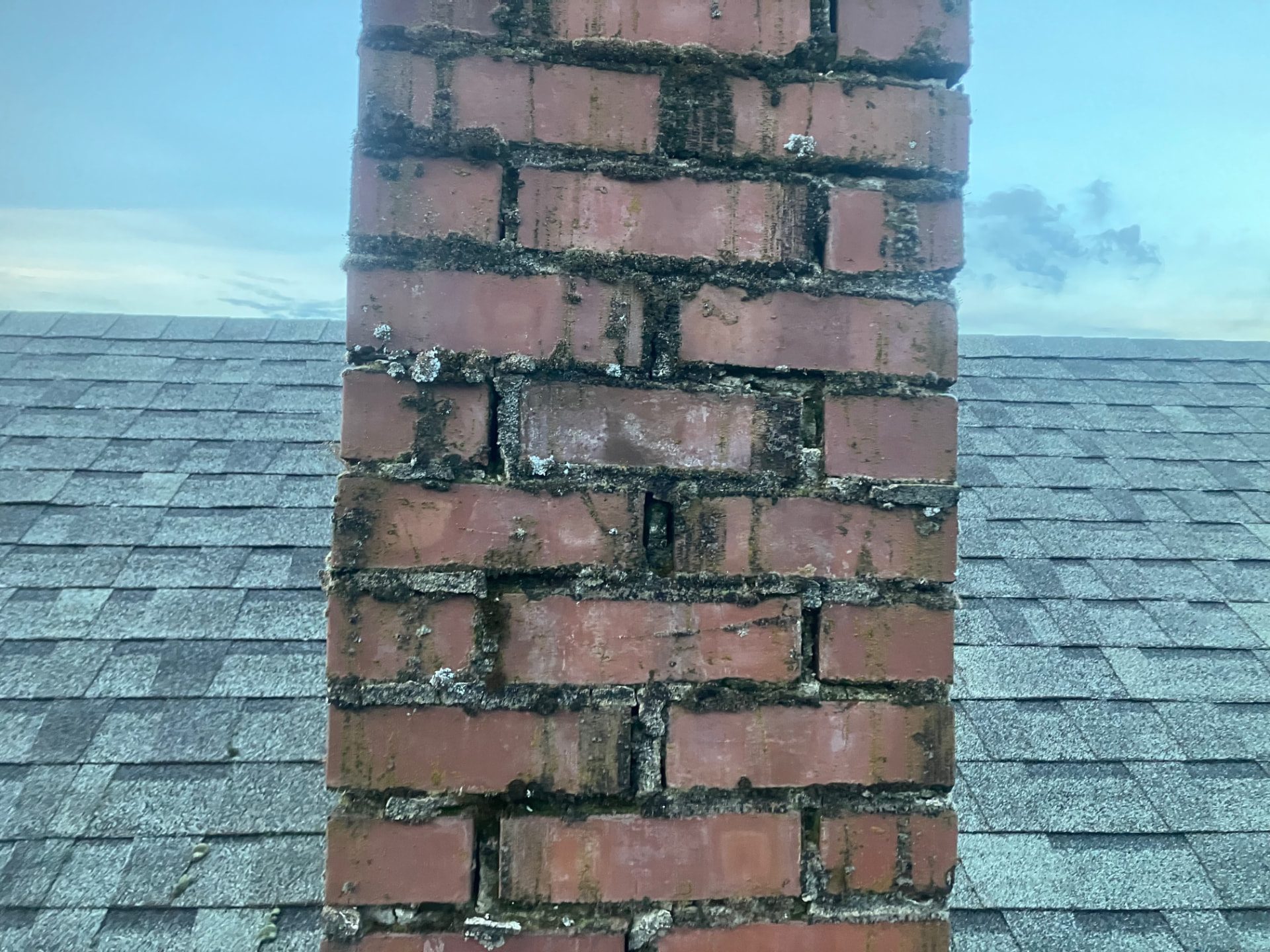
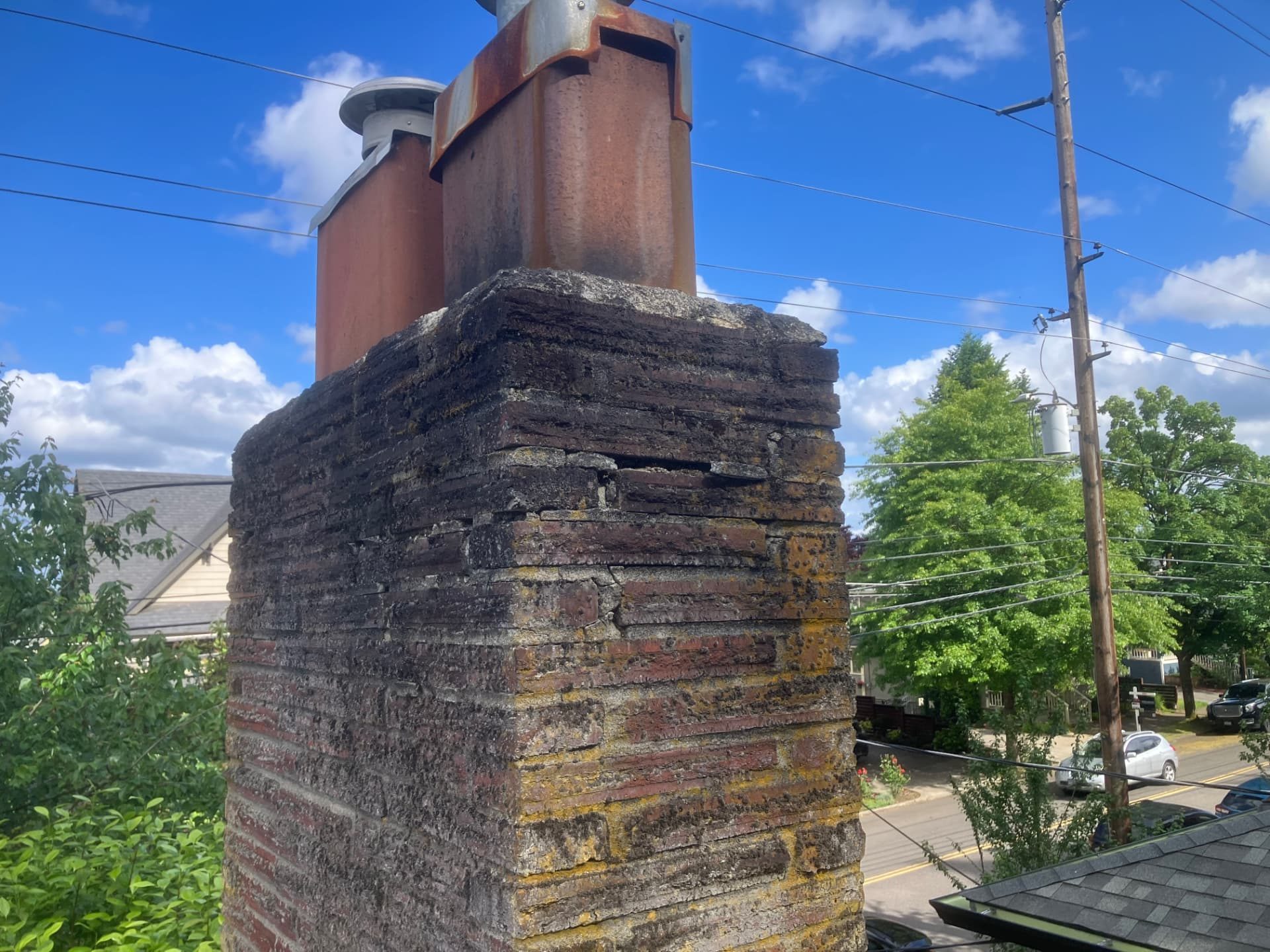
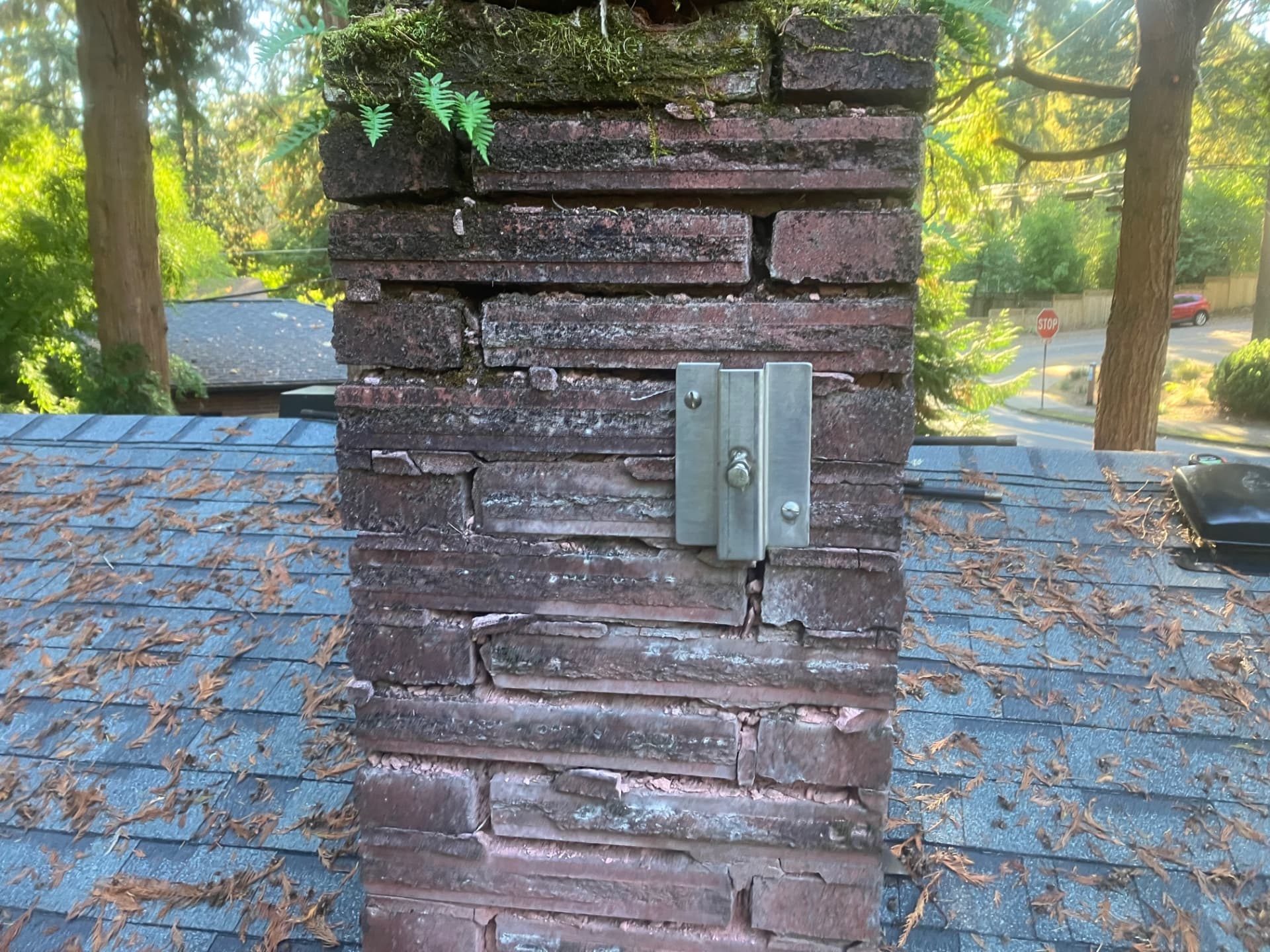
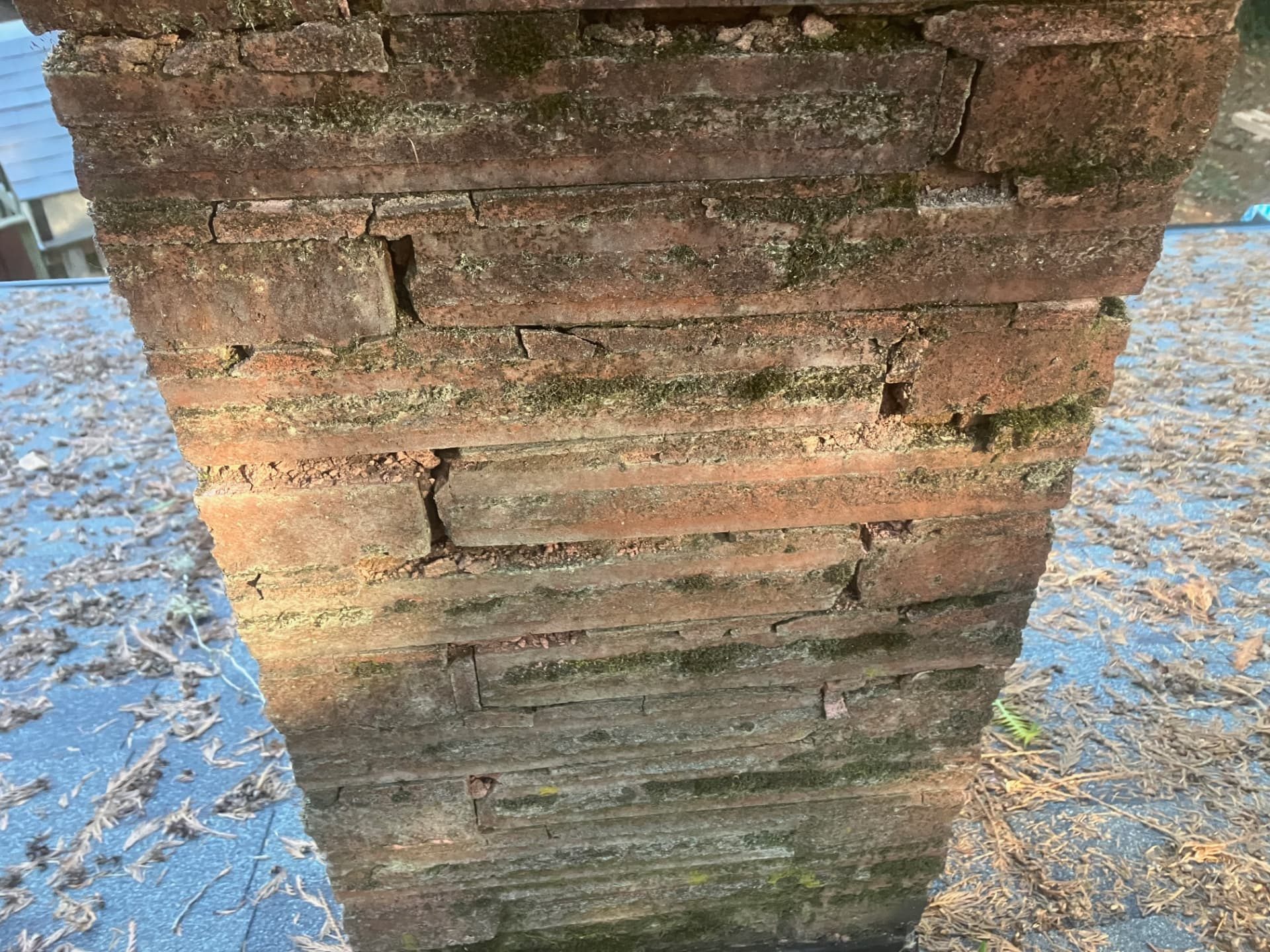
This process causes the mortar joints to deteriorate and widen due to weather exposure and continued moss growth. This allows more water to penetrate the chimney and further compromises its structural integrity.
Photos to come: Freeze thaw folder — freeze_thaw_degredation_01.jpg through freeze_thaw_degredation_09.jpg
This can also cause water damage beneath the roof, in the attic area where the chimney passes through, as well as damage to the ceilings inside the house.
Photos to come: Freeze thaw folder, “water damage inside” — you listed freeze_thaw_degredation_01–09 again, so please send these under their real file names
Stone-faced chimneys are also highly susceptible to leaks in the Portland area because stone does not retain and shed water as effectively as clay brick. As a result, stone-faced chimneys often begin growing moss and leaking long before clay brick chimneys do.
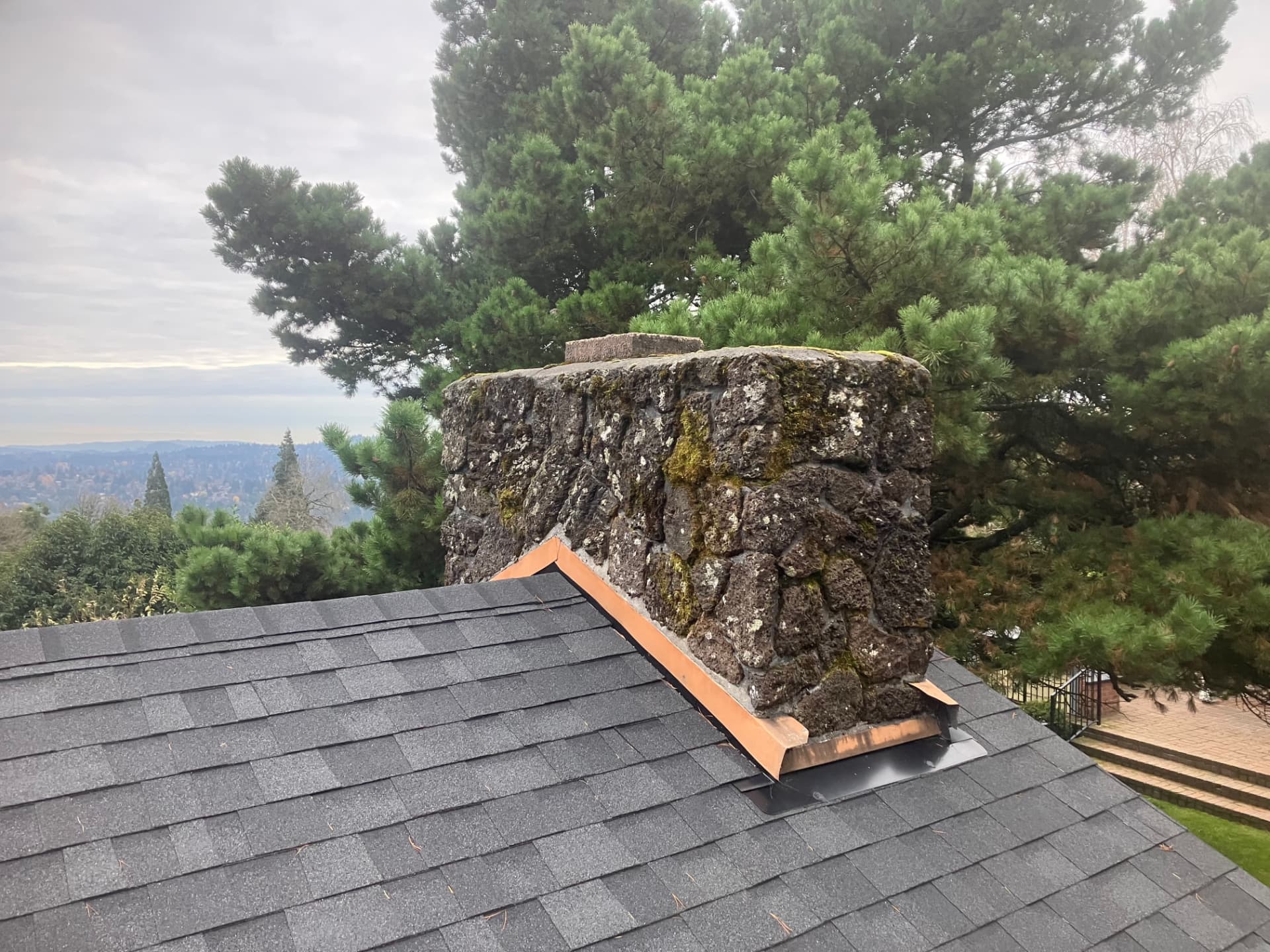
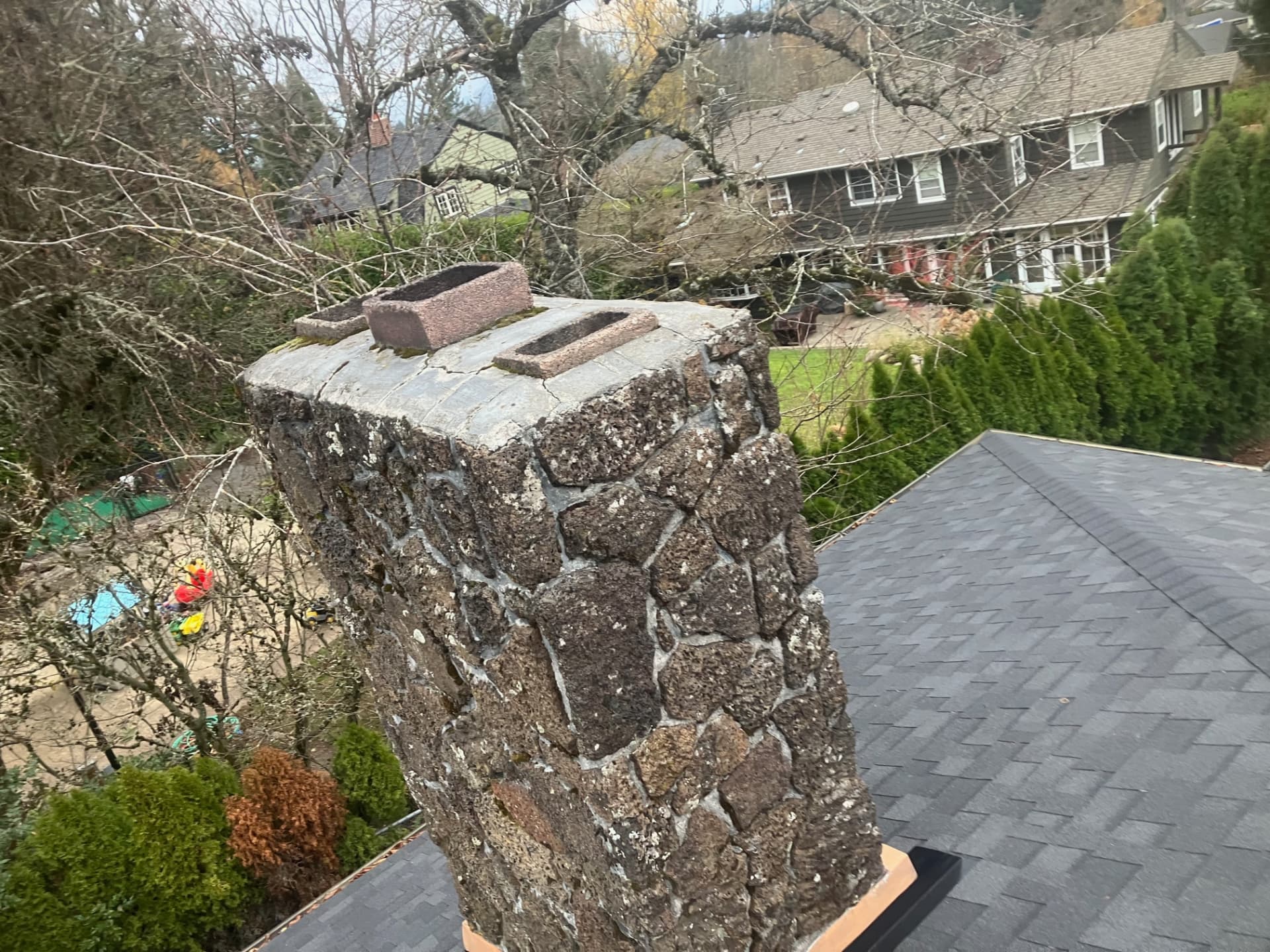
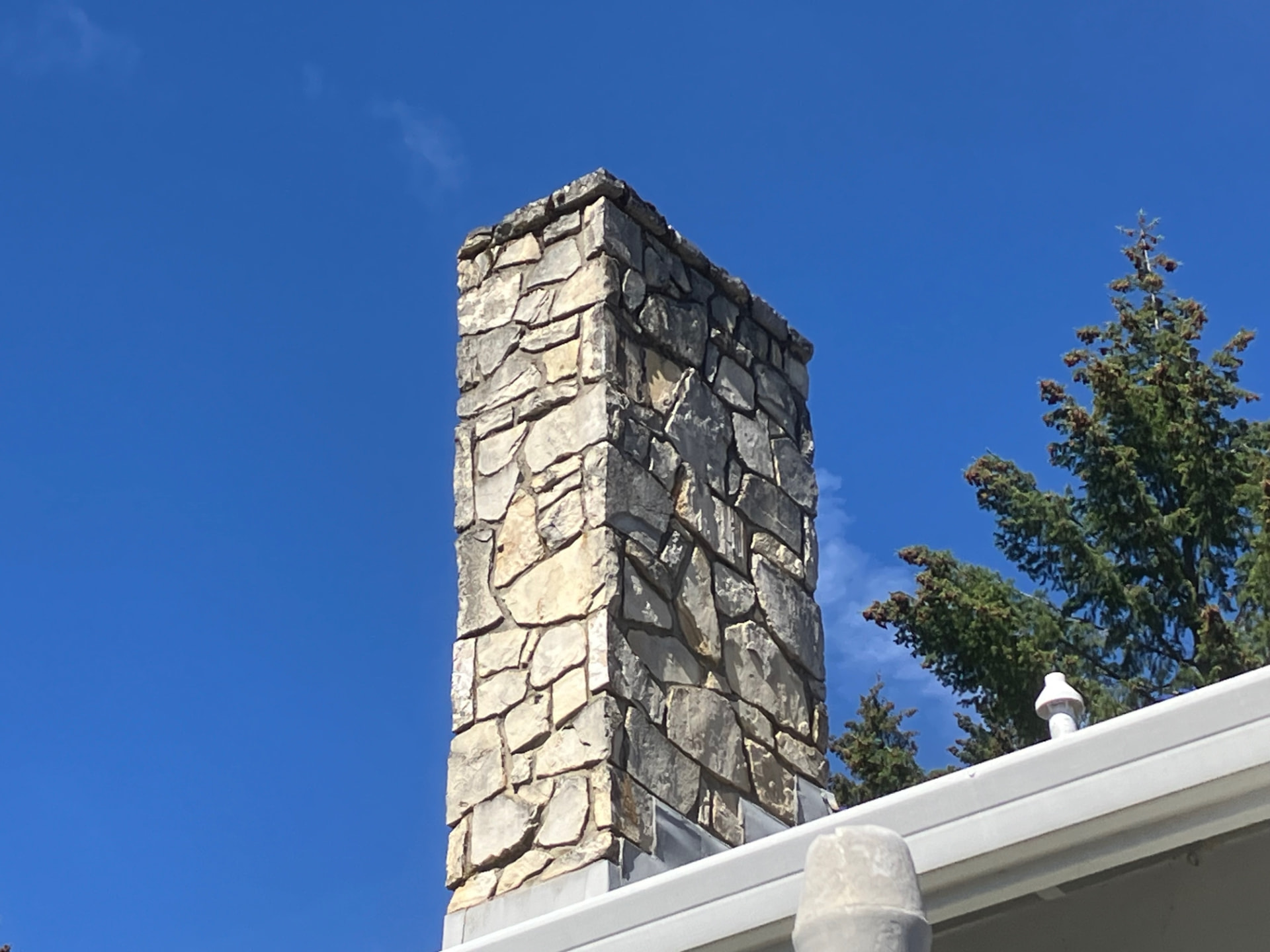
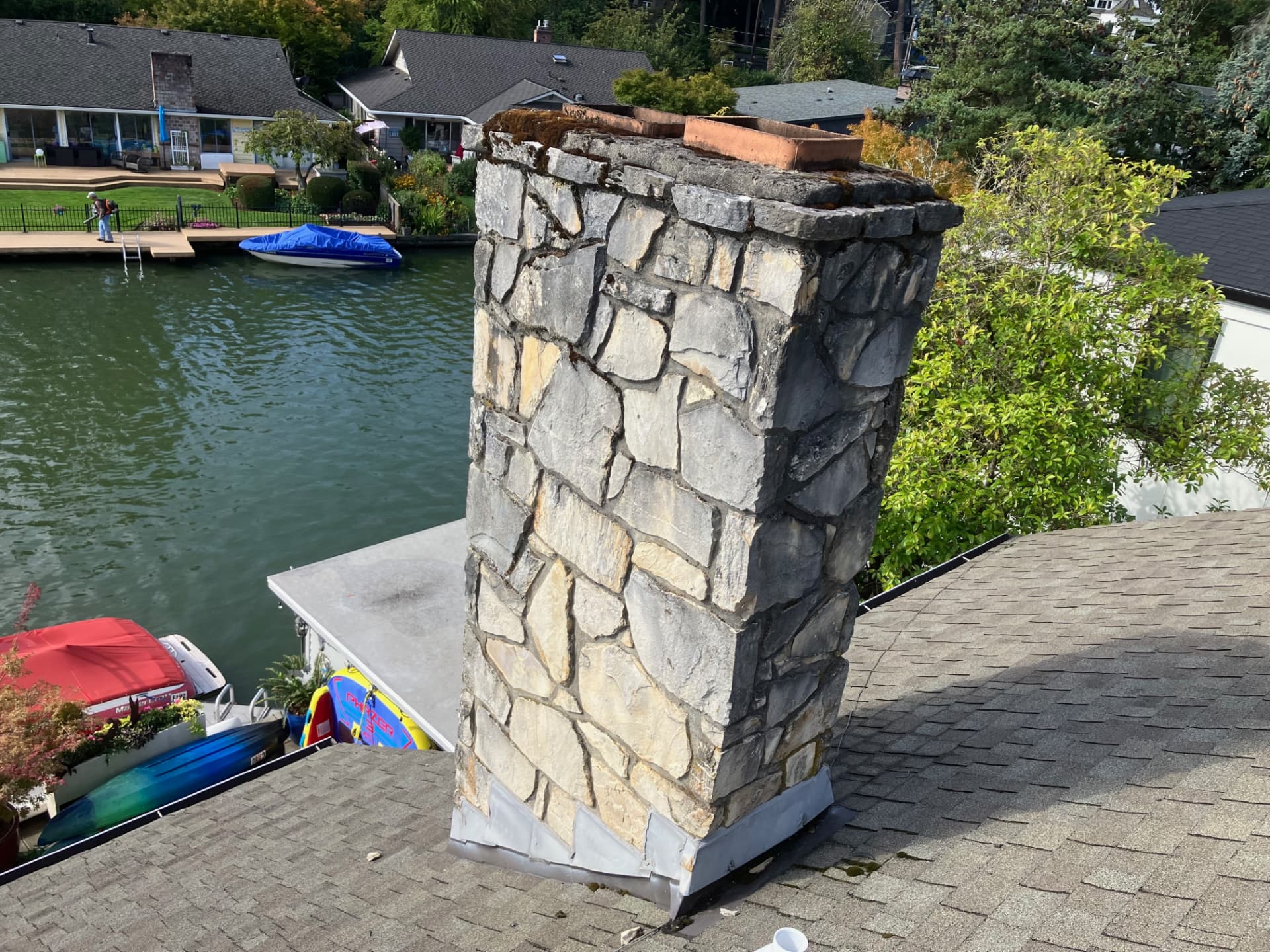
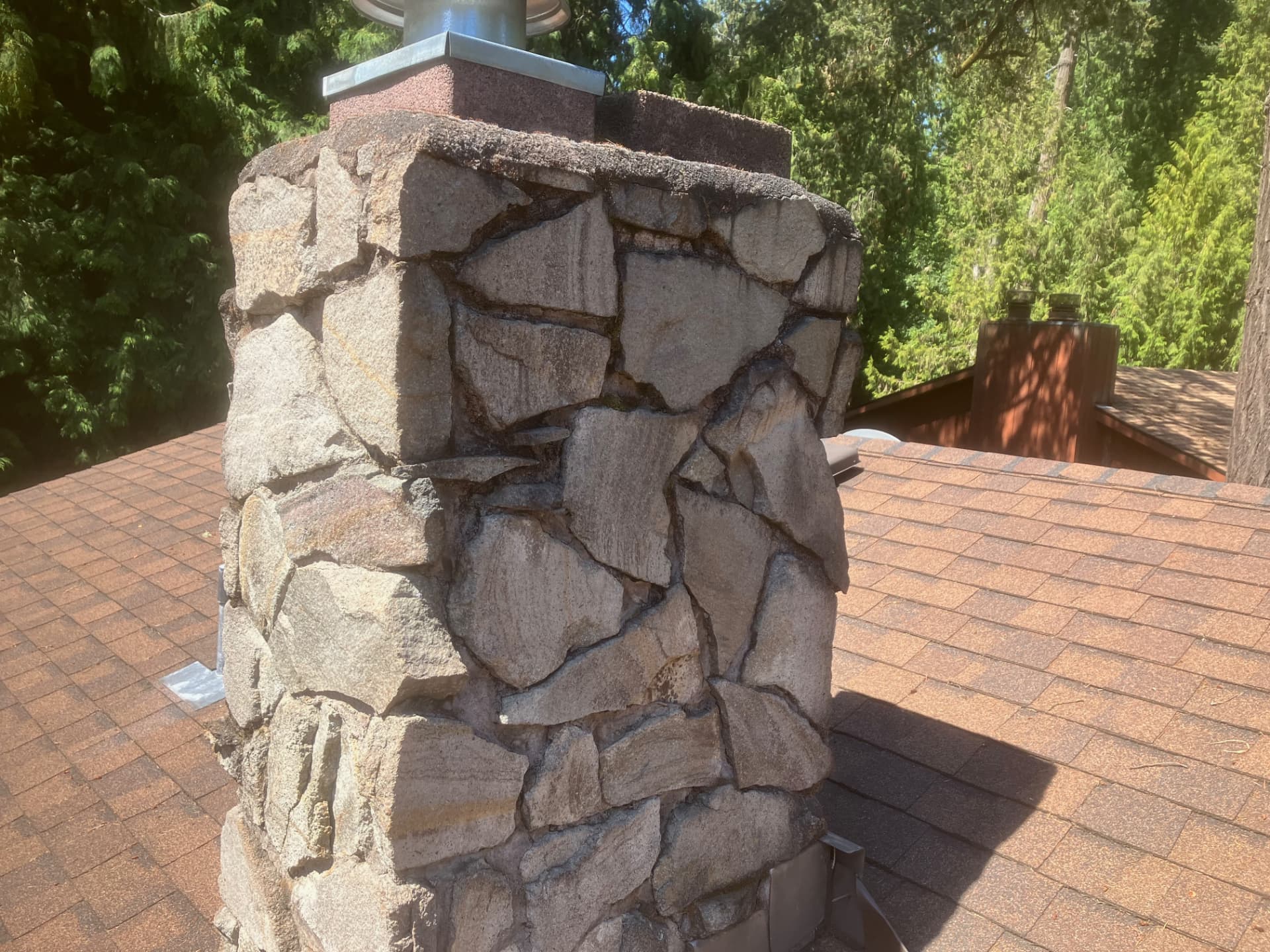
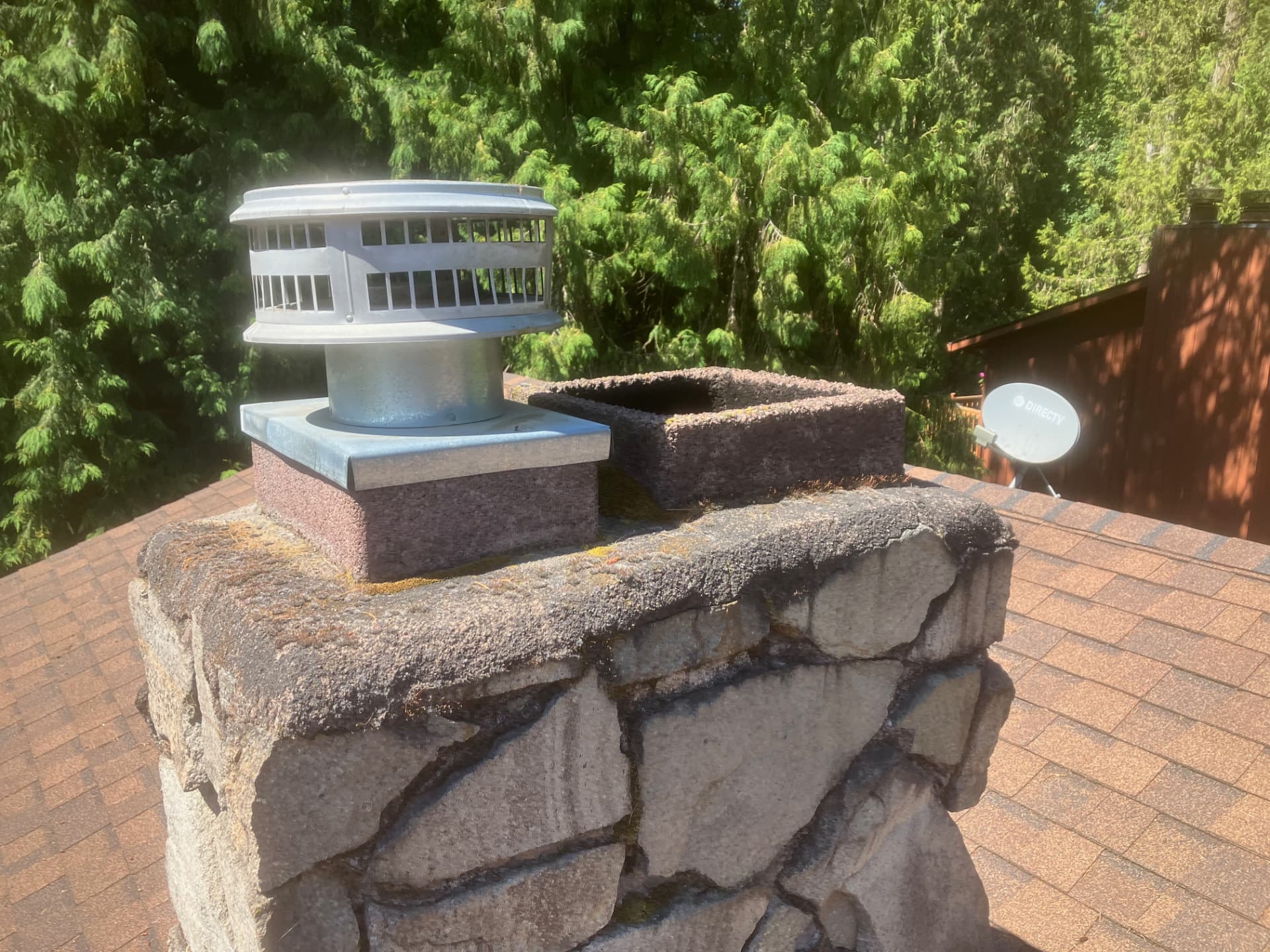
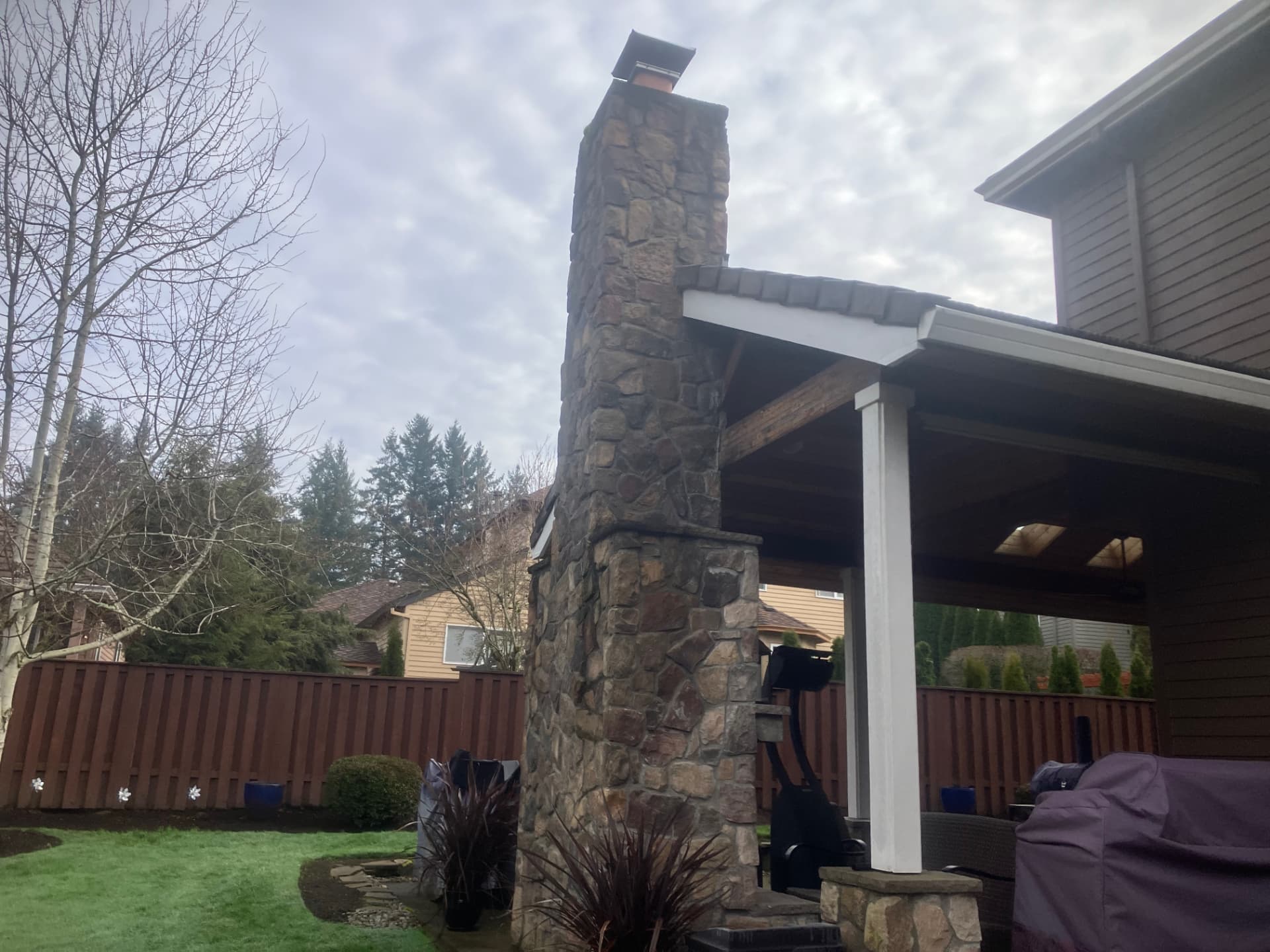
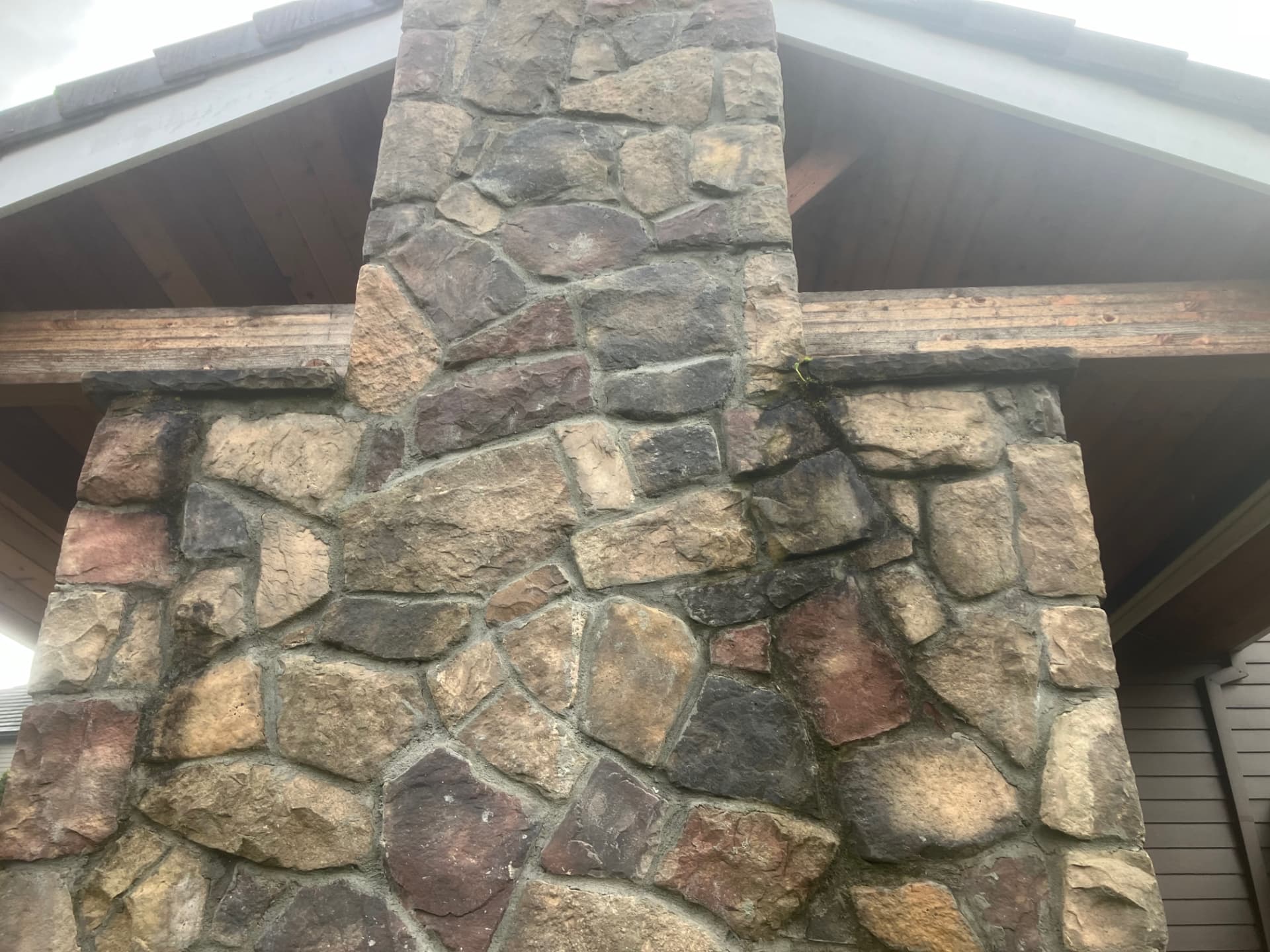
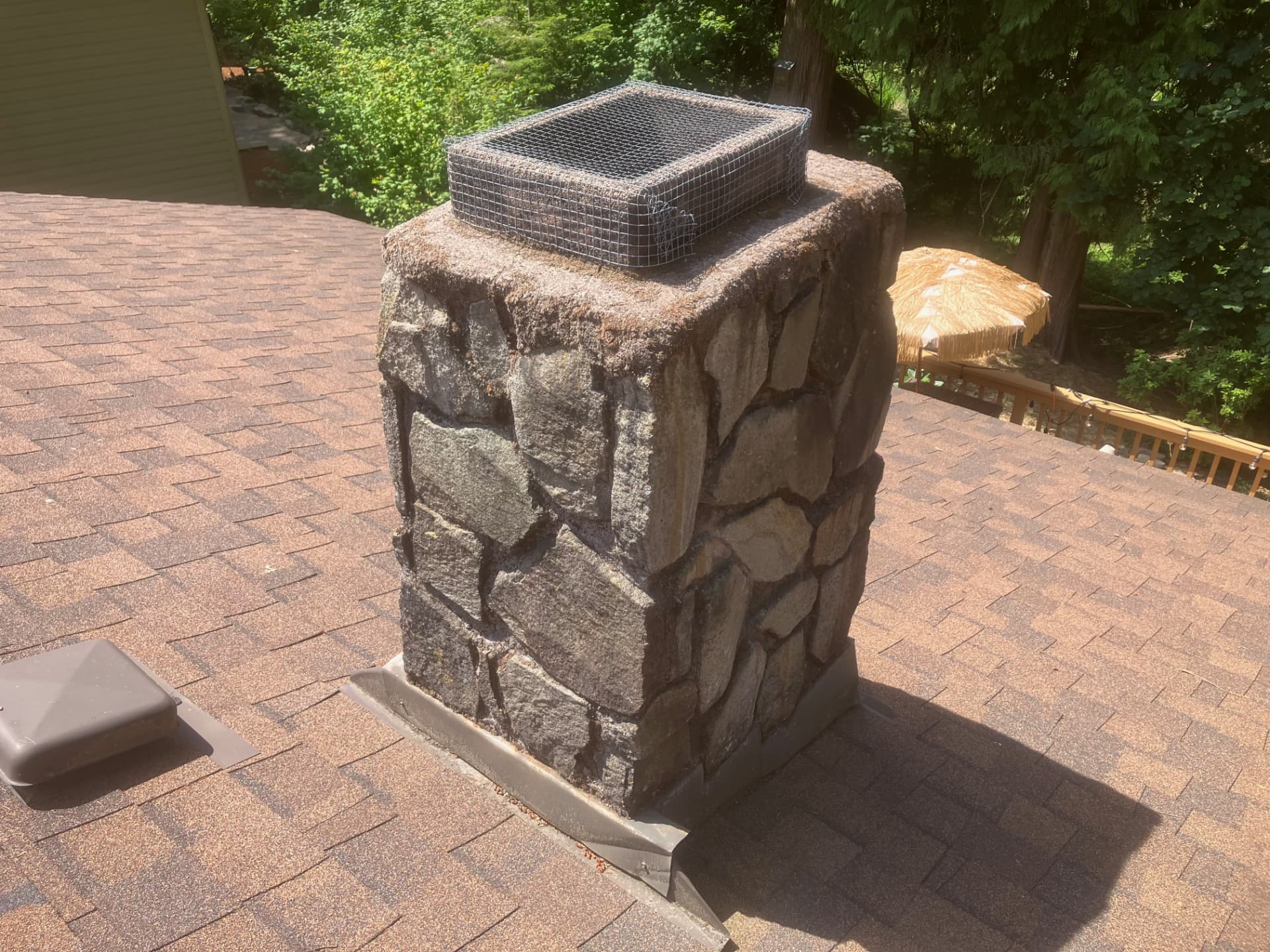
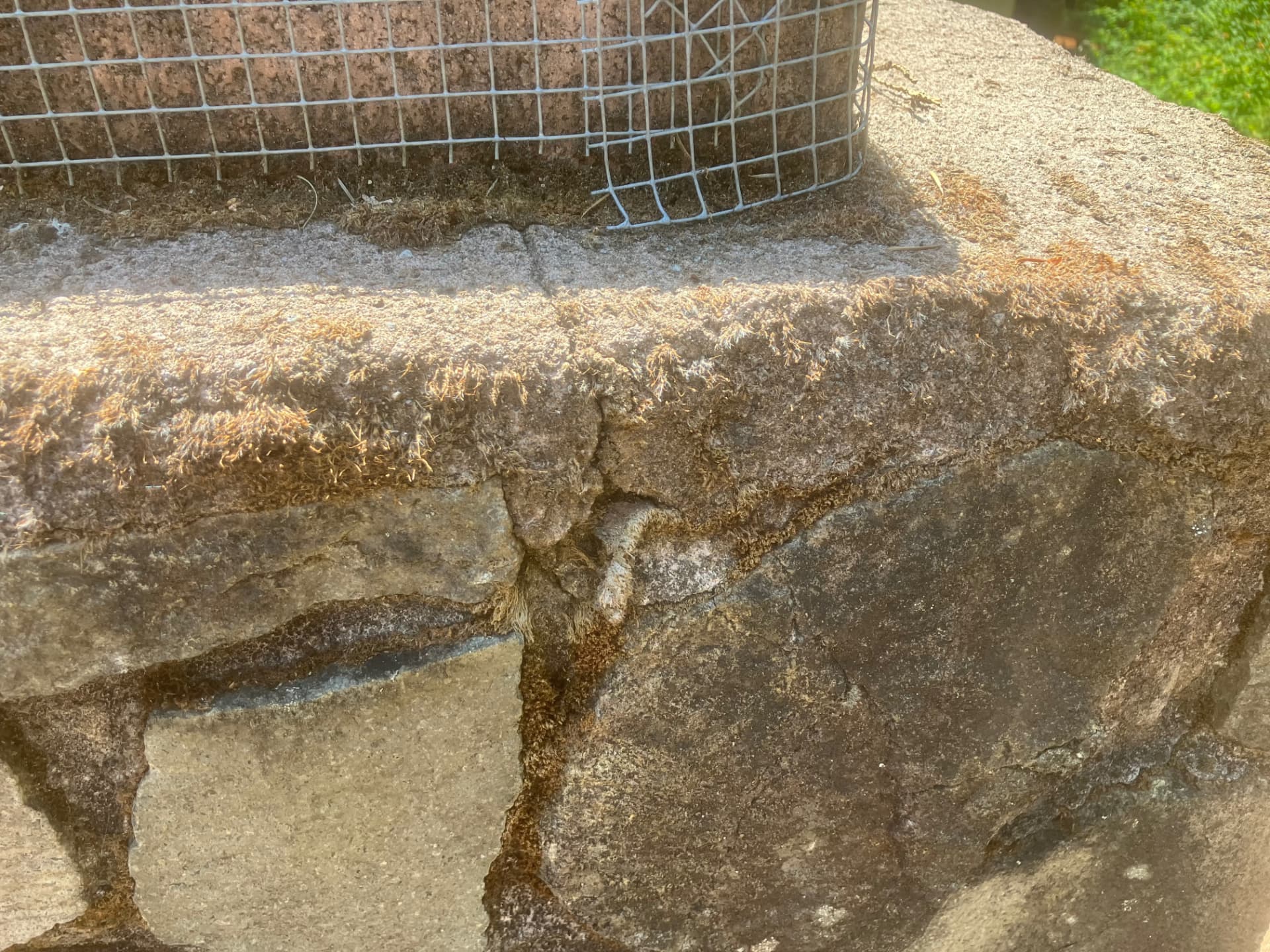
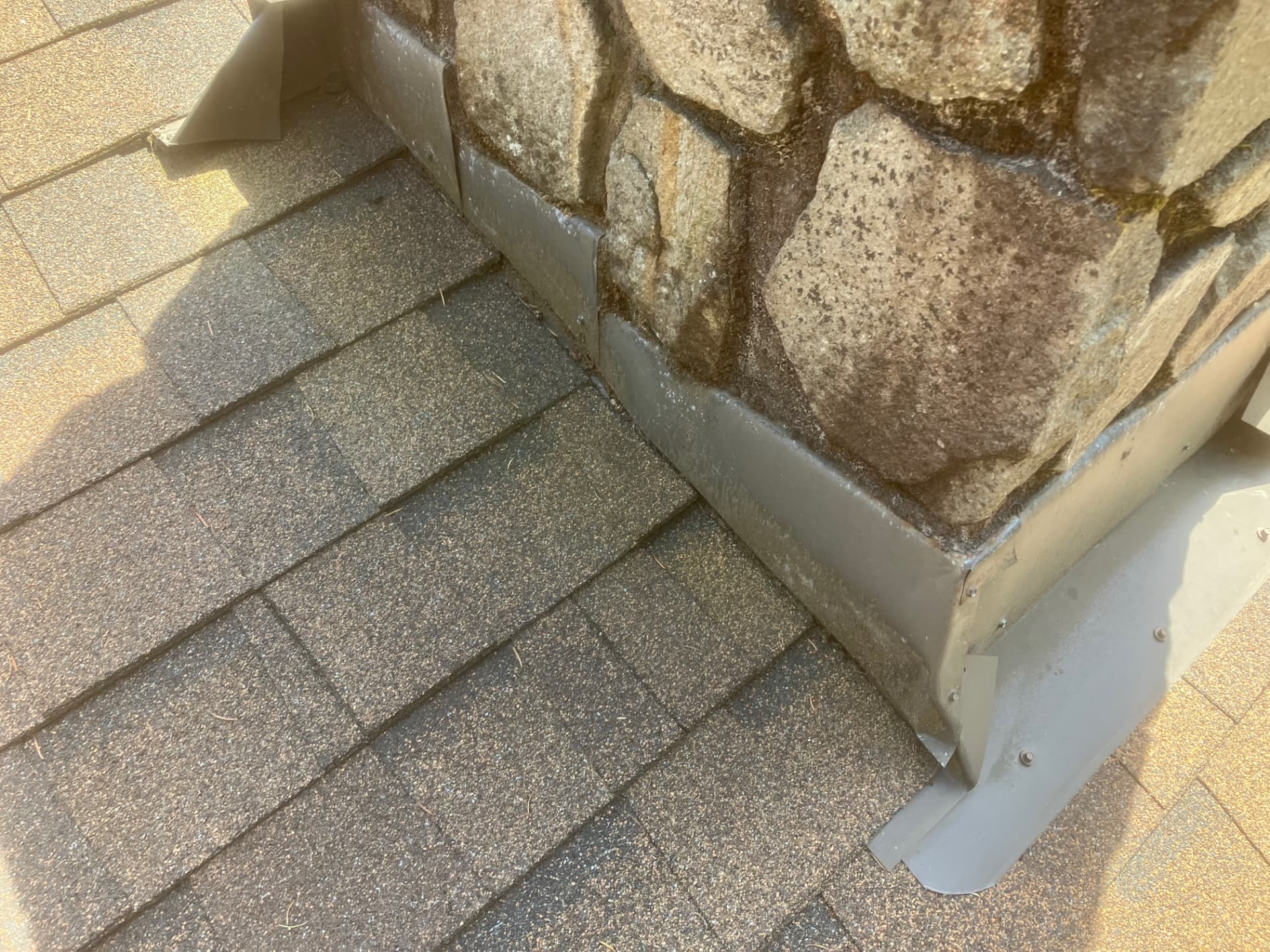
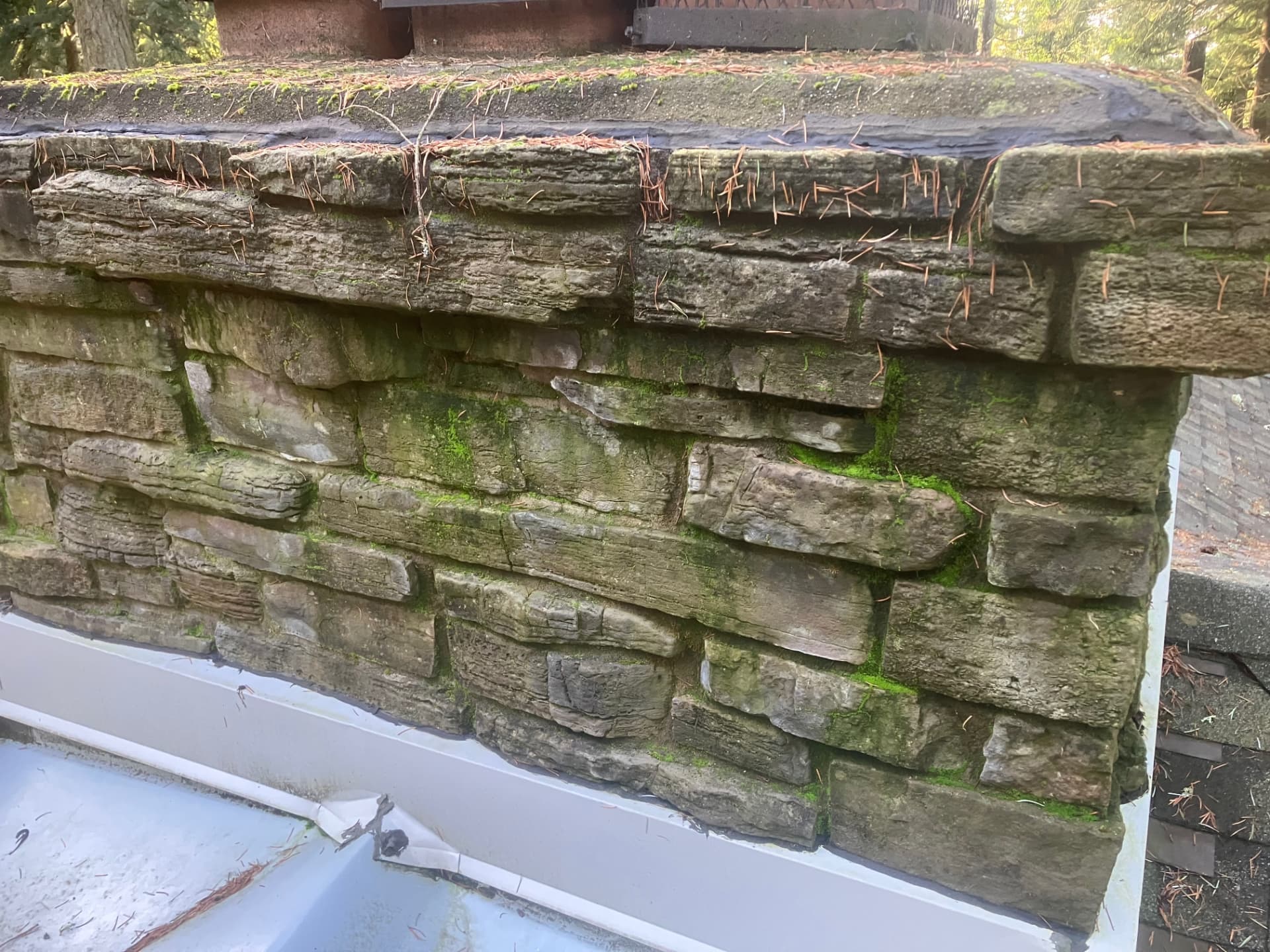
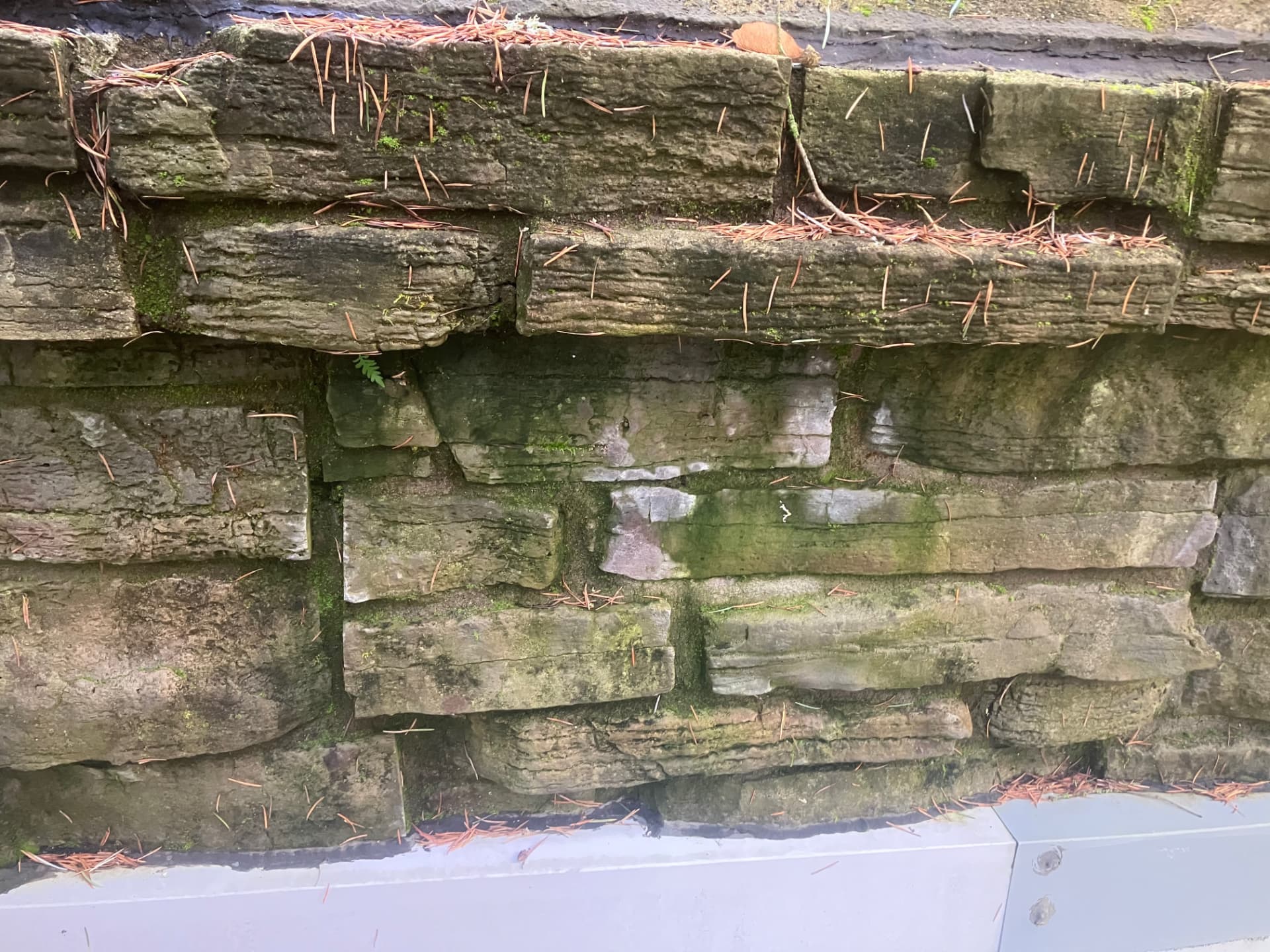
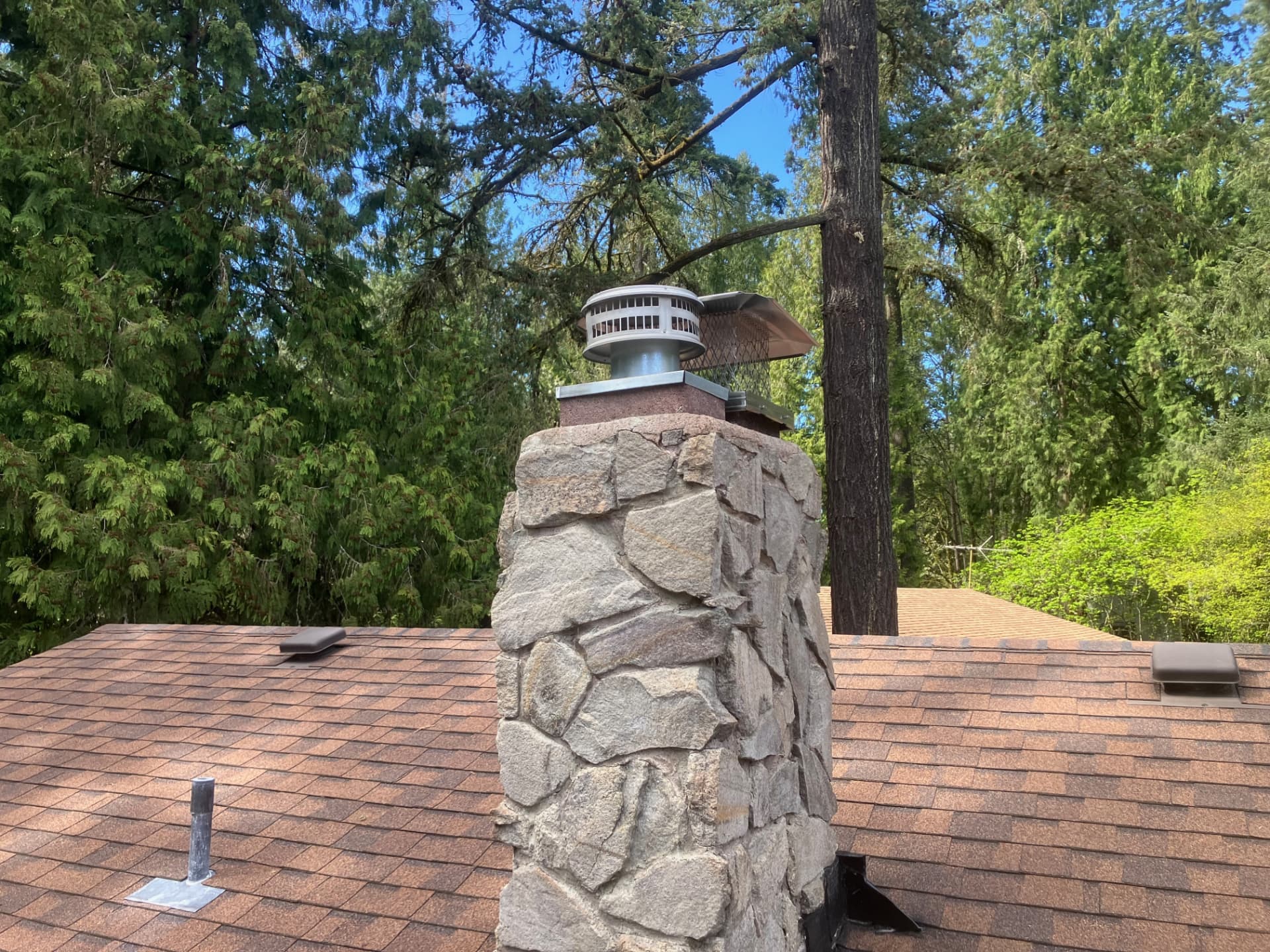
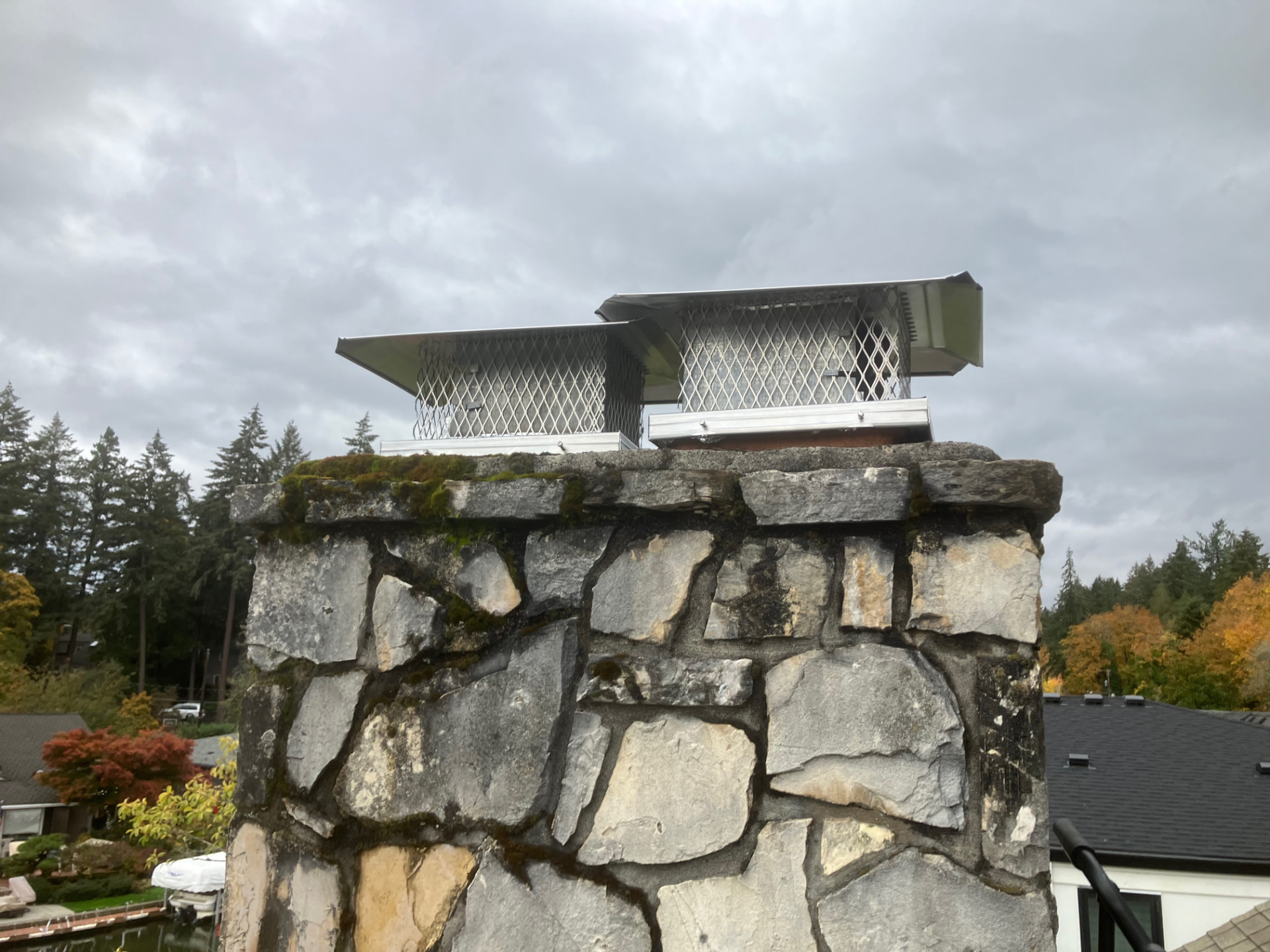
Photos to come: Stone faced chimney folder — more photos to come
NEVER EVER PAINT THE EXTERIOR FACES OF YOUR CHIMNEY OR ALLOW ANYONE ELSE TO PAINT THEM.
Local painters may also try to convince homeowners to paint their chimneys while painting the rest of the house. They may use excuses such as, “It will allow the chimney to match the rest of the house,” or, “It will make the chimney look much better without the expense of actually repairing it.”
Painting your chimney can doom it to a lifetime of problems. Painters may know the risks but still recommend painting because they can make extra money, while the homeowner may hold the chimney contractor responsible for the resulting damage rather than the painter.
Painting your chimney seals the exterior, preventing moisture and condensation within the bricks from escaping and preventing the chimney from breathing properly. This can accelerate the deterioration of your chimney. Additionally, acidity in rainwater and condensation caused by cold, wet weather can contribute to moss growth along the mortar joints, damaging the painted finish and compromising the chimney’s structural integrity.
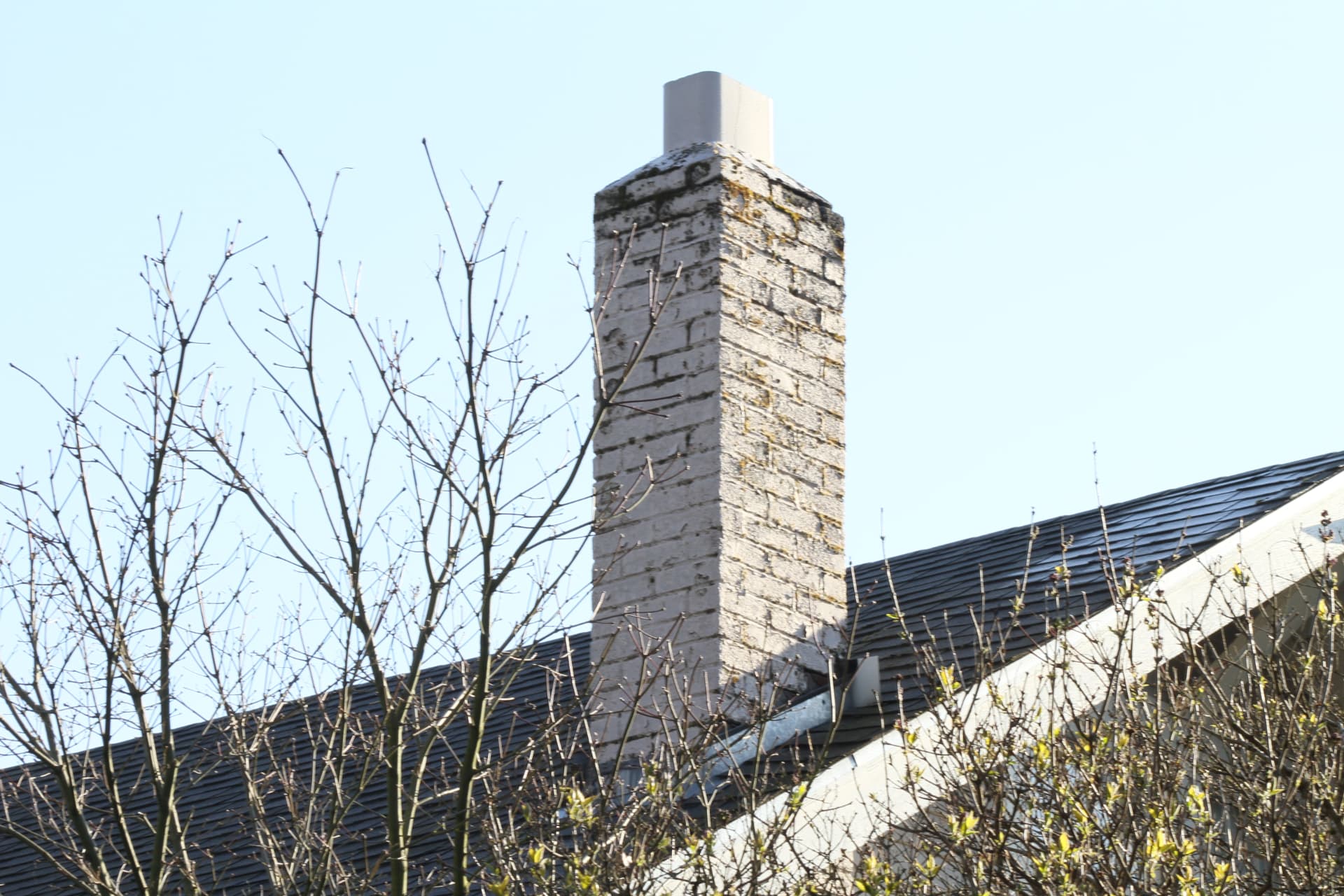
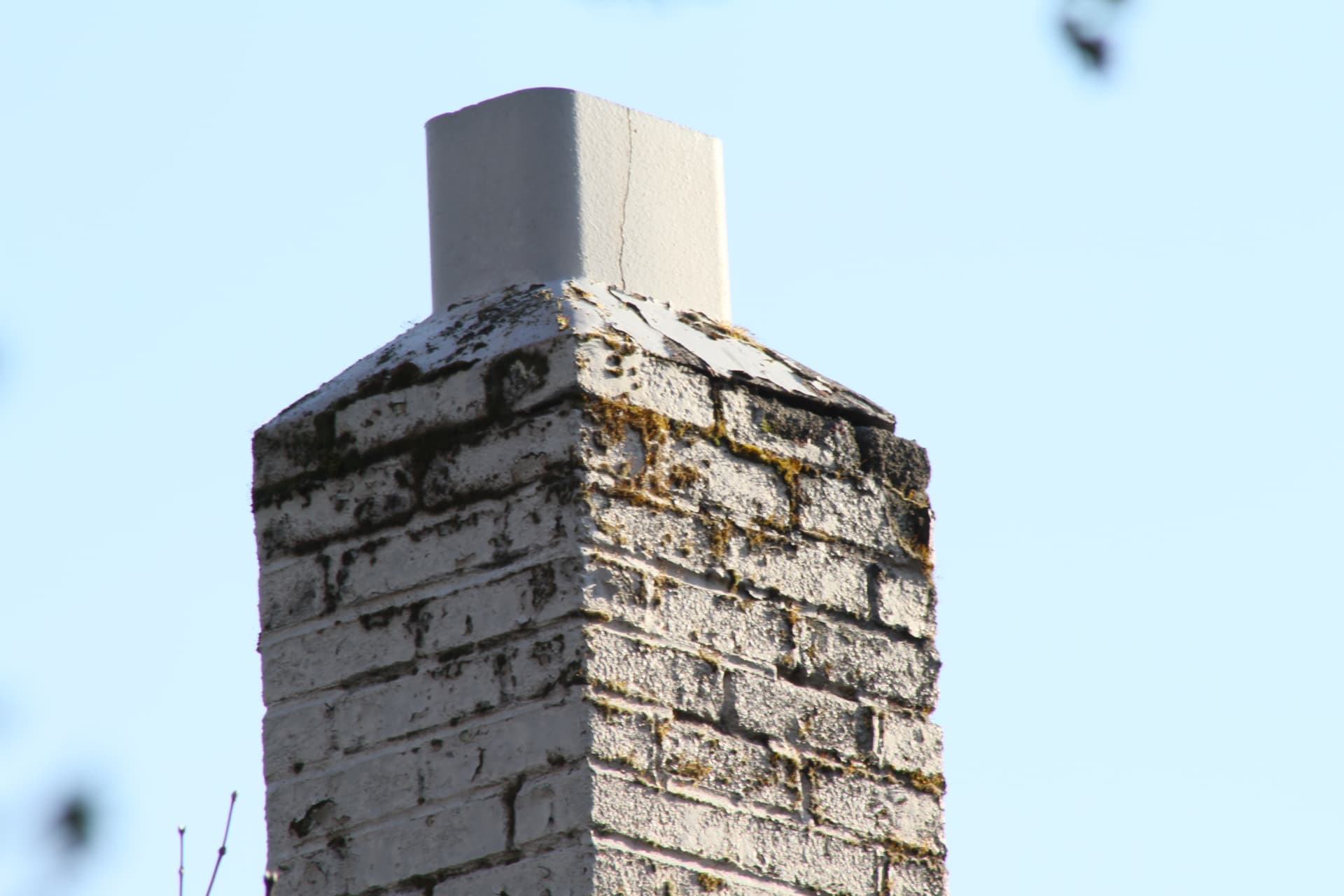
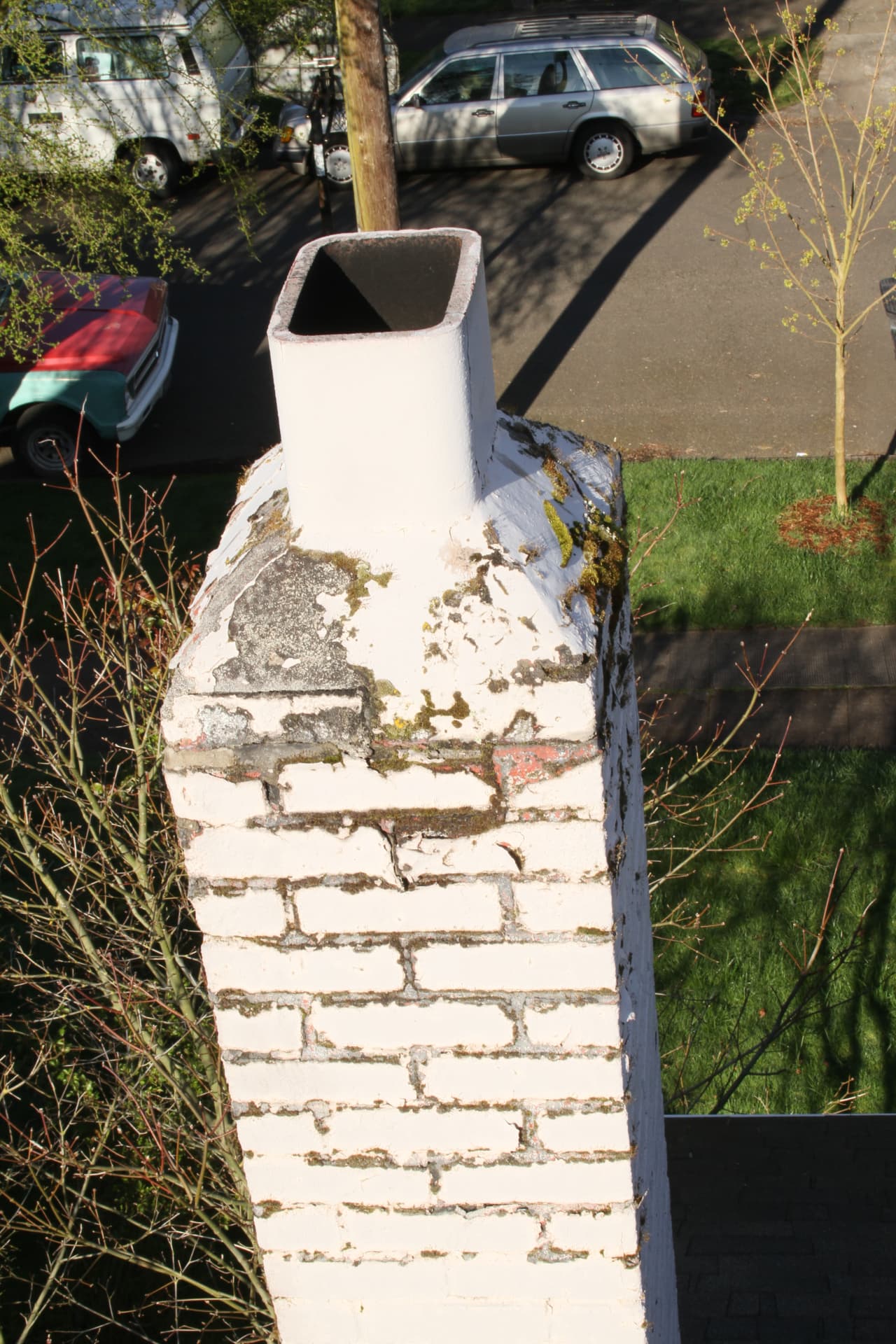
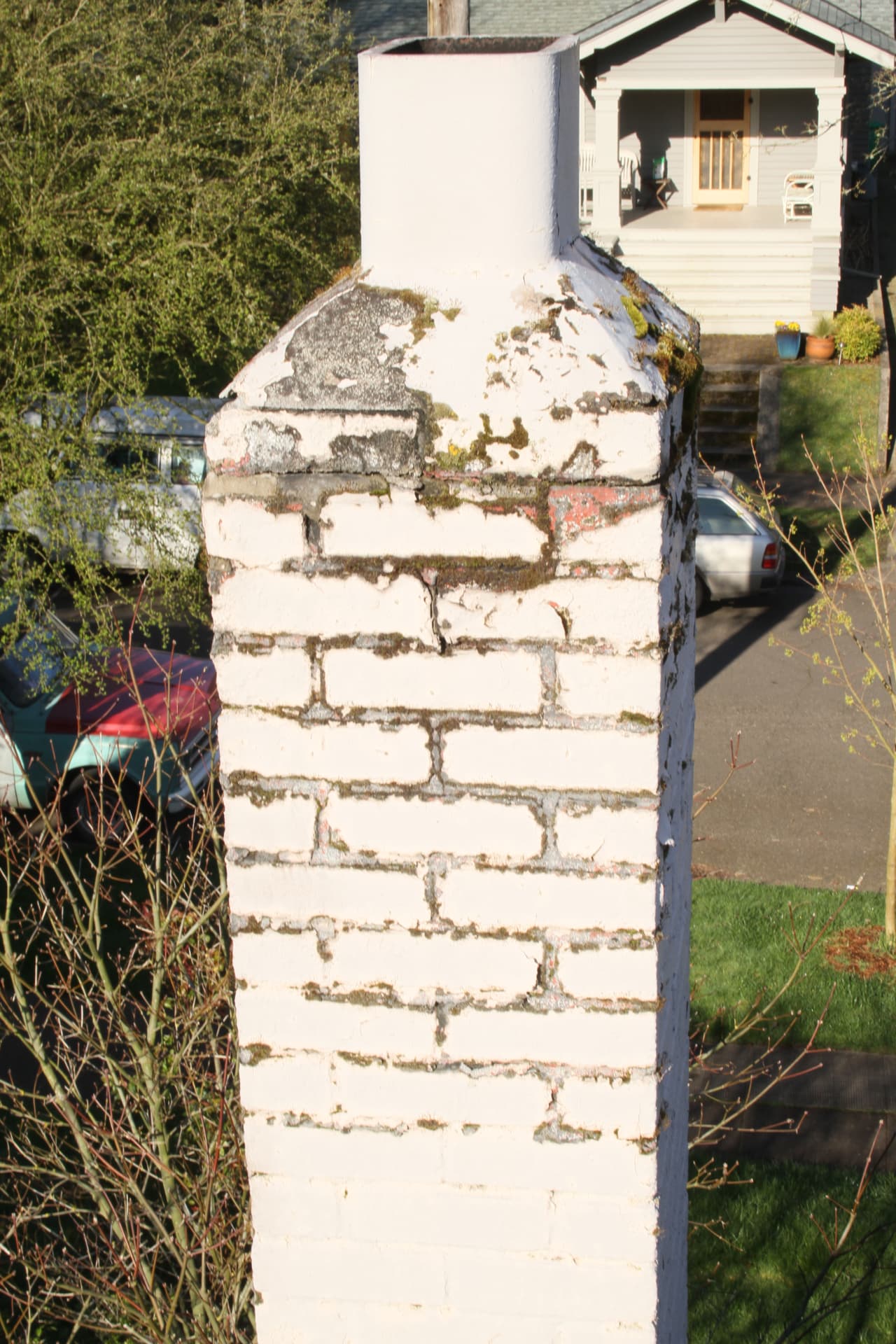
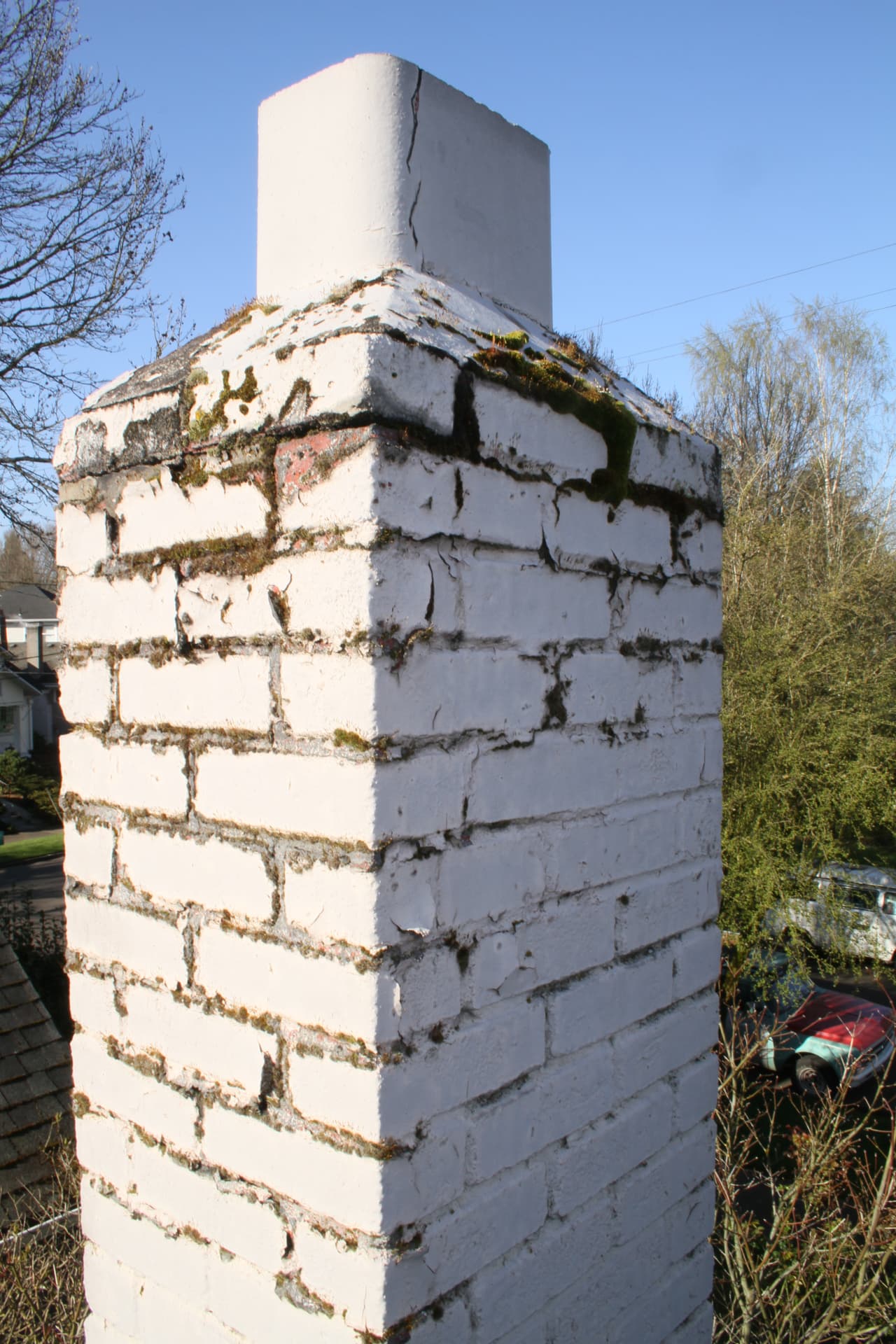
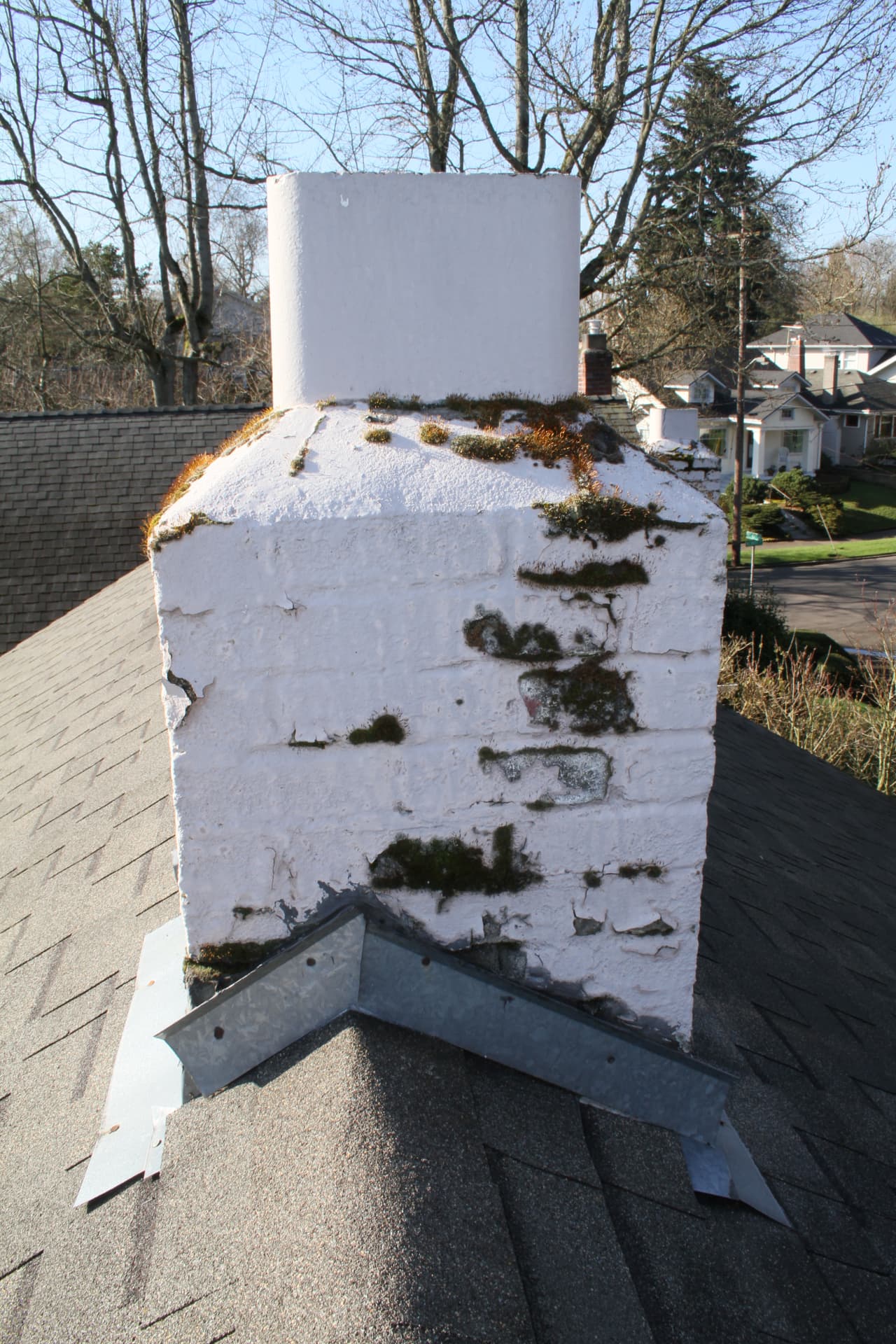
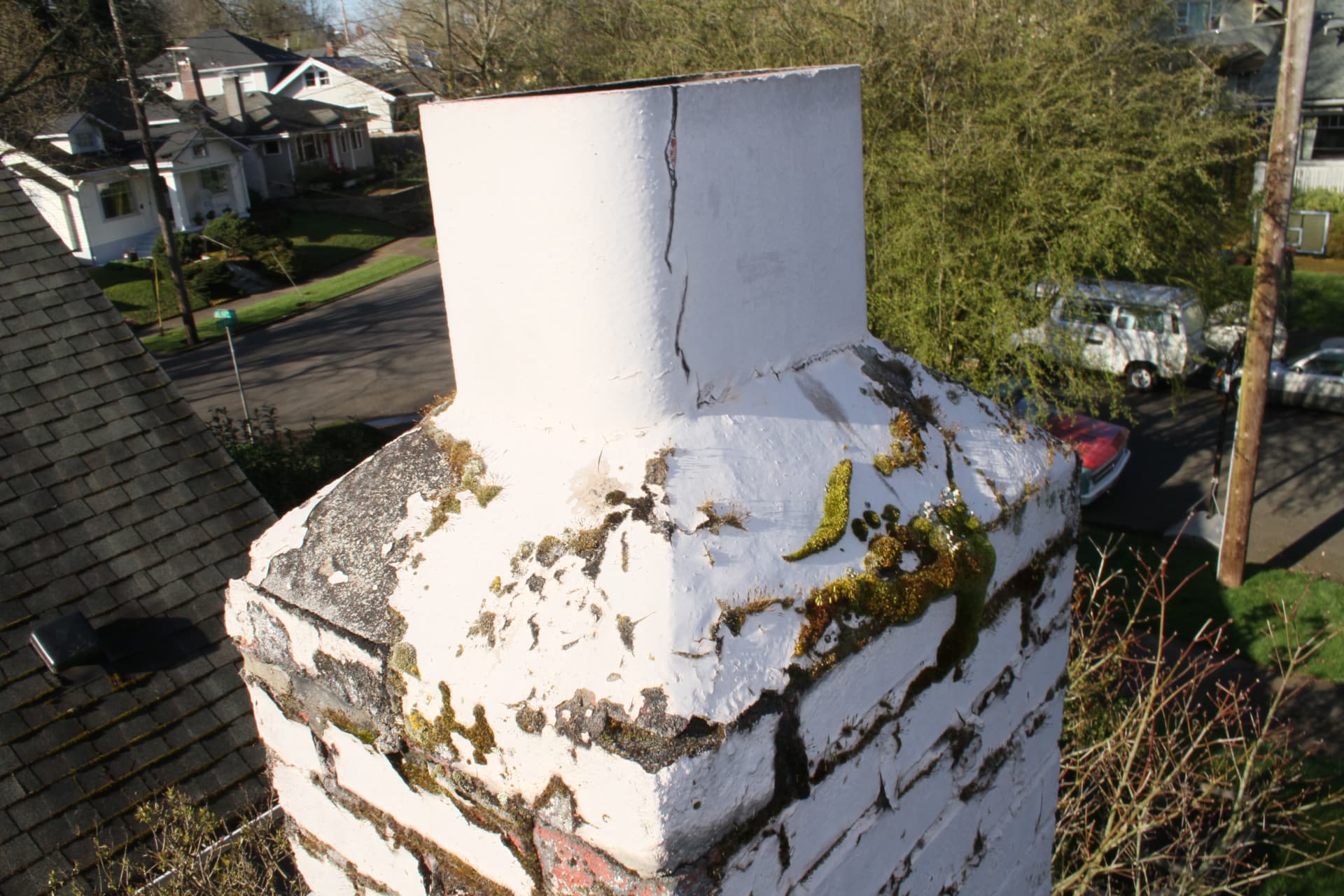
Homeowners with painted chimneys will eventually need repeated tuck-pointing. However, tuck-pointing alone will not solve the problem because it addresses only the mortar, not the painted brick faces that make up most of the chimney’s exterior. The result is still a leaking, moss-covered chimney that continues to deteriorate.
At this point, you have only two very expensive options:
1. Tear down and rebuild the entire chimney. This is very expensive.
2. Hire a licensed paint abatement company. In Oregon, only appropriately licensed companies are permitted to perform regulated paint removal. The cost can approach that of rebuilding the chimney, and paint speckles may remain throughout the masonry because the paint cannot be completely removed from the pores.
In short, NEVER LET ANYONE TALK YOU INTO PAINTING YOUR CHIMNEY, AND NEVER DECIDE TO PAINT ITS EXTERIOR YOURSELF.
Also, never use any other type of waterproofing on your chimney, even products labeled “masonry waterproofing.” These products may act as sealers that prevent the chimney from breathing, creating problems similar to those caused by painting.
Such products are also commonly designed for brick veneer on houses, where building codes require a moisture and water management system behind the exterior brick facing to protect the underlying wood wall from rain and condensation. This is why a chimney should be waterproofed only with a chimney-specific waterproofing product designed expressly for that purpose.
Chimney Moss Removal and Waterproofing
Many companies pressure-wash moss off chimneys before applying waterproofing. However, pressure washing removes only the surface moss, leaving the roots behind. As a result, the moss eventually returns.
To properly address moss, you must kill it, roots and all. We chemically treat the moss during mortar repairs or when performing moss removal alone. This treatment kills the moss that is damaging your chimney, but it also eliminates the moss’s ability to absorb rainwater and condensation. Moss can hold moisture against the chimney, contributing to water intrusion and turning a chimney that was not previously leaking into one that leaks significantly.
This is why, after moss removal, we consider it essential to apply chimney-specific waterproofing.
Sometimes, when performing moss removal alone, we must wait a few days before applying the waterproofing. This allows us to ensure that all the moss has died, including more stubborn varieties, and that the pH of the brick and mortar has returned to normal after the moss treatment.
When mortar or crown repairs are performed, we must wait at least 28 days after the final day of work. This allows sufficient curing and moisture evaporation from the new mortar and crown materials so that the waterproofing can penetrate the masonry properly. This waiting period is essential. Therefore, any waterproofing estimate that includes mortar or crown repairs will be submitted as a separate bid.
Before applying waterproofing, it is crucial to address any structural damage, mortar deterioration, crown damage, and existing moss on the chimney.
The manufacturer’s 10-year warranty requires all brick, mortar, crown, flue tile, flashing, and structural issues to be addressed before waterproofing is applied for the warranty to cover the waterproofing.
Additionally, if the chimney has efflorescence (lime leaching), we must acid-wash the surface to remove the existing deposits before applying the waterproofing.
If your chimney has heavy efflorescence, however, it may return even after waterproofing because lime can continue to migrate from inside the bricks through their pores. Think of it like a car-filled tunnel: you can remove the cars that have exited the tunnel, but the cars remaining inside will eventually emerge.
Efflorescence develops as moisture moves through the masonry and carries dissolved salts to the surface. Because the chimney must remain breathable, additional efflorescence may emerge after waterproofing if salts remain inside the bricks.
Once your chimney has extensive efflorescence, there is no practical way to remove all the lime trapped inside the bricks without tearing down and rebuilding the chimney from scratch. We only need to remove the efflorescence present on the exterior surfaces before applying the waterproofing.
Prioritizing Proper Brick Ventilation for Your Chimney and Preventing Freeze-Thaw Damage
To the best of our knowledge, the chimney-specific waterproofing we use is the only product suitable for this application that is specifically designed to allow a chimney to “breathe,” which is essential to its longevity.
According to the manufacturer’s website, the chimney-specific waterproofing we use is a water-based, water-repellent product that is 100% vapor-permeable. This means it repels liquid water from the outside while allowing internal moisture and combustion-related vapors to escape. It works by penetrating deep into masonry pores and chemically bonding with the material rather than forming a surface film or plastic-like seal.
It helps prevent freeze-thaw damage by creating a deeply penetrating, hydrophobic barrier while maintaining vapor permeability. Unlike standard hardware-store sealers that form a surface film and trap moisture inside the brick, this product allows water vapor from internal moisture and natural wicking to escape. This breathability is critical because trapped moisture expands when frozen, potentially causing spalling, cracking, and accelerated mortar deterioration.
Without proper protection, moisture and weather exposure can also contribute to moss growth along mortar joints and on brick surfaces, causing further damage.
Key features of the chimney-specific waterproofing include:
- Deep Penetration: The water-based siloxane formula penetrates approximately 1/4 inch or more into the capillaries of bricks, stone, and mortar.
- Chemical Reaction: Activated by ultraviolet (UV) light and atmospheric moisture, the molecules form a durable, hydrophobic (water-repelling) zone beneath the surface.
- Vapor Permeability (100% Breathable): Unlike standard paint and non-breathable sealers that trap moisture inside, chimney-specific waterproofing allows internal moisture and combustion-related vapors to escape.
- Water Beading: The treated surface repels external rain, sleet, and liquid water, helping prevent freeze-thaw damage, spalling, efflorescence (salt deposits), and mold growth.
The manufacturer’s application instructions also require all structural concerns on the chimney’s exterior to be addressed before application. The product must be applied above a specified temperature, the chimney must be completely dry before application, and there must be at least six hours without rain, condensation, or misting after application.
For these reasons, we perform mortar repairs, crown repairs, moss removal, and waterproofing during the drier spring and summer months, with repair work completed by the end of August.
We cannot and will not waterproof any painted brick, mortar, or crown surfaces on your chimney because the product cannot properly penetrate and bond to these areas. Applying it to painted surfaces would therefore be ineffective and a waste of time and money.
Because the product is water-based, it does not leave an oily shine and is quick to apply. You may notice some moisture on your chimney during rainy weather, but this can be moisture vapor escaping from within the chimney rather than water penetrating from the outside.
The inside of a chimney flue cannot be waterproofed with this product because hot combustion gases and smoke passing through the flue can damage the waterproofing and render it ineffective. This is one reason chimney caps are important: they help keep rain and other precipitation out of the flue.
IMPORTANT
I e-mail bids only to give you all the information you need to make an informed decision for the work. If you contact me for a bid, please give me a correct e-mail address. Also, I may need to contact you via phone prior to e-mailing you the bid if there is work that needs to be done in addition to what you originally called for due to structural, code, or safety reasons, or if I need any further information not provided during your first call to schedule me to come out to do the bid.
Metro Chimney reserves the right to walk away from a job even if there is signed bid before the work is initiated if we sense there will a problem or ongoing issue between us and the customer. This is the Oregon CCB’s position. The customer can call another contractor or chimney company.
Attention: Due to the nature of how mixing mortar or corn mix with mortar is how you use it, and it cures by expelling that water, it takes 48 days for crown and mortar mix to kick out enough water in the curing process before it is not effected by at any point the temperature going below 32 degrees Fahrenheit (0 degrees celcius). If the temperature goes below that at any time during that 48 day curing period the water in the mortar/crown mix will freeze, expand and crack the same mortar or crown mix necessitating us to come out to repair it in the warmer Spring and Summer months. Also due to the fact that Flue Tiles and Flashing requires mortar or crown mix too, we only do mortar, crown, moss removal and waterproofing work during the non raining warmer parts of Spring and Summer months and we make sure to have all repair work requiring mortar or crown mix to end by the end of August. Moss removal and Water proofing also requires the work to be done in the non raining warmer parts of Spring and Summer months as well. There will be no exception to this rule.