Understanding the Importance of Chimney Flashing
If your chimney extends through your roof or any part of your roof’s overhang, the flashing system plays a vital role in its integrity. Chimney flashing consists of sheets of durable materials, such as sheet metal, meticulously installed to create a barrier against water intrusion from the expansion space surrounding your chimney.
This expansion space allows your chimney to accommodate temperature changes when it heats up during fireplace use. The two components of flashing—roof flashing and chimney flashing—work in harmony, ensuring that your chimney can expand and contract while effectively keeping your roof watertight.
The roof flashing is installed from beneath the roofing material, bending up and under the chimney flashing. The chimney flashing, on the other hand, extends from a joint at the chimney’s base, bending down to overlap the roof flashing. Together, these components prevent rainwater from leaking into your home.
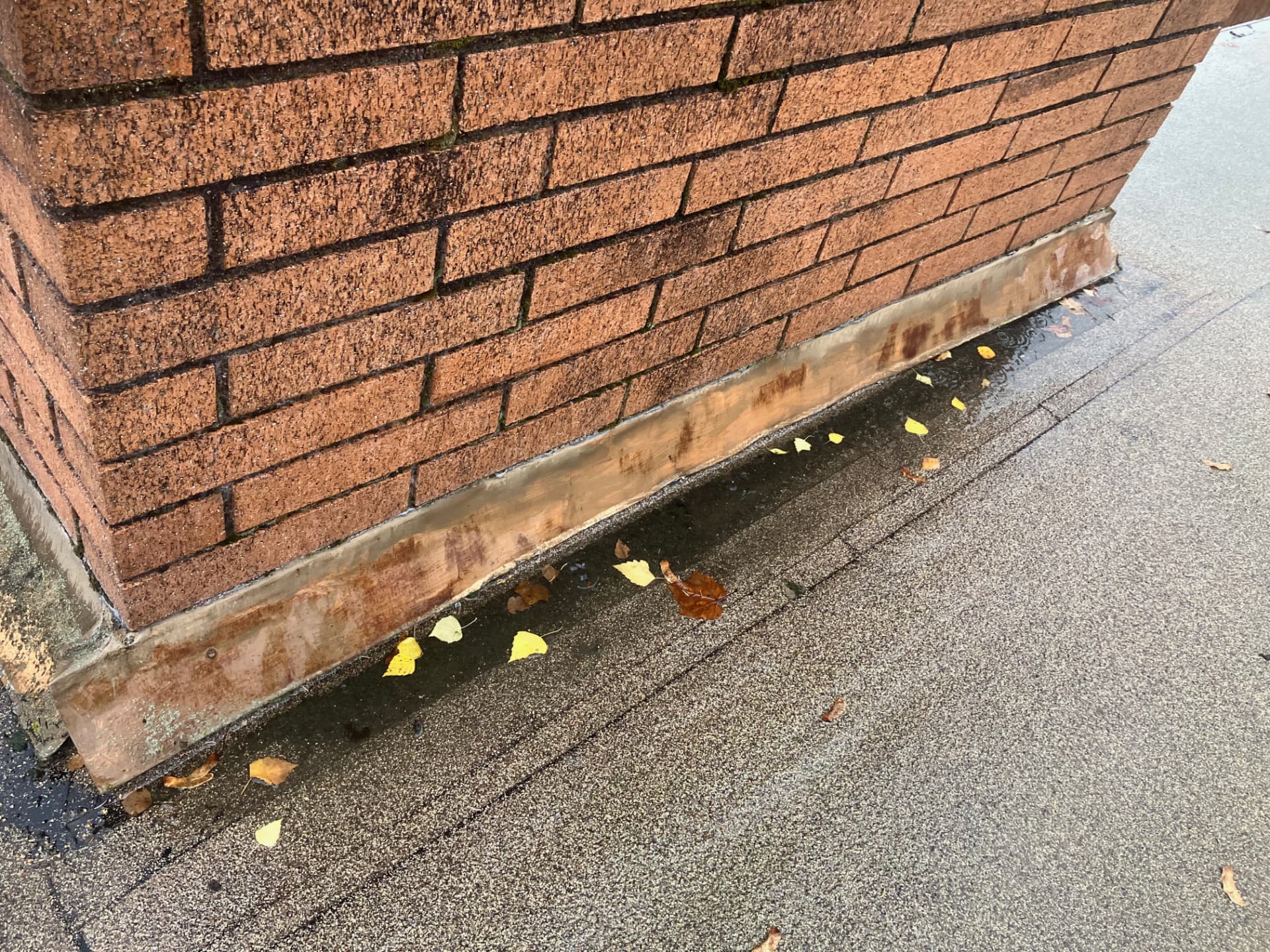
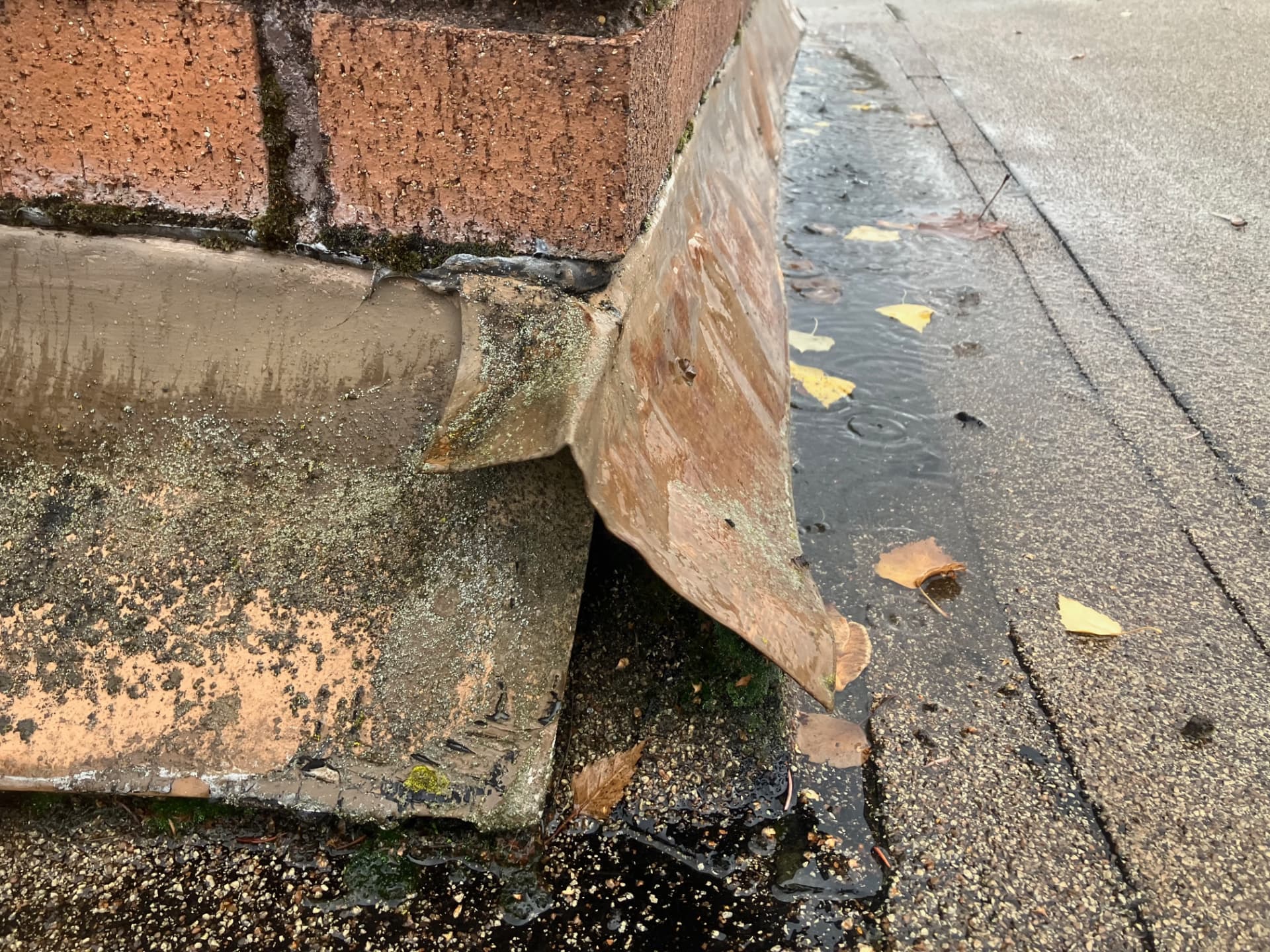
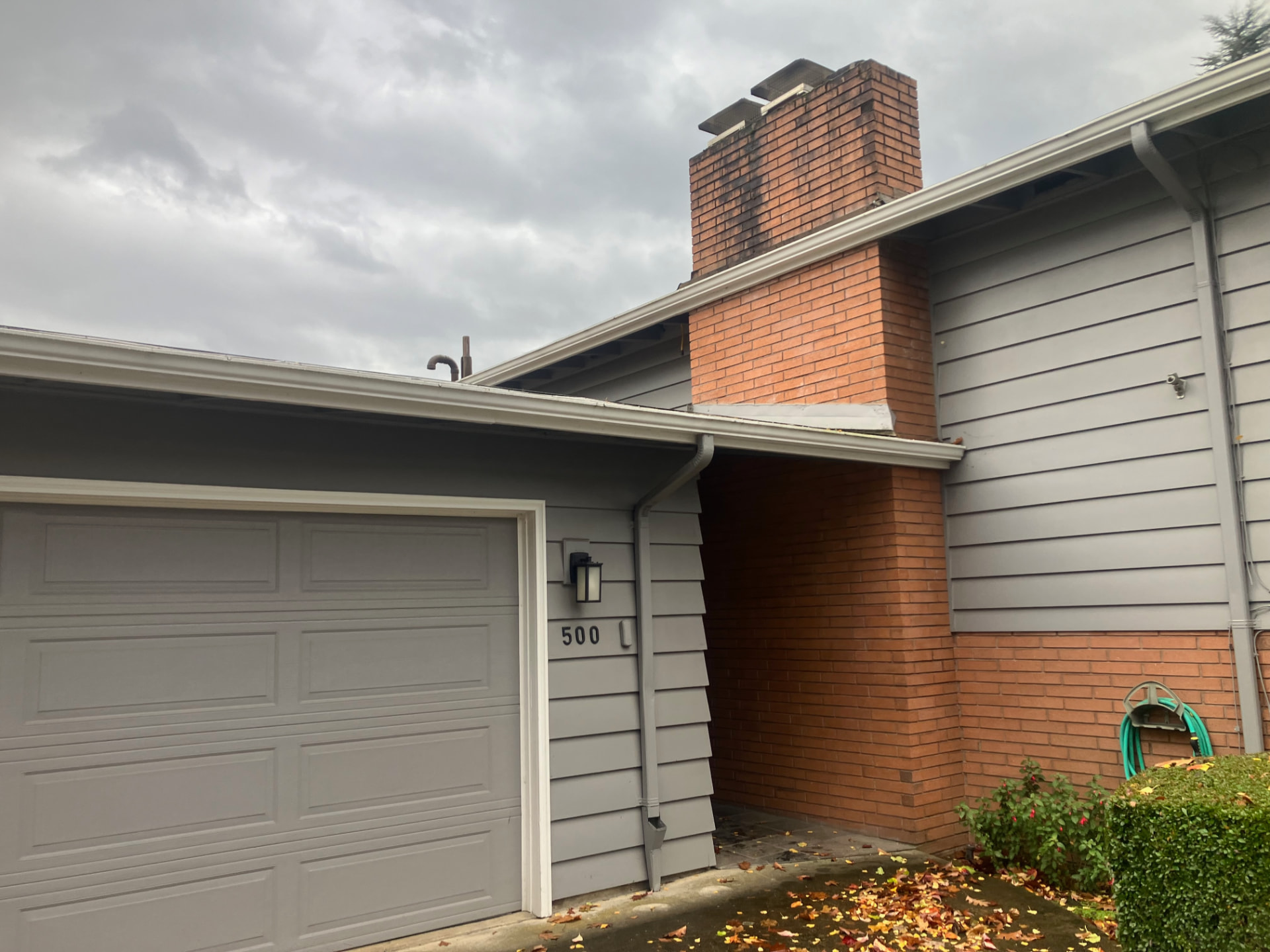
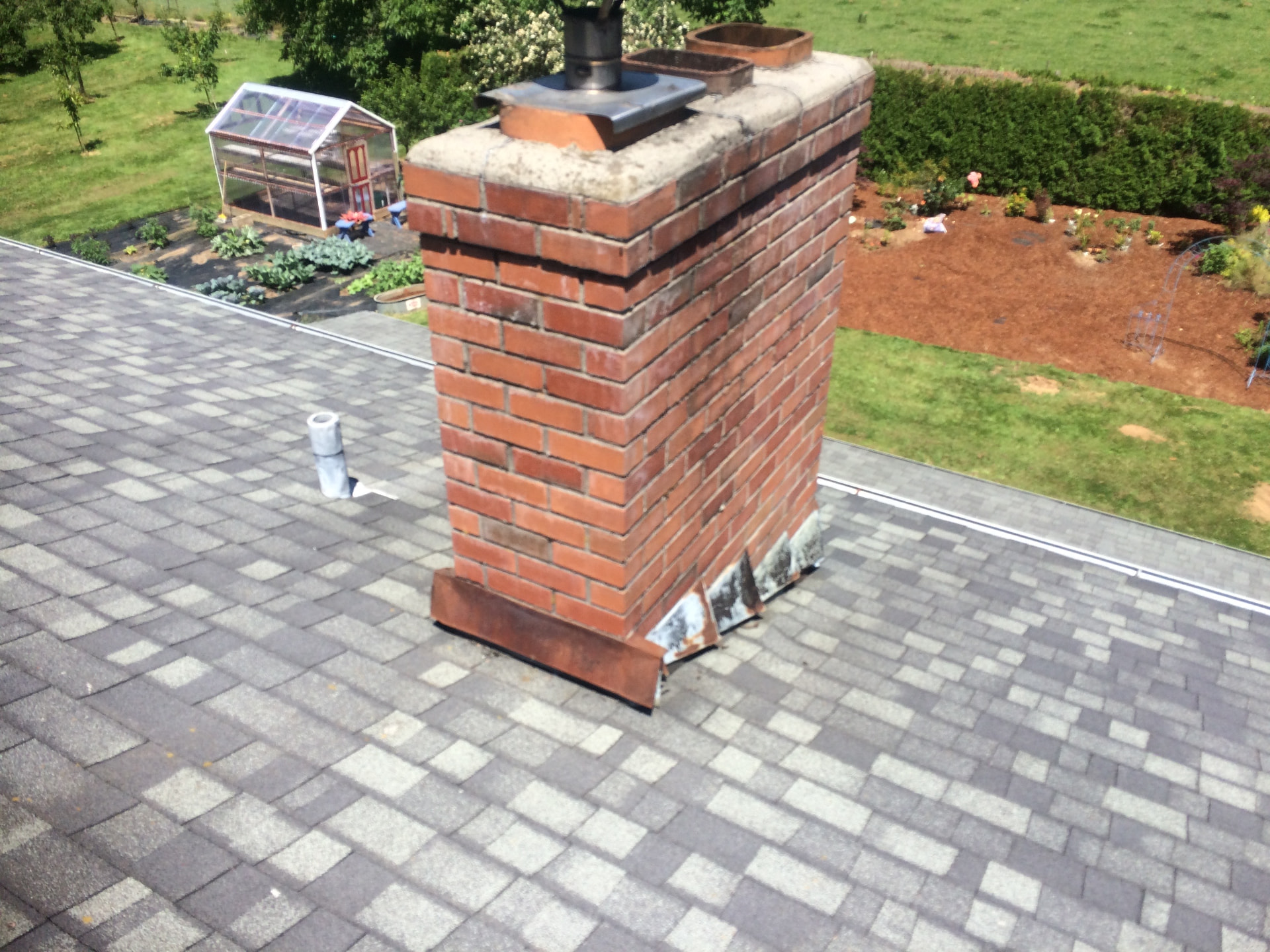
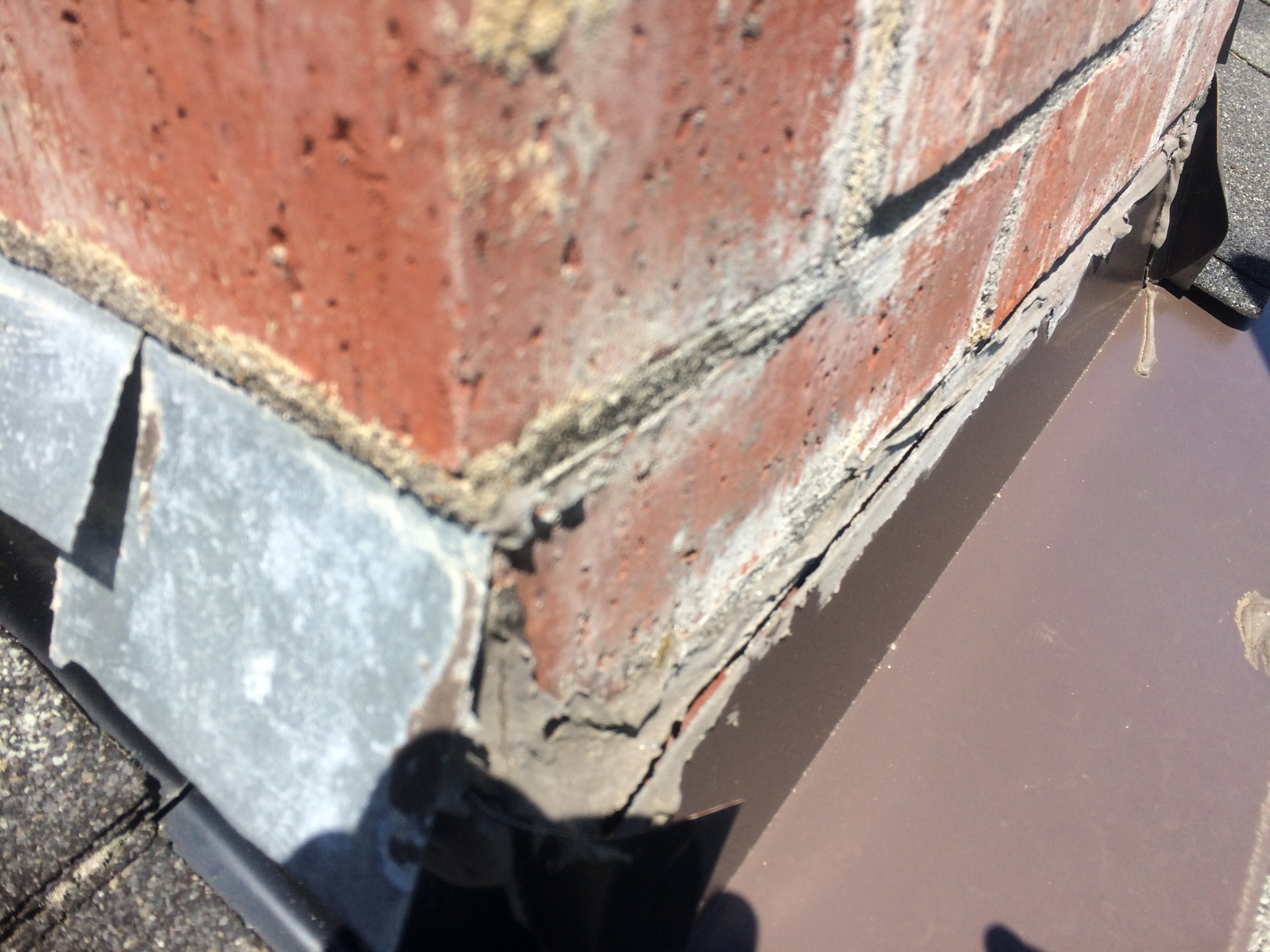
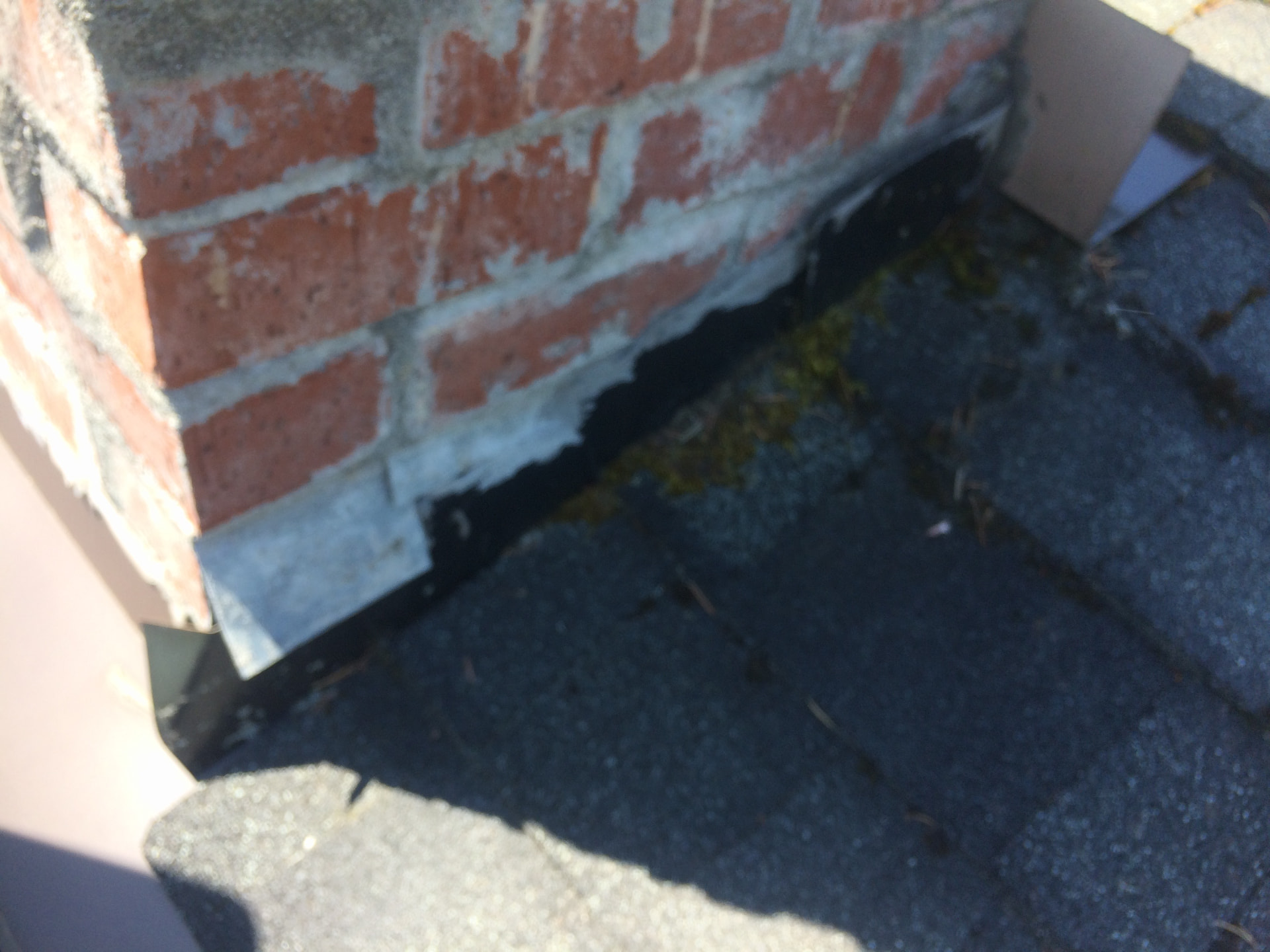
Even if your chimney has flashing, it may still be inadequate, potentially leading to interior leaks. As depicted in the images below, these issues can persist, highlighting the importance of proper chimney flashing installation and maintenance.
The Consequences of Deteriorating Chimney Flashing
When the chimney flashing deteriorates, it creates a pathway for water to infiltrate the interior of your home. This can result in substantial damage to the roof and walls in the vicinity of the chimney, as vividly illustrated in the picture below.
STEP FLASHING
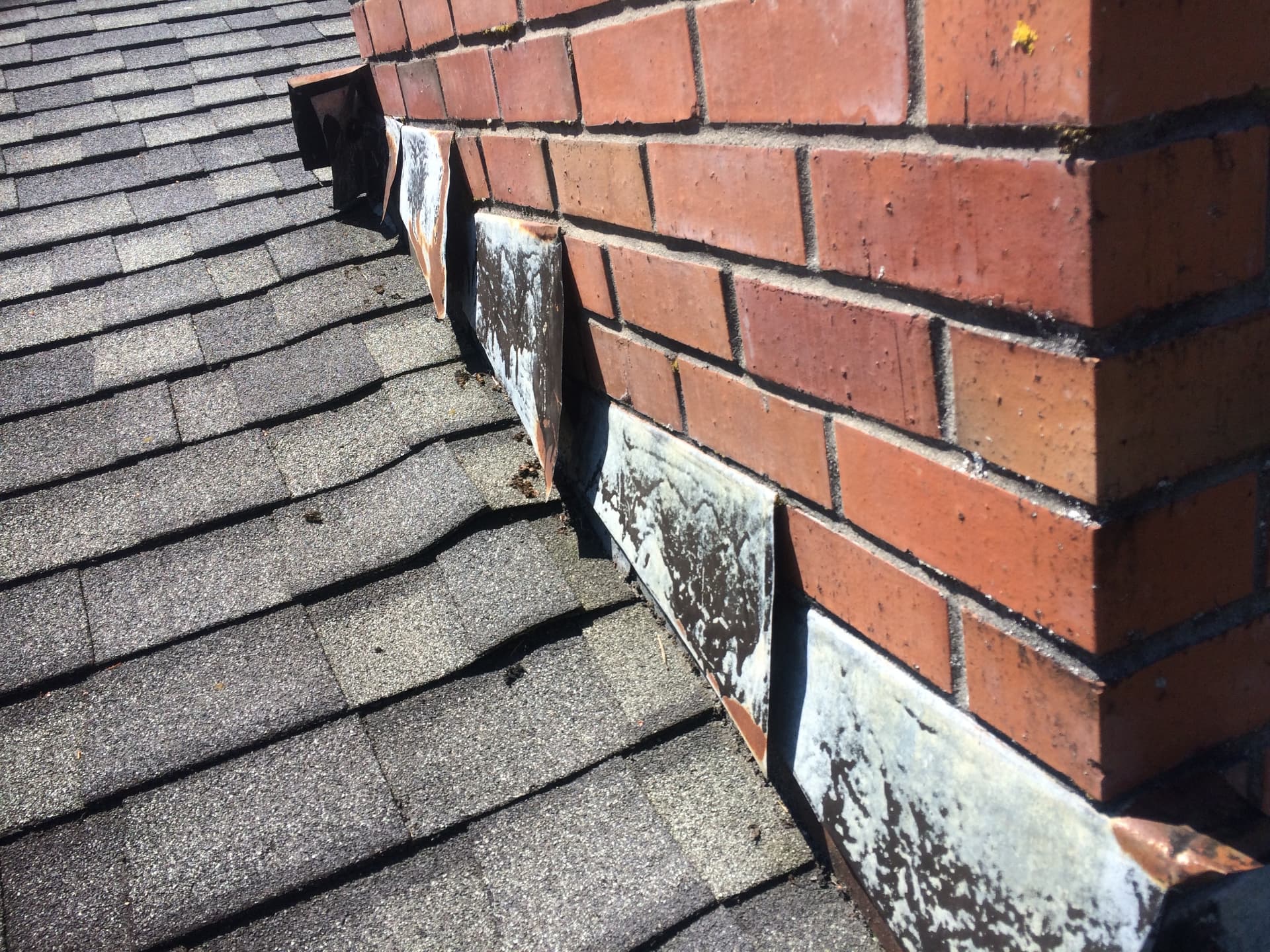
Step Flashing: Named for Its Stair-Step Appearance
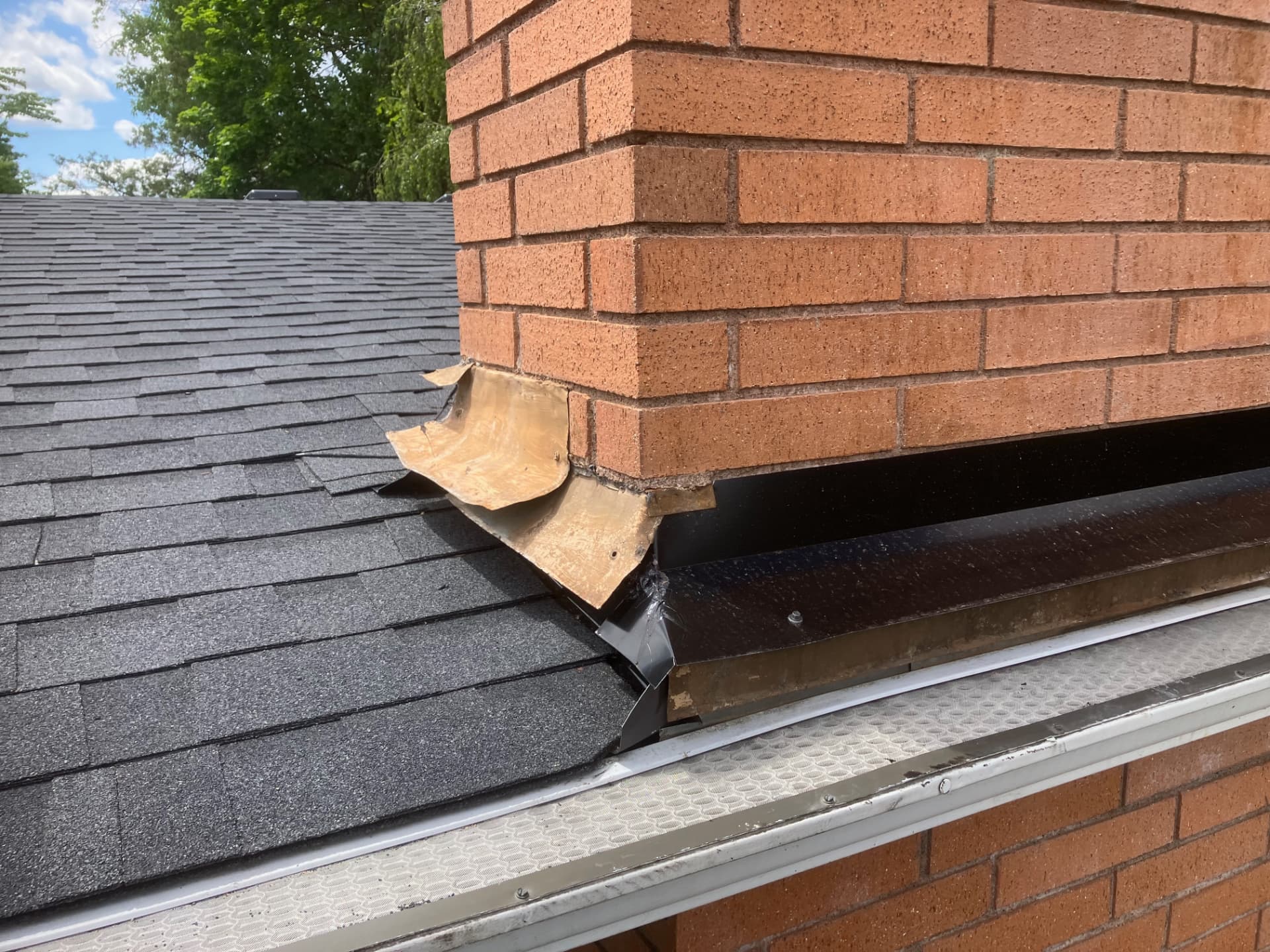
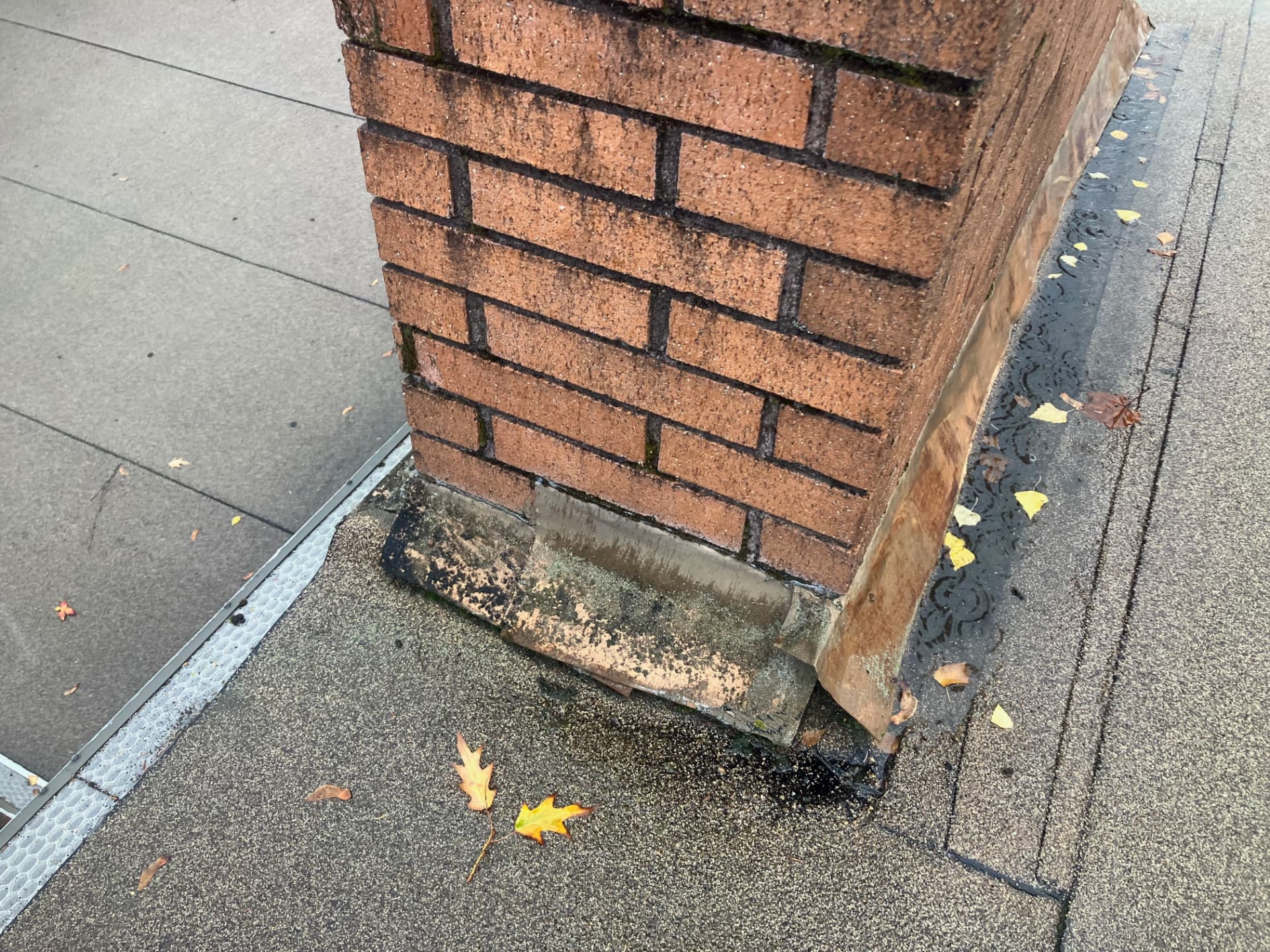
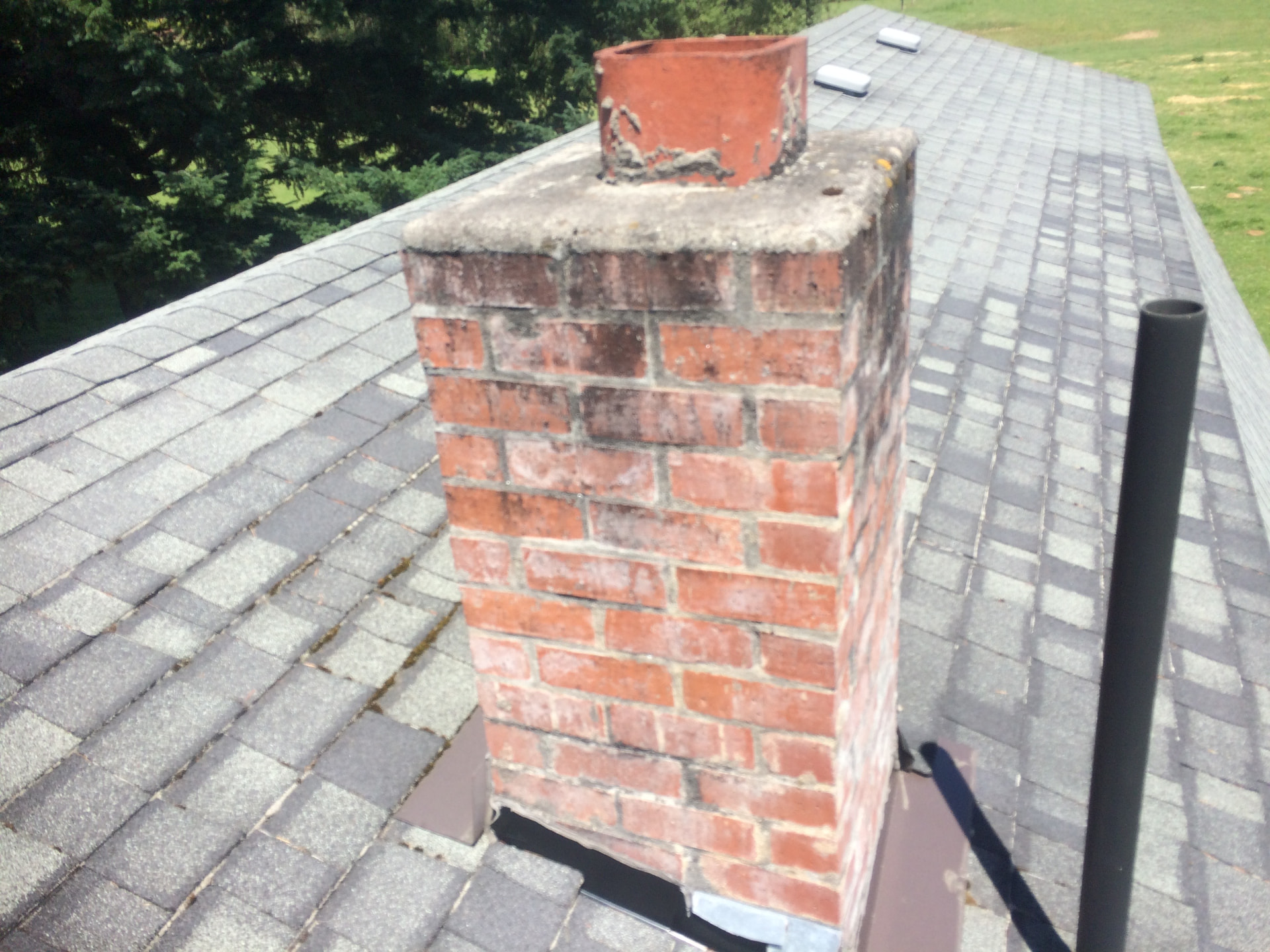
Step flashing, aptly named for its stair-step appearance along the side of a chimney, is an option that Metro Chimney prefers not to install. This choice stems from the recognition of multiple variables that can lead to its failure, including exposure to wind or service personnel on your roof. These factors can cause step flashing to become dislodged, rendering it ineffective, as demonstrated below.
While we can certainly install step flashing if you prefer to maintain visual continuity, we believe it falls short in design when compared to the more reliable One-Piece Flashing.
1 PIECE FLASHING
Choose One Piece Flashing for Superior Performance
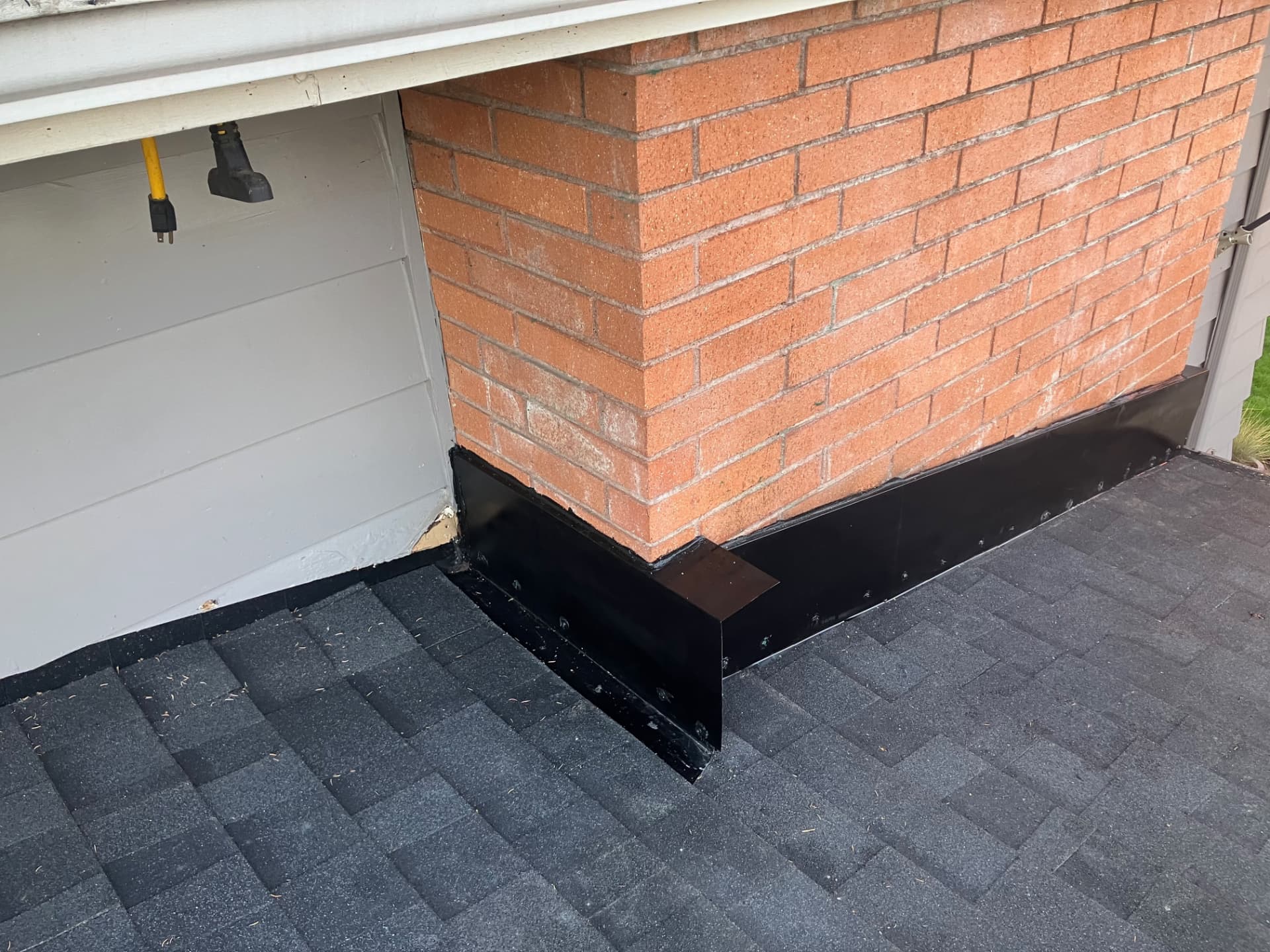
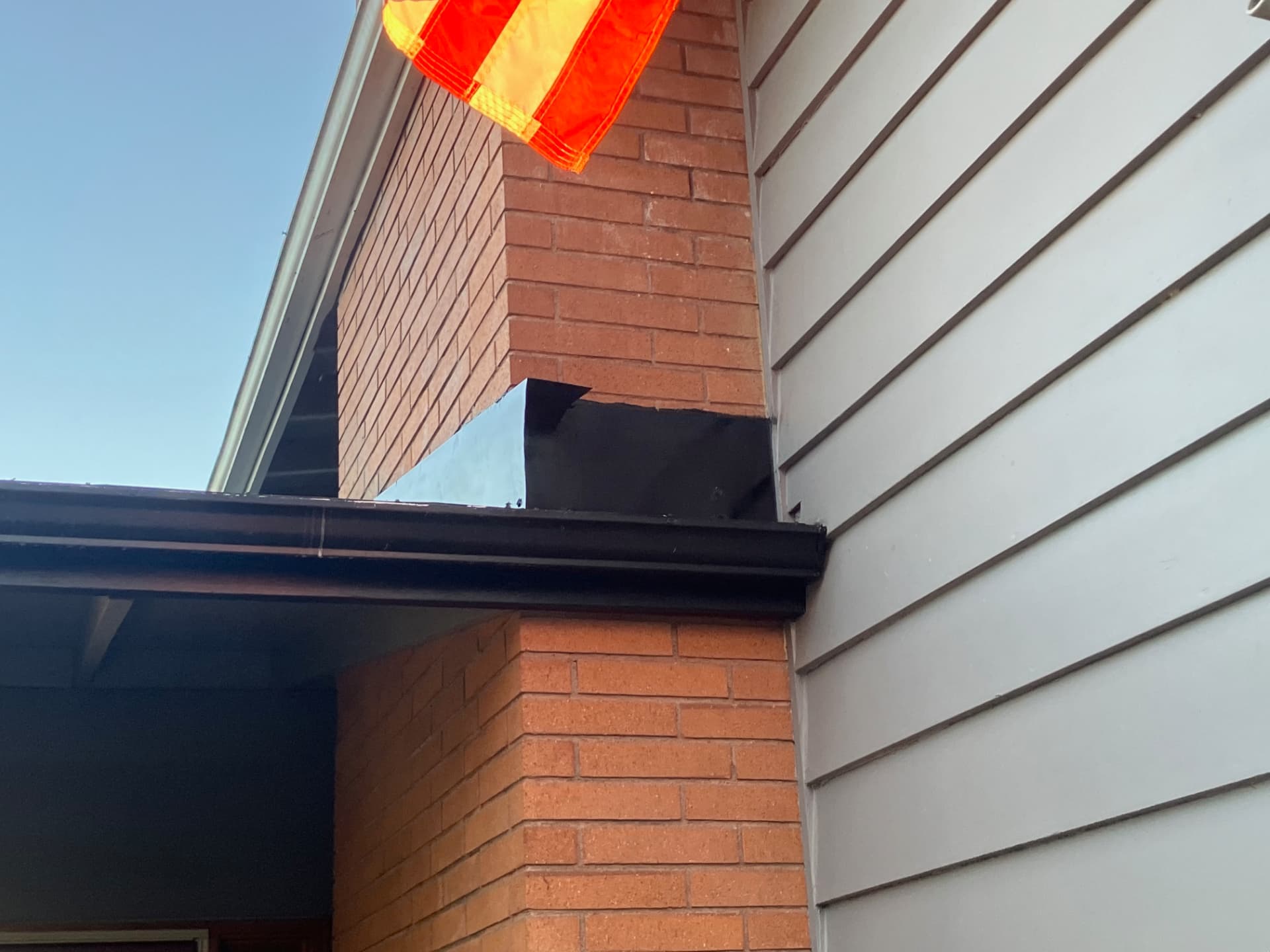
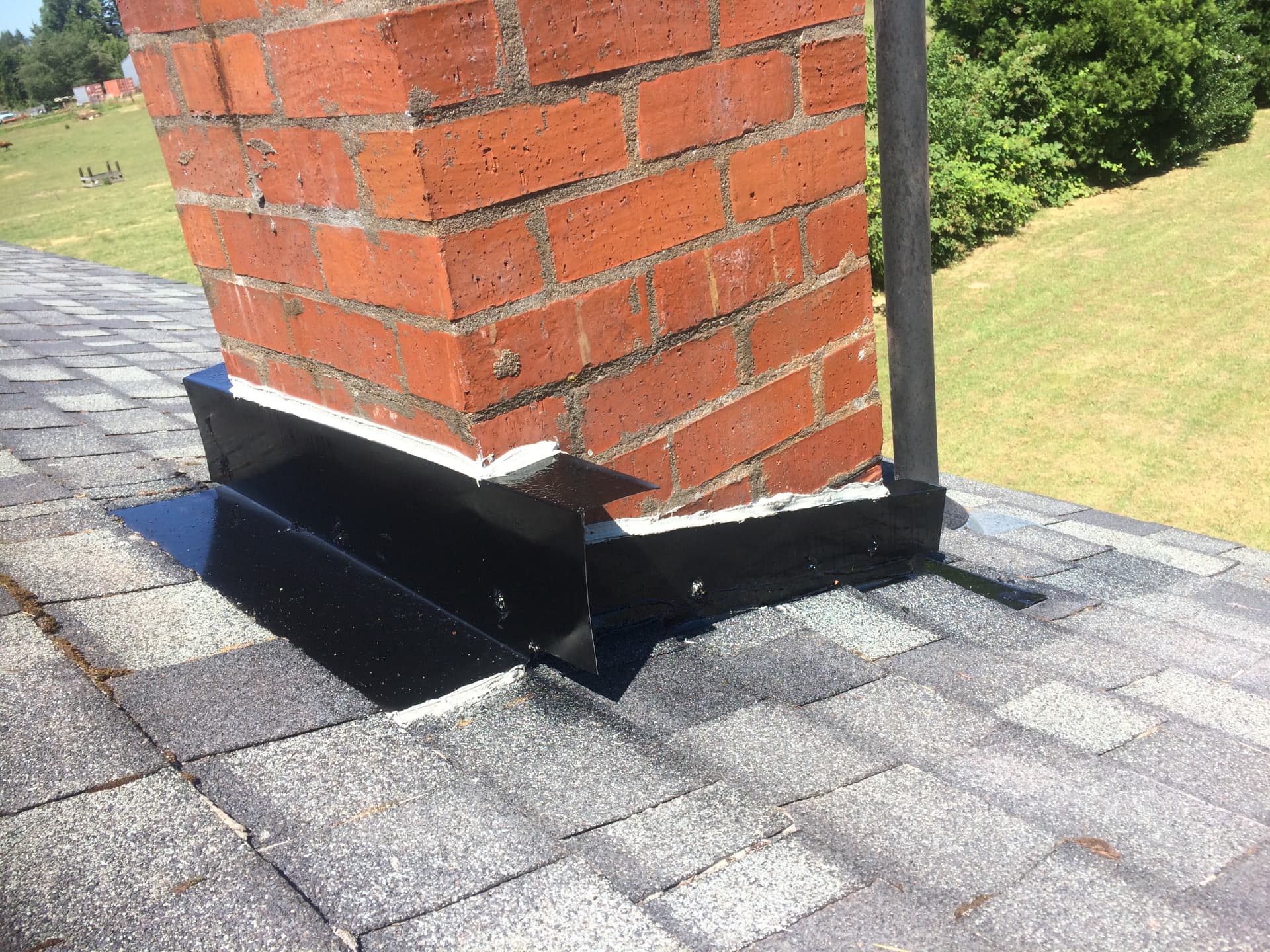
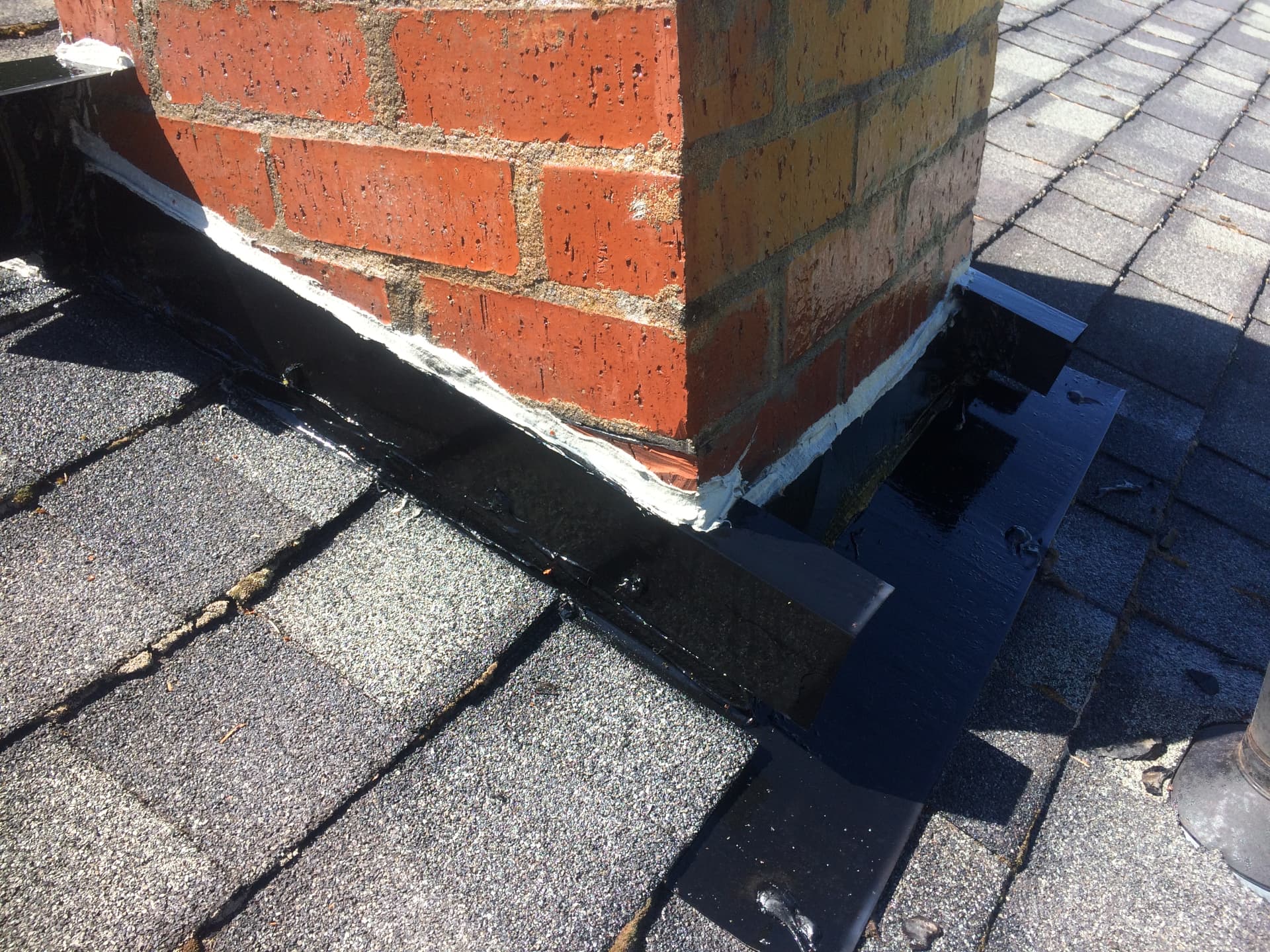
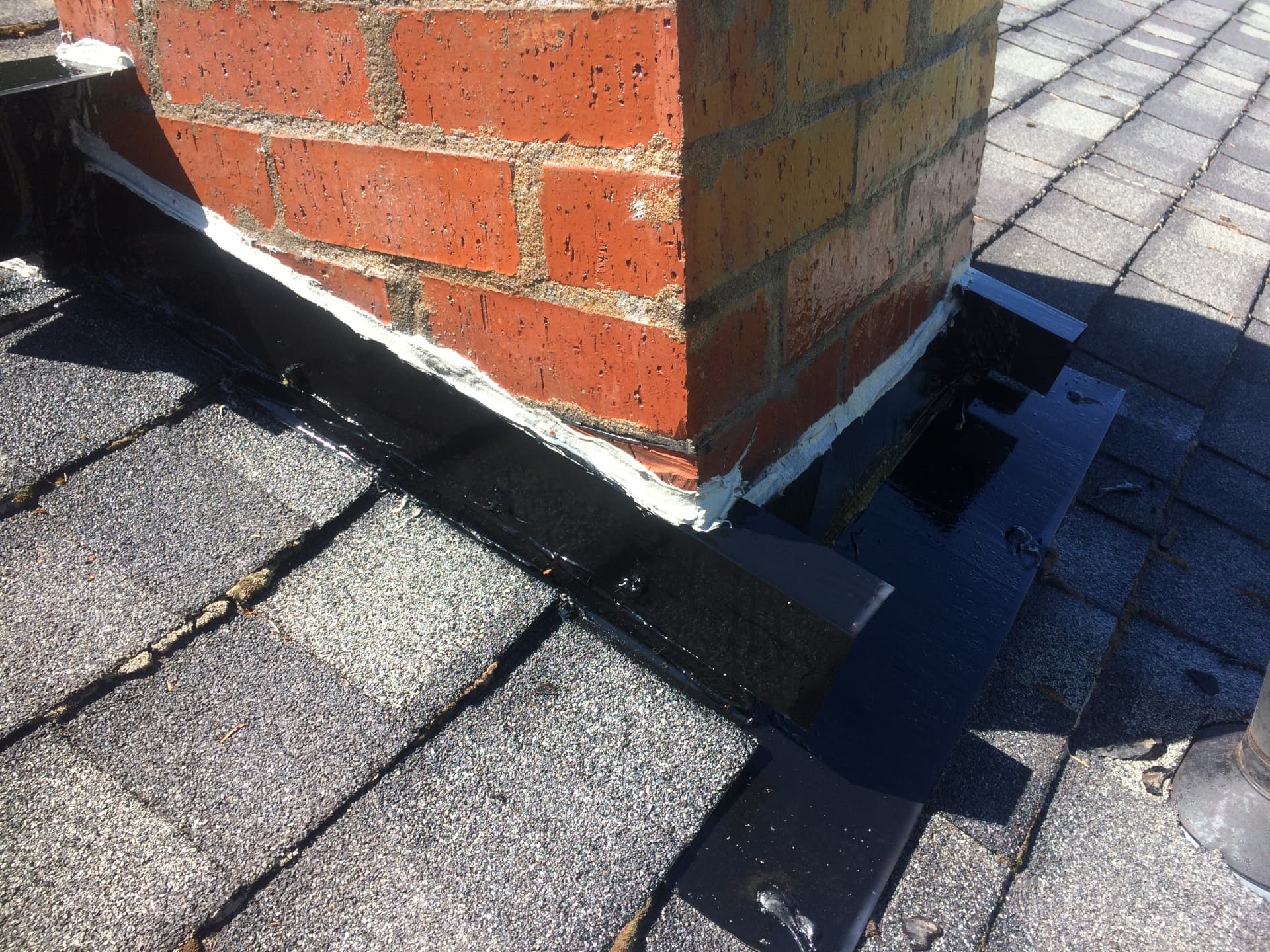
At Metro Chimney, our preference lies with the installation of One Piece Flashing, a choice we consider far superior to step flashing. One Piece Flashing offers increased durability and resistance to failure. Unlike step flashing, it can be securely fastened with screws and remains unaffected by high winds or the presence of service personnel on your roof. This longevity translates into a longer-lasting solution.
Furthermore, One Piece Flashing can be tailored to follow the natural flow of water as it travels down your roof, enhancing its effectiveness in preventing water intrusion.
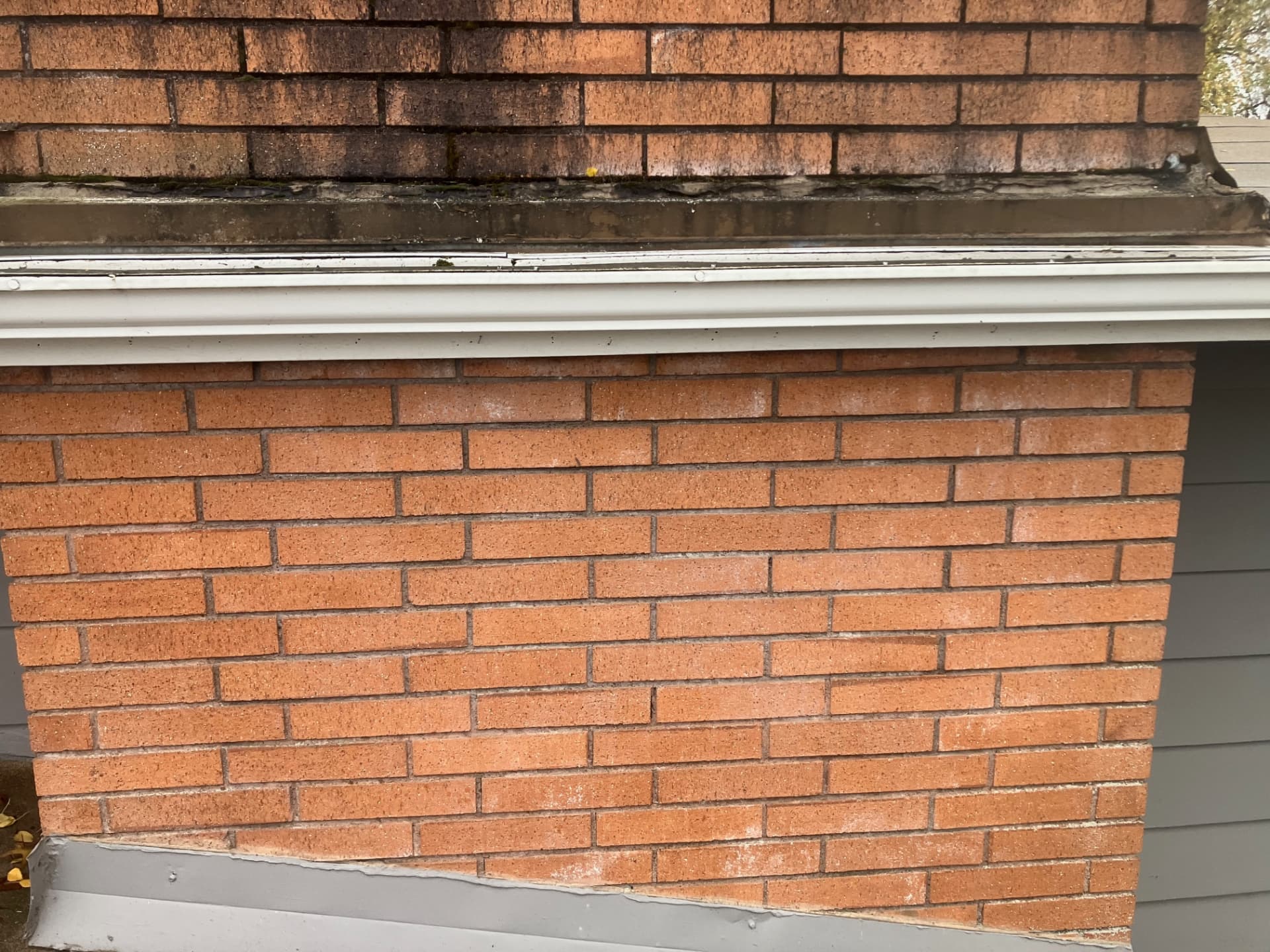
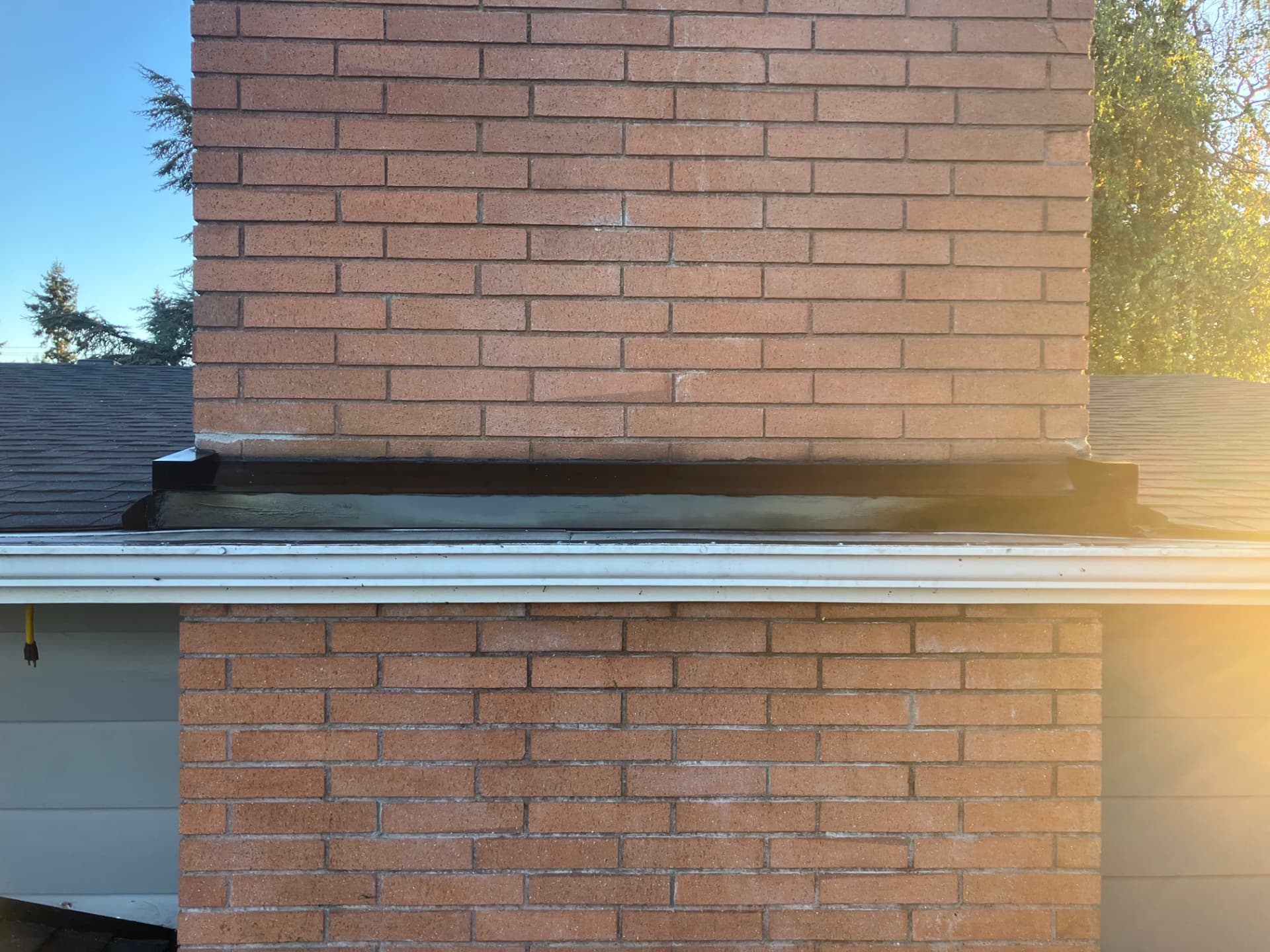
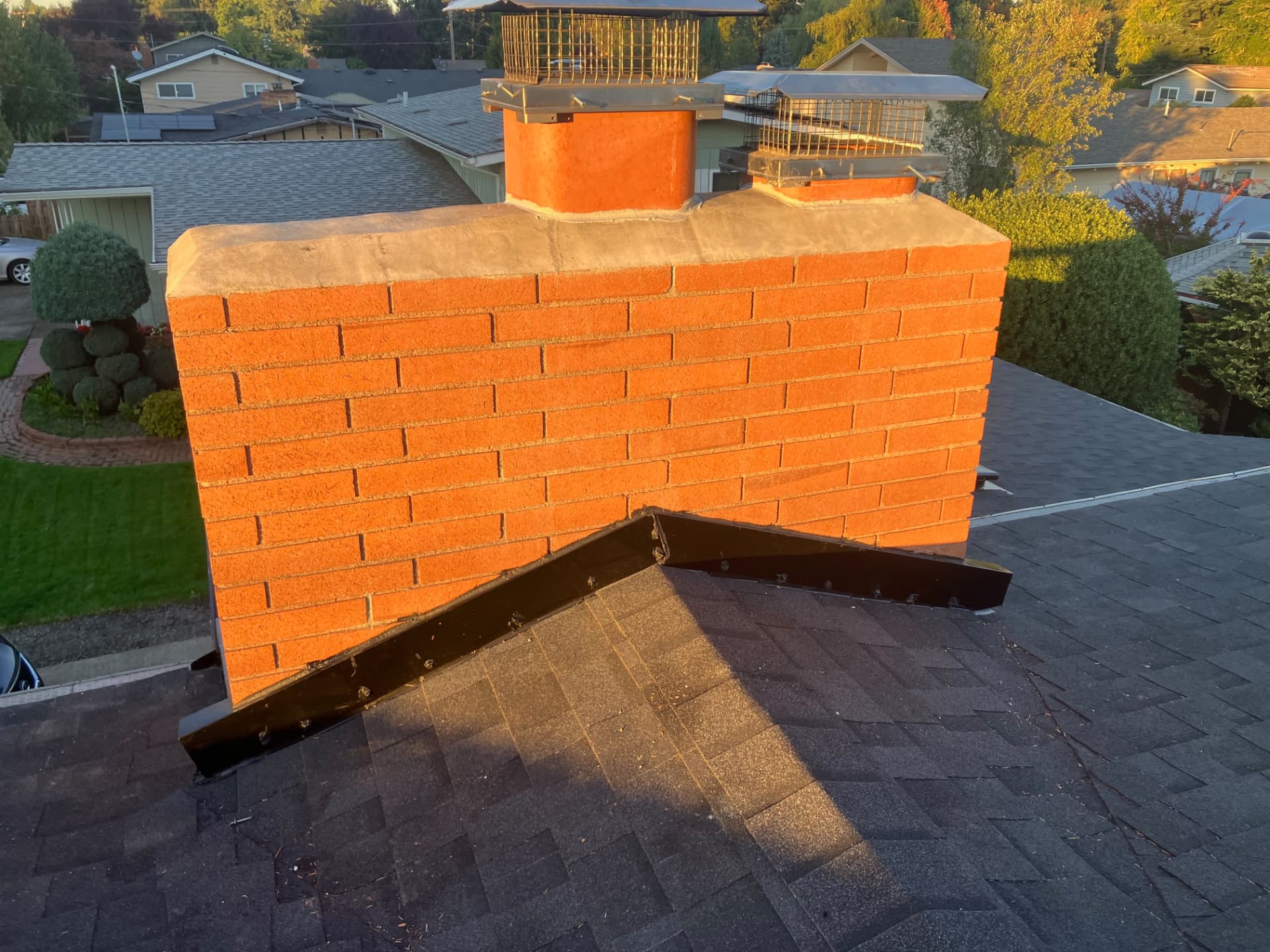
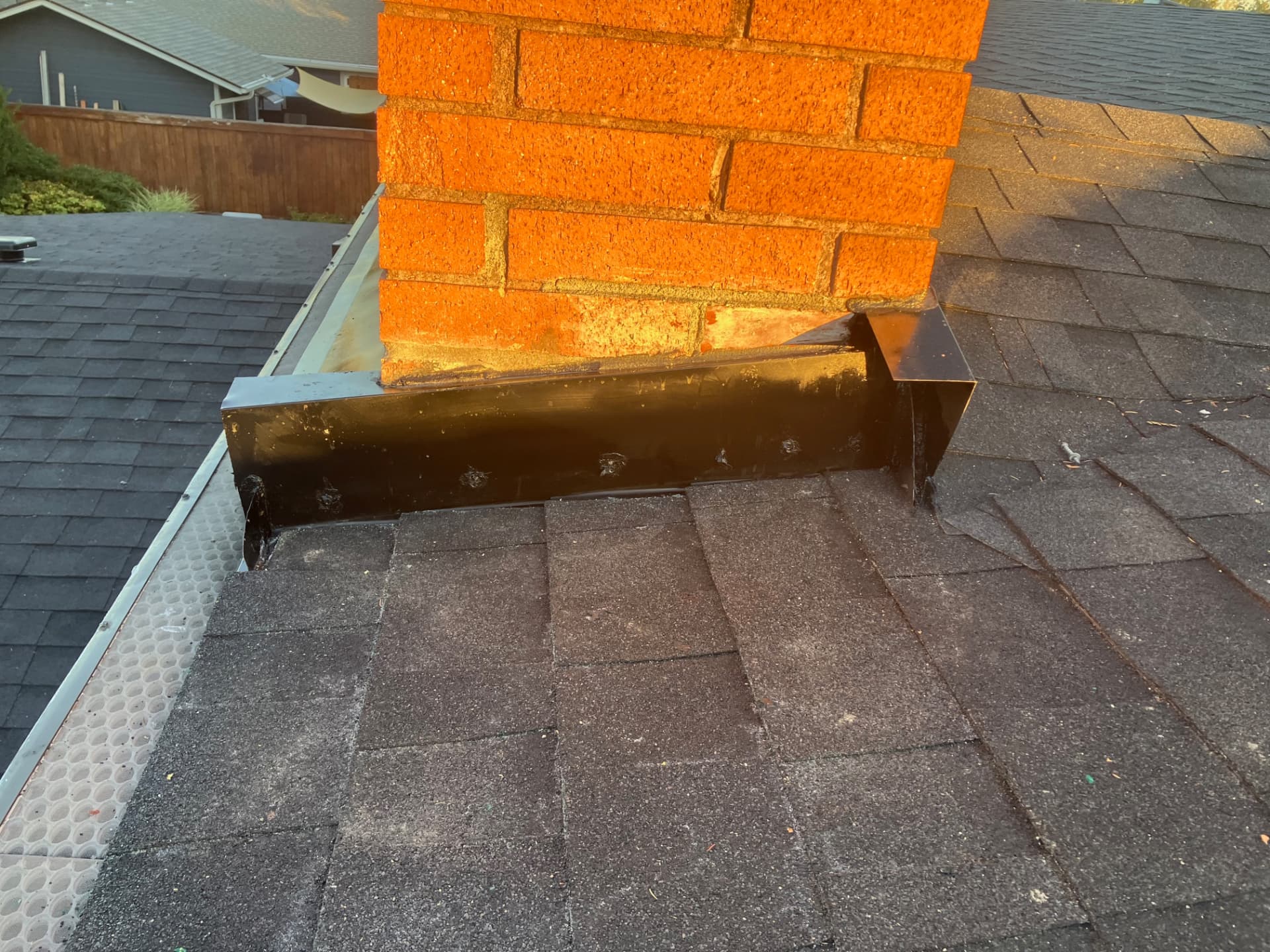
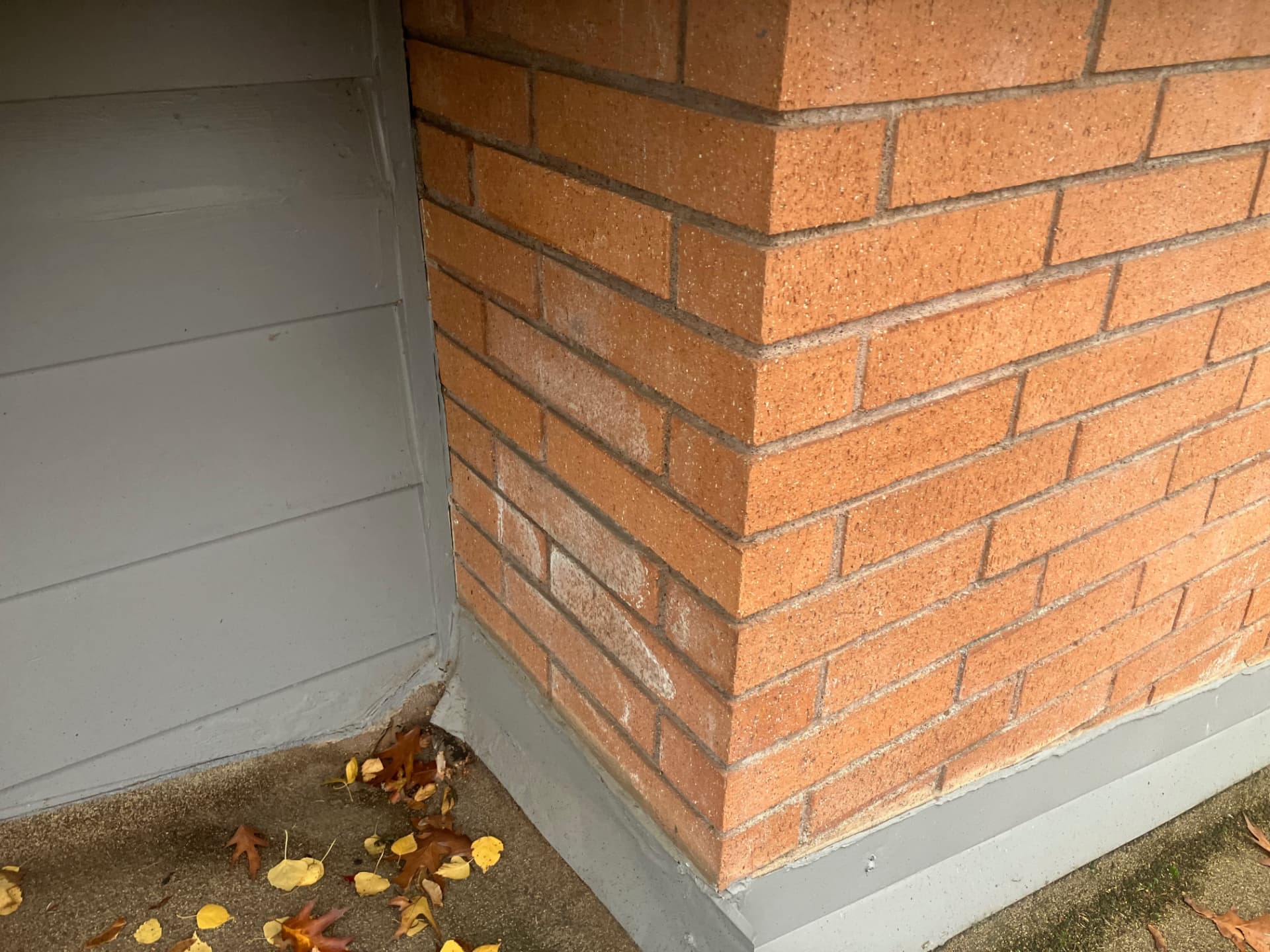
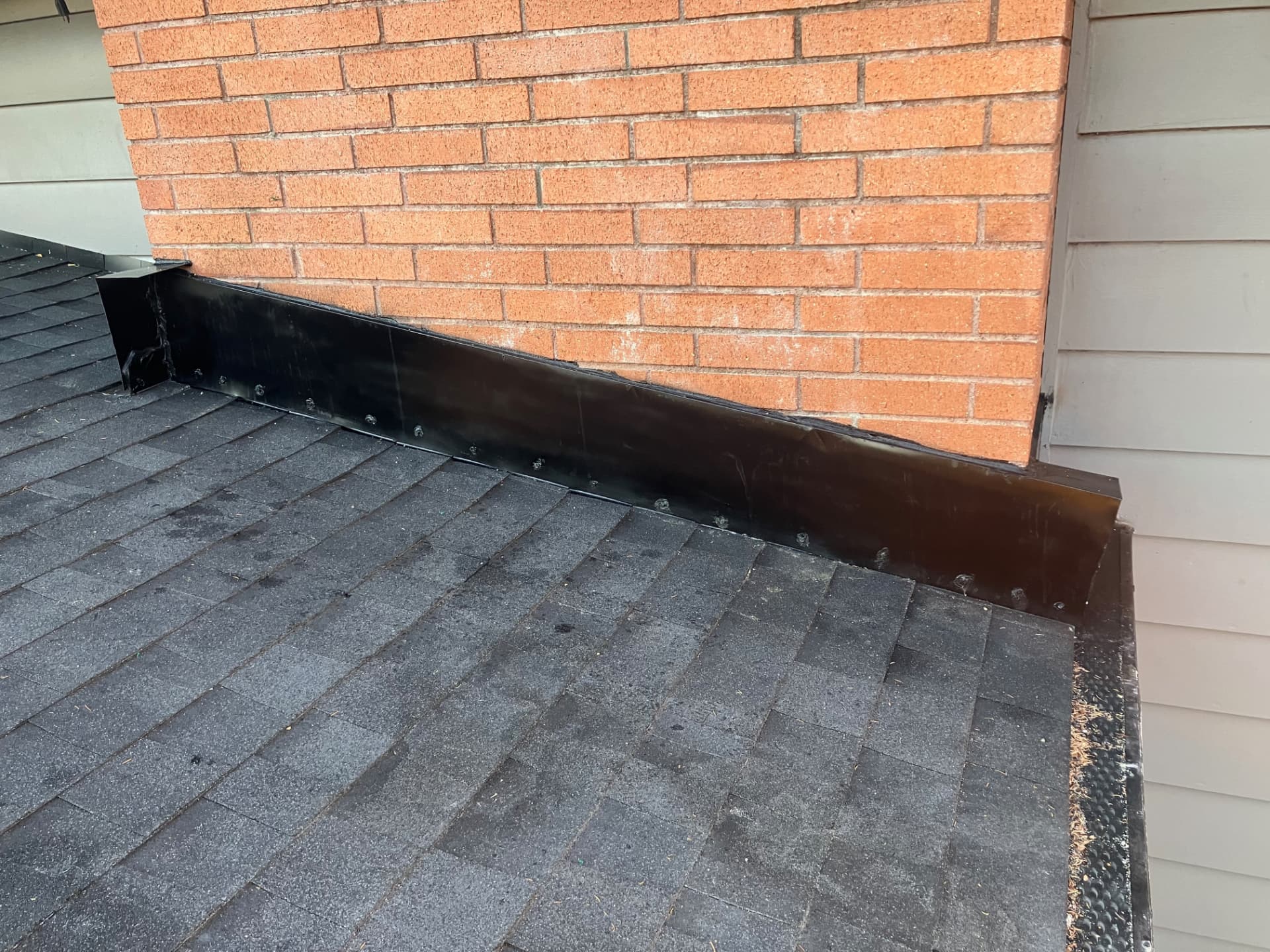
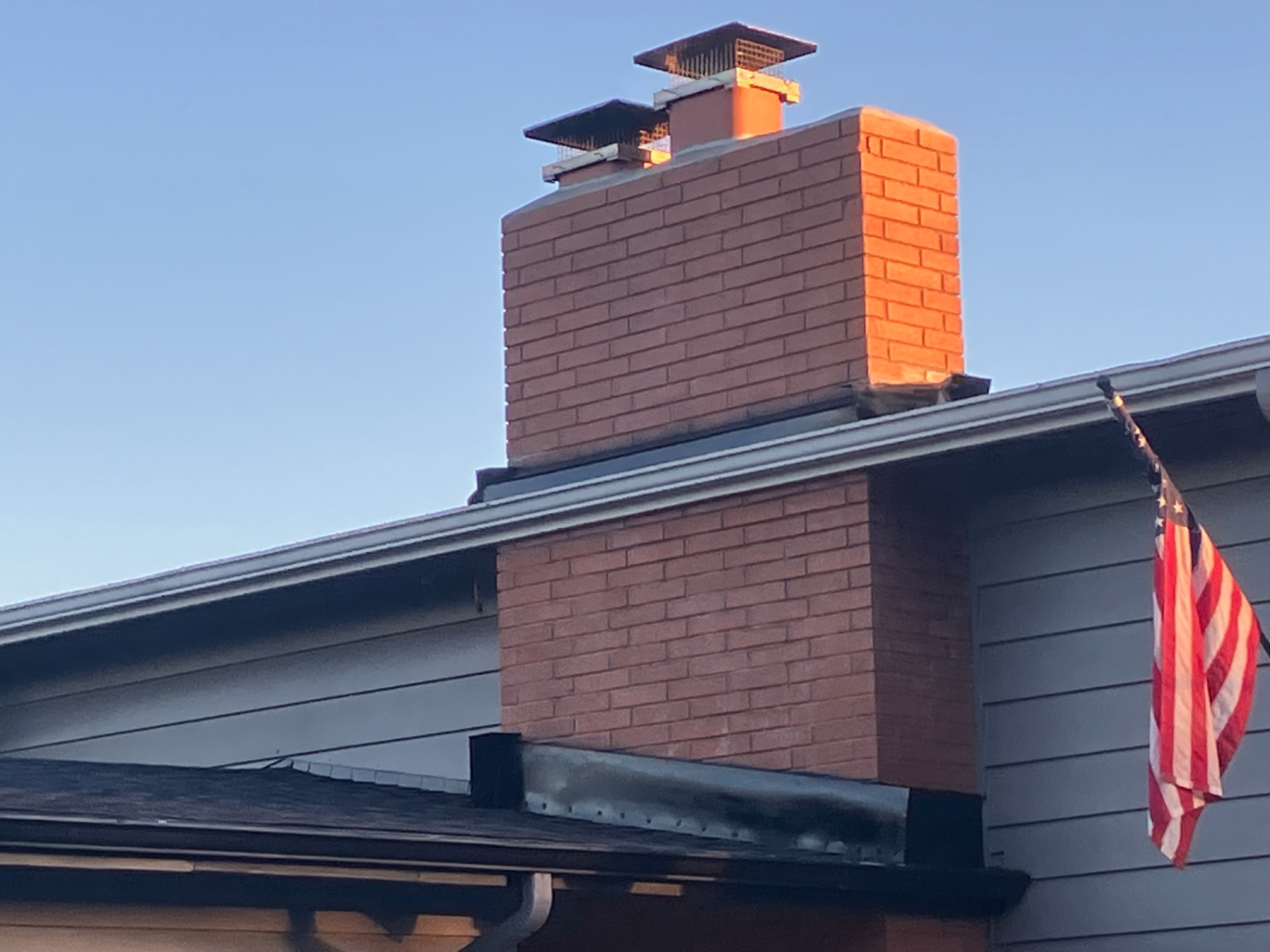
Witness the remarkable transformation in the images below, showcasing a before-and-after view of a chimney with new One Piece Flashing installed on all sides.
Choose Metro Chimney for top-notch One Piece Flashing installation that ensures lasting protection for your home.
UPDATE
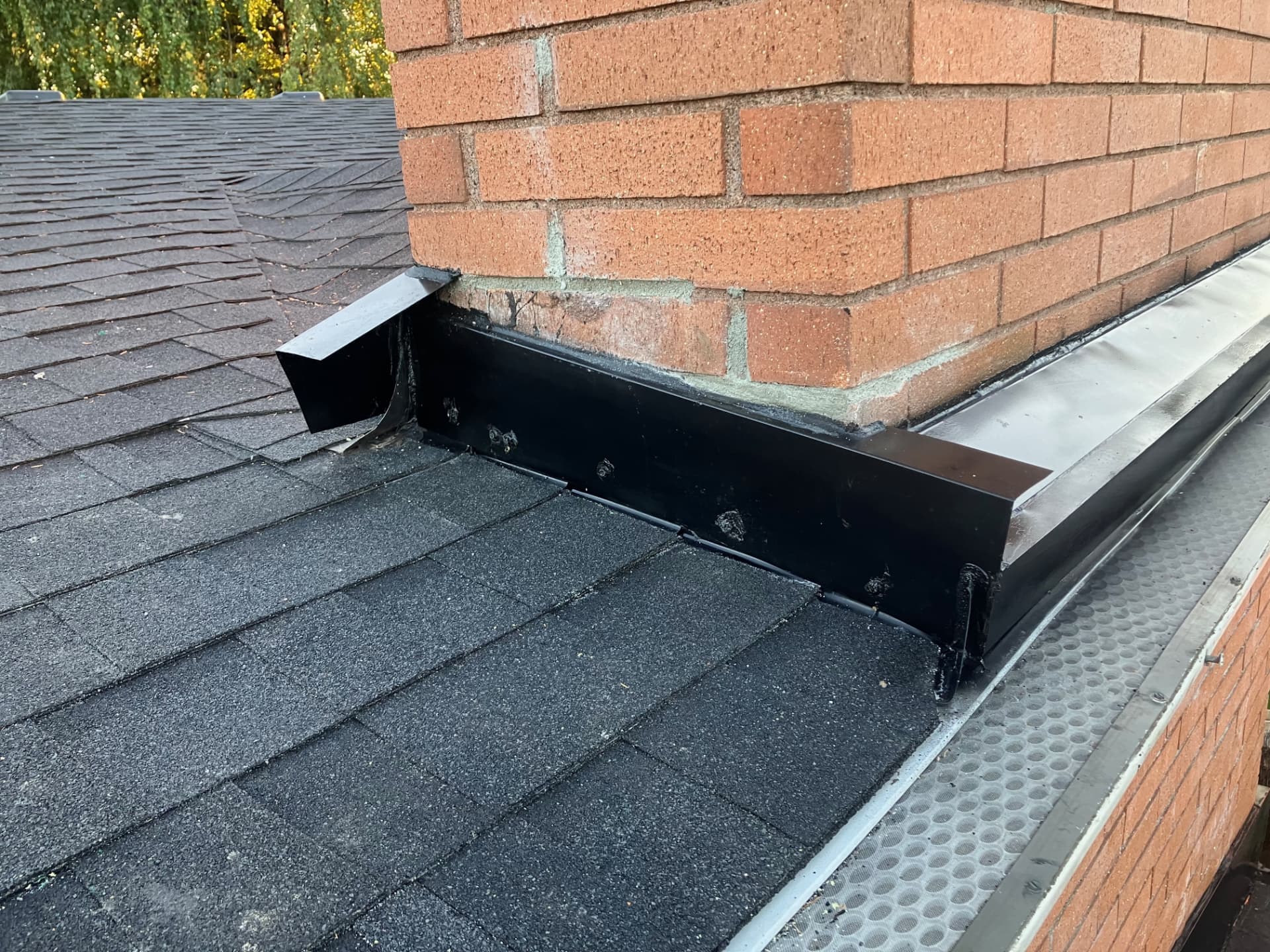
After trial and error to find the best flashing design to keep rain and water buildup getting into the seams of the flashing (where it usually starts to degrade) we have changed the flashing design to this style as we feel this will last the longest.
IMPORTANT
I e-mail bids only to give you all the information you need to make an informed decision for the work. If you contact me for a bid, please give me a correct e-mail address. Also, I may need to contact you via phone prior to e-mailing you the bid if there is work that needs to be done in addition to what you originally called for due to structural, code, or safety reasons, or if I need any further information not provided during your first call to schedule me to come out to do the bid.
Metro Chimney reserves the right to walk away from a job even if there is signed bid before the work is initiated if we sense there will a problem or ongoing issue between us and the customer. This is the Oregon CCB’s position. The customer can call another contractor or chimney company.
Attention: Due to the nature of how mixing mortar or corn mix with mortar is how you use it, and it cures by expelling that water, it takes 48 days for crown and mortar mix to kick out enough water in the curing process before it is not effected by at any point the temperature going below 32 degrees Fahrenheit (0 degrees celcius). If the temperature goes below that at any time during that 48 day curing period the water in the mortar/crown mix will freeze, expand and crack the same mortar or crown mix necessitating us to come out to repair it in the warmer Spring and Summer months. Also due to the fact that Flue Tiles and Flashing requires mortar or crown mix too, we only do mortar, crown, moss removal and waterproofing work during the non raining warmer parts of Spring and Summer months and we make sure to have all repair work requiring mortar or crown mix to end by the end of August. Moss removal and Water proofing also requires the work to be done in the non raining warmer parts of Spring and Summer months as well. There will be no exception to this rule.
This work must be performed in dry, warm weather with no rain, so we only schedule it during the drier months of spring and summer. We do not perform repair work in September because the mortar and crown mix need at least 48 days to cure sufficiently to withstand freezing temperatures. If temperatures drop to freezing or below before the materials have cured properly, the mortar or crown mix may crack, requiring us to return during the warmer months to make repairs